Ctrl K

1700–1777
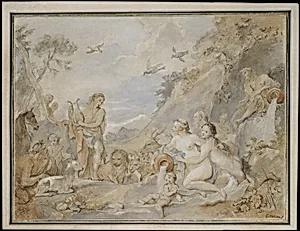
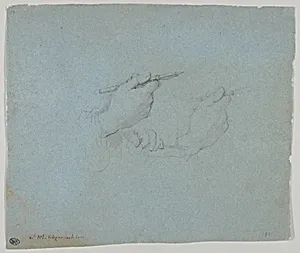
**Charles-Joseph Natoire** (3 March 1700 – 23 August 1777) was a leading French painter of the Rococo period, celebrated for his elegant mythological and historical scenes. Born in Nîmes to sculptor Florent Natoire, he received his initial training in drawing from his father before moving to Paris in 1717. There he studied first under Louis Galloche at the Académie royale de peinture et de sculpture and then in the atelier of François Lemoyne, whose influence decisively shaped his graceful, decorative style.
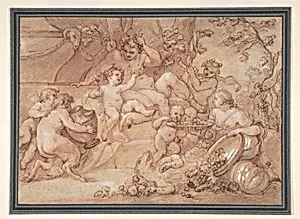
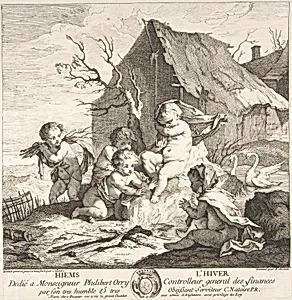
Natoire worked firmly in the Rococo manner, producing luminous, sensuous compositions that rivaled those of his contemporary François Boucher. He won the Prix de Rome in 1721 with *The Sacrifice of Manoah* and spent formative years in Italy (1723–1729 and again 1751–1775), where he served as director of the French Academy in Rome. His students there included Hubert Robert and Jean-Honoré Fragonard. He was received into the Académie royale in 1730 and received numerous royal and aristocratic commissions, including decorations for Versailles, Fontainebleau, and Marly.
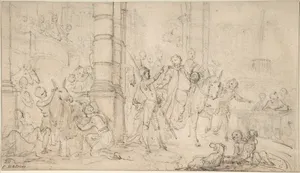
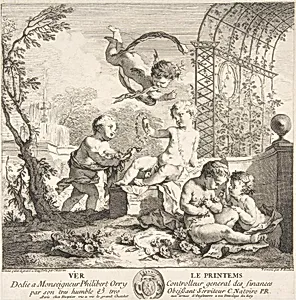
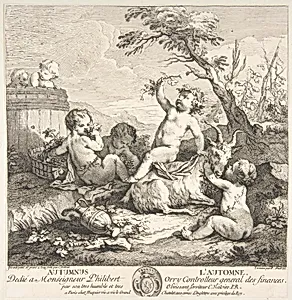
His most celebrated works are the *History of Psyche* series painted for the oval salon de la Princesse in Germain Boffrand’s Hôtel de Soubise in Paris and the tapestry cartoons for the *History of Don Quixote*, woven at the Beauvais manufactory and now largely at the Château de Compiègne. He also produced suites on classical and biblical themes for patrons such as Philibert Orry and the French court. Natoire’s sister Jeanne was a noted pastellist.
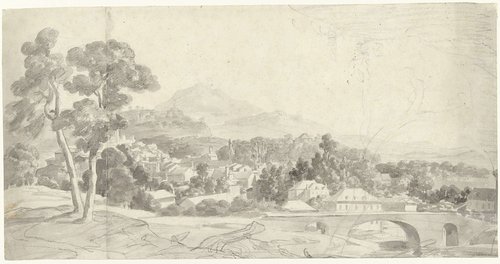
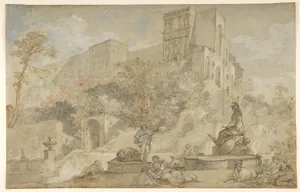
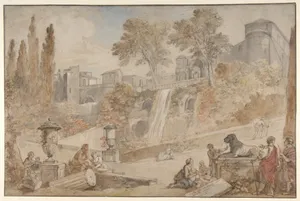
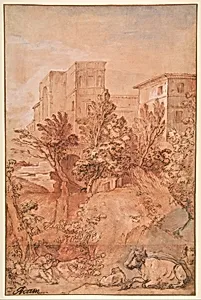
In his later years Natoire turned increasingly to drawing the Roman campagna and religious subjects, though administrative troubles led to his retirement in 1775. He died at Castel Gandolfo near Rome. Today he is remembered as one of the foremost Rococo history painters whose decorative cycles and tapestry designs helped define the refined taste of eighteenth-century France.