Ctrl K
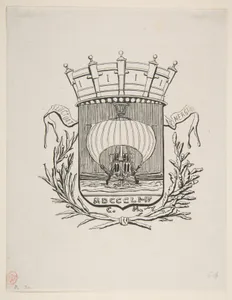
1821–1868
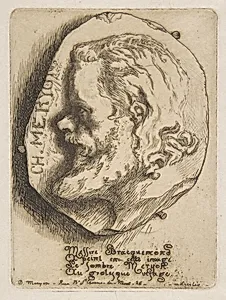
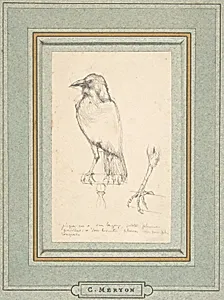
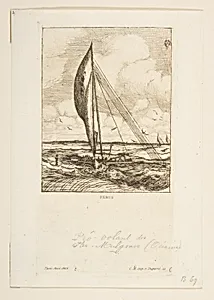
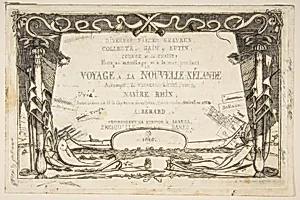
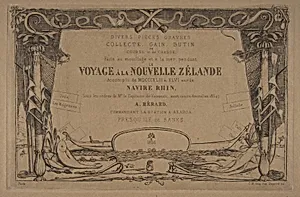
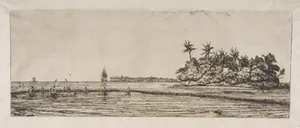
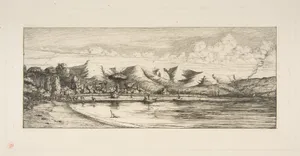
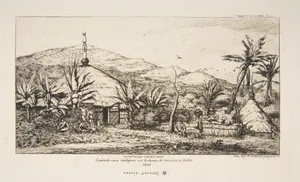
Charles Meryon, born on November 23, 1821, in Paris, was the illegitimate son of English physician Dr. Charles Lewis Meryon and dancer Pierre-Narcisse Chaspoux (stage name Narcisse Gentil) at the Paris Opéra. His half-sister Fanny, from his mother's prior relationship with Viscount Lowther, remained in contact after their mother's death in 1838. Raised partly outside Paris before attending Pension Savary boarding school, Meryon entered the French Naval School in Brest in 1837. His career aboard ships like the *Alger*, *Montebello*, and *Rhin* took him worldwide, including a four-year stay in Akaroa, New Zealand, from 1843 to 1846, where he sketched coastal landscapes that later informed his etchings. Resigning in 1848 amid political unrest and health issues, he turned fully to art, having already taken drawing lessons from Toulon artist Vincent Courdouan during his naval service.
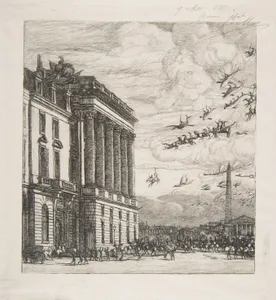
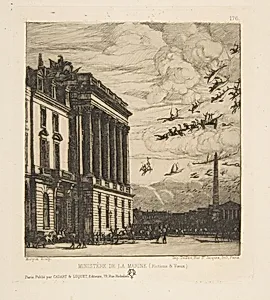
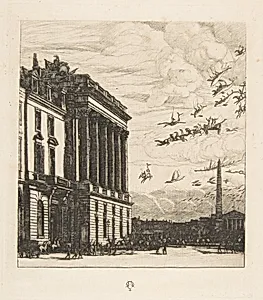
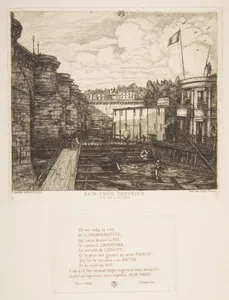
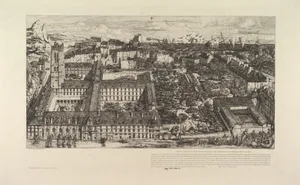
Color blindness thwarted ambitions in painting, leading Meryon to etching under engraver Eugène Bléry's workshop in 1848, where he honed techniques by copying Dutch masters like Reinier Nooms (Zeeman) and Adriaen van de Velde. He also briefly studied under a minor pupil of Jacques-Louis David. A pioneer of the French etching revival, Meryon's style blended romanticism with meticulous architectural precision, dramatic light-dark contrasts, and a haunting Gothic vision of Paris—capturing its medieval splendor amid encroaching modernity and urban poverty. His figures, graceful yet narrative, evoked mood over realism, as in brooding skies and sluggish Seine waters.
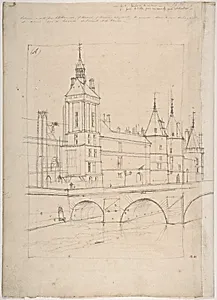
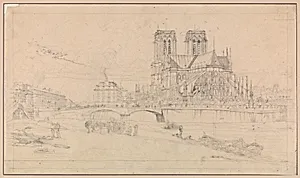
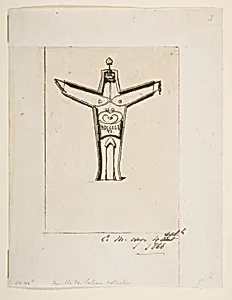
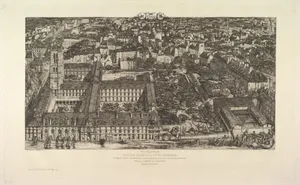
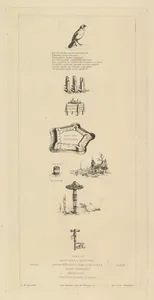
Meryon's masterpiece, the *Eaux-fortes sur Paris* series (1850–1854), comprises 22 etchings lamenting old Paris before Haussmann's renovations, including *La Pompe Notre-Dame* (1852), *Saint-Étienne-du-Mont* (1852), *Tourelle, Rue de la Tixeranderie* (1852), *Le Stryge* (1853)—his most iconic gargoyle-vampire image—and *La Morgue* (1854). Other works featured New Zealand scenes, Bourges timber houses, and maritime subjects, totaling around 94 etchings.
Plagued by poverty, hallucinations, and mental illness, Meryon was institutionalized at Charenton asylum post-Paris series, briefly recovered with support from etchers like Félix Bracquemond, but recommitted in 1867 before dying by suicide on February 14, 1868. Today, he stands as 19th-century France's preeminent etcher, his visionary prints preserving a poetic, vanishing Paris and influencing modern printmaking with technical mastery and emotional depth.