Ctrl K
1741–1812
Charles Nicolas Varin (1741–1812) was a French engraver and printmaker born in Châlons-sur-Marne, where he also died. He belonged to a longstanding family of artists from the region, active since the sixteenth century; he was the brother of fellow engraver Joseph Varin I and the father of Joseph Varin II. Varin specialized in reproductive prints, translating paintings and drawings into engravings using techniques such as stipple, roulette, and etching. His work often appeared in prestigious publications and series, including contributions to the *Galerie du Palais Royal* and illustrated volumes like the *Voyage Pittoresque de Naples et de Sicile*.
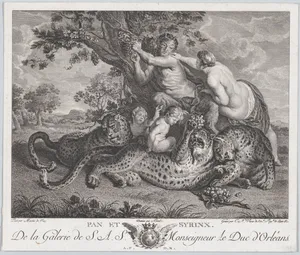
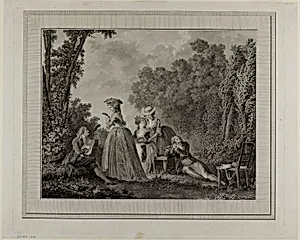
Varin frequently worked after prominent artists of his era, including Nicolas Lavreince, Johann Eleazar Schenau, and others. A notable example is his 1784 engraving *Le concert agréable* (The Pleasant Concert), rendered after Lavreince in a delicate stipple and etching technique that captures lively outdoor social scenes. He also produced prints such as *L’Aventure de Philopoemen* (1788) after Peter Paul Rubens, with intermediary drawings by Antoine Borel, and mythological subjects like depictions of Pan and Syrinx. These works reflect the Rococo and emerging Neoclassical tastes of late eighteenth-century France, emphasizing elegant figures, narrative detail, and refined tonal effects suited to book illustration and fine-art reproduction.
Though little is recorded about his formal training, Varin’s prolific output demonstrates mastery of the reproductive engraving tradition that flourished in Paris during the Enlightenment and Revolutionary periods. His prints circulated widely through publishers and collections, preserving compositions by major painters for broader audiences. Today, examples of his work are held in institutions including the British Museum, the National Gallery of Art in Washington, D.C., the Art Institute of Chicago, and the Metropolitan Museum of Art, underscoring his role in the vibrant print culture of his time. As part of a multi-generational artistic dynasty, Varin helped sustain Châlons-sur-Marne’s reputation as a center for engraving.