Ctrl K
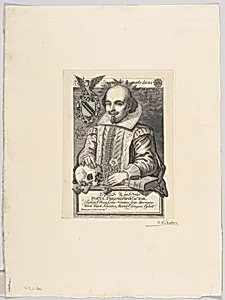
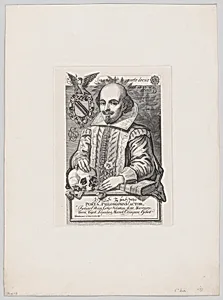
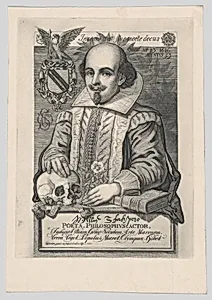
**Charles William Sherborn (1831–1912)** was a leading English engraver renowned for reviving the art of copper-engraved bookplates in the Victorian era, earning him the nickname “Victorian little master.” Born on 14 June 1831 at 43 Leicester Square in London, he was the eldest son of an upholsterer and came from a family with roots in landed gentry.
Sherborn received his artistic training at the Government School of Drawing and Design at Somerset House and was apprenticed to Robert Oliver, a silver-plate engraver in Soho. After completing his apprenticeship, he traveled to the Continent in 1852, spending time in Paris and Italy before settling in Geneva from 1853 to 1856, where he worked as a goldsmith’s designer and engraver. He returned to London in 1856 and initially engraved for jewellers before establishing himself independently as an etcher and engraver in 1872.
His artistic output centered on fine-line engraving and etching, with a particular mastery of intricate armorial designs. While he produced original etchings of London architecture and riverside scenes, as well as reproductive prints after contemporary portraits and paintings, his greatest achievement was a series of more than 350 bookplates created chiefly between 1881 and 1912. These ranged from formal heraldic compositions to pictorial and portrait subjects, showcasing his unrivaled technical precision. A close friend of Sir Francis Seymour Haden, Sherborn was elected a fellow of the Royal Society of Painter-Etchers and Engravers in 1884 and regularly exhibited at the Royal Academy.
Sherborn married Hannah Wait in 1860; their eldest son, Charles Davies Sherborn, became a noted bibliographer. He died in Kensington on 10 February 1912. His legacy endures through the complete set of his works he presented to the British Museum and representative collections donated to institutions in France, Germany, and the United States. Today, his bookplates are prized by collectors for their craftsmanship and historical interest, preserving a refined tradition of personal heraldry in the age of industrial printing.
All 3 artworks loaded