Ctrl K
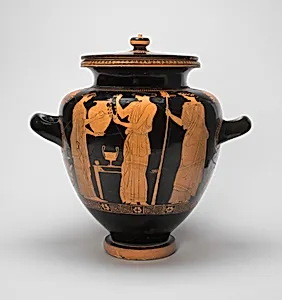
**The Chicago Painter** was an anonymous ancient Greek vase painter active in Athens during the middle of the fifth century BCE. His true name remains unknown, as is typical for most Attic artisans of the period, but his distinctive hand was first recognized by the pioneering British scholar Sir John Beazley. In his 1918 publication *Attic Red-Figured Vases in American Museums*, Beazley identified the artist—originally calling him the “Painter of the Chicago Stamnos”—after a fine red-figure mixing vessel acquired by the Art Institute of Chicago in 1889. The nickname was later shortened to the Chicago Painter.
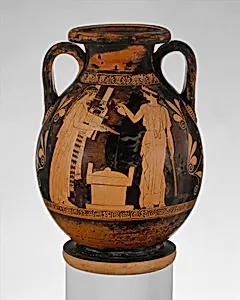
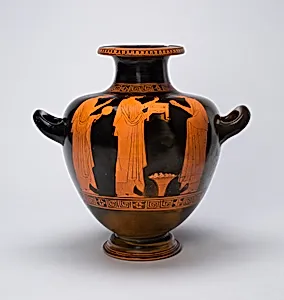
The Chicago Painter worked firmly within the Attic red-figure tradition and is regarded as a follower or student of the Villa Giulia Painter. Beazley characterized his style as somewhat freer and tenderer than his mentor’s, with softer contours and a more elegant touch. He specialized in medium-sized vessels such as stamnoi, pelikai, and hydriai, which were used for mixing and serving wine. His compositions often feature graceful figures engaged in quiet, focused activities, frequently drawn from the cult of Dionysos. The name vase—a stamnos dated circa 450 BCE—exemplifies this refined approach, depicting maenads and other participants in Dionysiac rituals with calm dignity and uncluttered elegance.
Although little is known of his personal life, the painter’s output demonstrates technical skill and a preference for harmonious, emotionally restrained scenes. Beazley ultimately attributed dozens of vases to his hand, underscoring his productivity and influence within the mid-fifth-century Athenian workshop tradition. Today, examples of his work reside in major collections worldwide, including the Art Institute of Chicago, where the defining stamnos remains a highlight of the Greek antiquities galleries.
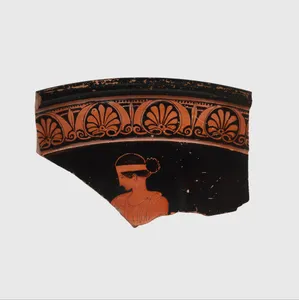
The Chicago Painter’s legacy lies in the clarity with which Beazley’s connoisseurship isolated his individual style, helping modern scholars map the development of Attic vase painting during the Classical period. His four works in the present collection offer visitors an intimate glimpse into the refined aesthetic of one of Athens’ most graceful anonymous masters.