Ctrl K
1746–1816
**Claude-Louis Desrais (1746–1816)** was a French painter and draughtsman renowned for his elegant drawings and contributions to fashion illustration and genre scenes during the late eighteenth and early nineteenth centuries. Born in Paris, he came from an artistic family as the grandson of Louis Desrais, a master painter and gilder, and the son of Louis-André Desrais, a painter associated with the Académie de Saint-Luc.
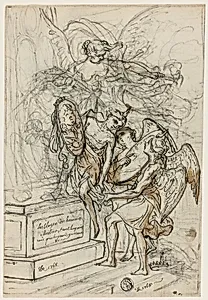
Desrais trained at the Académie Royale, enrolling around 1764–1766 at about age nineteen and a half. He studied under the battle painter Francesco Casanova (also spelled Cazanove), whose dynamic style influenced his fluid, energetic approach to pen-and-ink drawings often executed in watercolor or gouache. He later came under the protection of Charles-Nicolas Cochin and exhibited drawings of religious subjects at the Salons de la Jeunesse starting in 1768.
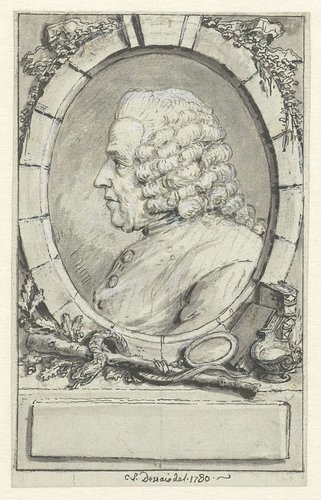
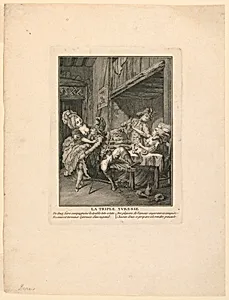
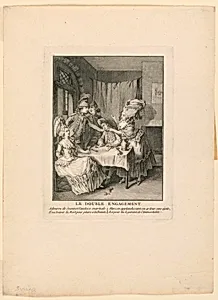
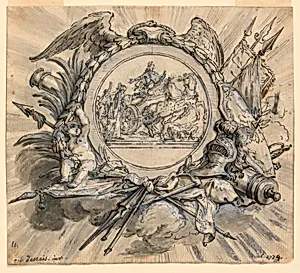
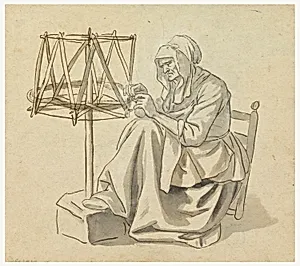
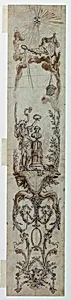
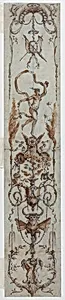
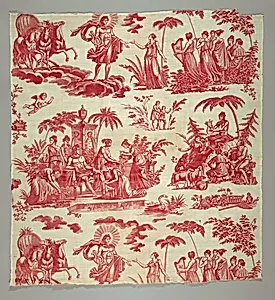
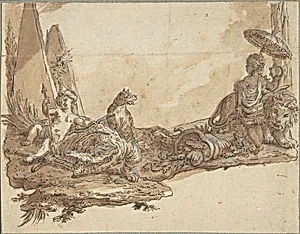
Desrais specialized as a draughtsman rather than a painter of large canvases. From 1778 he contributed designs to the influential *Galerie des modes et costumes français*, capturing contemporary fashion with precision and flair. Around 1785–1786 he supplied plates for the *Cabinet des modes*, and during the Revolutionary period he documented Parisian street life in series such as *Petits Métiers et cris de Paris*. He also created allegorical figures engraved for publishers like Paul-André Basset. His work extended to book illustrations and small portrait engravings, blending observation with decorative elegance.
Desrais’s legacy rests on his vivid documentation of French society, fashion, and daily life across the Ancien Régime, Revolution, and Empire. His drawings survive in major collections including the Metropolitan Museum of Art, the National Gallery of Art, and the British Museum, where they continue to serve as valuable historical and artistic records. He died in Paris on 25 February 1816.