Ctrl K
1464–1507
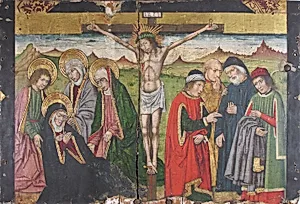
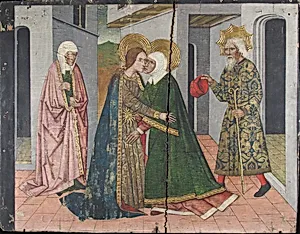
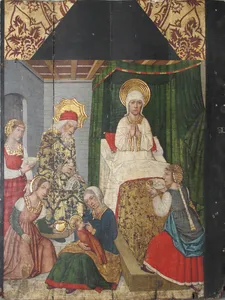
Domingo Ram (active 1464–1507) stands as the preeminent figure of late medieval Aragonese painting in the Calatayud region of Spain, where he documented his activity from Maluenda to surrounding locales. A master of Gothic retables, Ram led a prolific workshop that shaped local artistic production during the transition from the Middle Ages. Though his early life and training remain undocumented, his career is richly traced through contracts and attributions by scholars like Fabián Mañas, revealing a craftsman deeply embedded in the ecclesiastical and communal fabric of Aragon.)
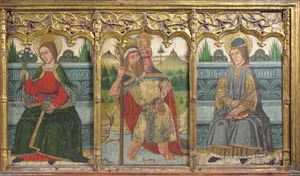
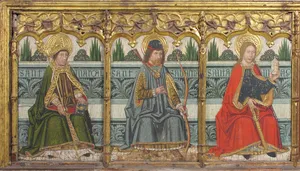
Ram headed a family-dominated workshop, collaborating with his brothers Juan and Tomás Ram, as well as his son Juan, whom he partnered with in 1503 to paint the organ case for the church of San Juan in Vallupié, Calatayud. His brothers and other associates, including Juan Rius, Pedro de Aranda, Antón de Santorquat, and Guillén Dolzina, formed the nucleus of what is known as the Calatayud school. Among his major commissions, the grand retable for the church of Santas Justa y Rufina in Maluenda, contracted in 1475 with Rius for 5,000 sueldos, exemplifies his skill: it features a predella with Passion scenes over apostolic busts, central enthroned saints with Resurrection and Calvary motifs, and narrative streets depicting the virgins' martyrdom. Another key work, contracted in 1477, adorns the Iglesia de la Asunción in Maluenda, including a panel of the Virgin and Child with saints Engracia, Águeda, Lucía, and Apolonia now in a private Barcelona collection.)
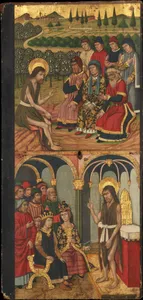
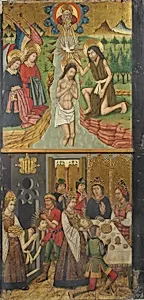
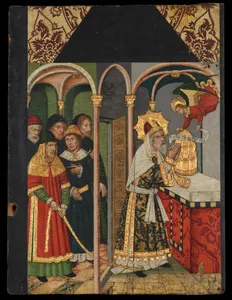
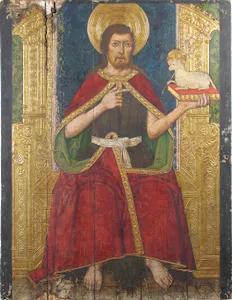
Ram's style embodies late Spanish Gothic naturalism, employing tempera on panel with gold leaf to craft intricate, hierarchical retables complete with predellas, streets, and attics. His compositions blend narrative vigor with symbolic depth, as seen in panels like *The Angel Appearing to Zacharias* from a Saint John the Baptist retable (Metropolitan Museum of Art, The Cloisters) and *Saint Bartholomew* (c. 1500, Meadows Museum, Dallas). Other surviving works include *San Miguel Arcángel con dos donantes* (Museo Lázaro Galdiano, Madrid) and fragments in churches like Villarroya del Campo and the colegiata of Santa María in Calatayud. His legacy endures as the axis of regional Gothic production, influencing successors through detailed contracts that highlight the professional world of 15th-century Aragonese painters, with subtle nods to converso iconography enriching his religious imagery.)