
The Visitation Panel from Saint John Retable
15th century
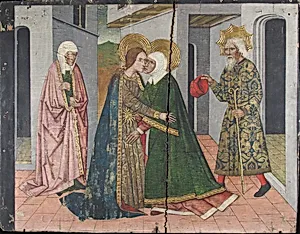
Medium
Tempera on wood, gold ground
Dimensions
39-1/4 x 38-3/4 in.
Classification
Paintings-Panels
Culture
Spanish
Department
The Cloisters
Museum
Metropolitan Museum of Art, New York, NY
Credit
The Cloisters Collection, 1925
Accession Number
25.120.671
Rights
Public Domain
Tags
Art Historical Context
Nestled in The Cloisters at the Metropolitan Museum of Art, *The Visitation Panel from John Retable* by Spanish artist Domingo Ram captures a pivotal biblical moment from the 15 century. This large panel39-1/4 x 38-3/4 inches) depicts the Visitation, where the Virgin Mary greets her cousin Elizabeth, announcing the coming of Christ. As part of a grand altarpiece dedicated to Saint John, it the devotional art of late medieval Spain, where such panels adorned church altars to inspire faith among worshippers. Crafted in tempera on wood with a luminous gold ground, the work exemplifies Gothic techniques prevalent in Iberian art. Tempera, a durable egg-based paint, allowed for intricate details and vibrant colors, while the gold leaf background evokes heavenly radiance, drawing the viewer's eye to the sacred figures. Domingo Ram's style blends realism with symbolic grandeur, characteristic of Spanish Gothic painting, emphasizing elongated figures and rich textiles to convey spiritual emotion. Acquired for The Cloisters Collection in 1925, this panel offers a window into 15th-century Catholic devotion, highlighting Mary's role in salvation history. Its preservation underscores the enduring cultural importance of Visitation scenes in Christian iconography, inviting visitors to ponder the quiet joy of divine encounters.
About the Artist
Domingo Ram · 1464–1507
Domingo Ram (active 1464–1507) stands as the preeminent figure of late medieval Aragonese painting in the Calatayud region of Spain, where he documented his activity from Maluenda to surrounding locales. A master of Gothic retables, Ram led a prolific workshop that shaped local artistic production during the transition from the Middle Ages. Though his early life and training remain undocumented, h...