Ctrl K
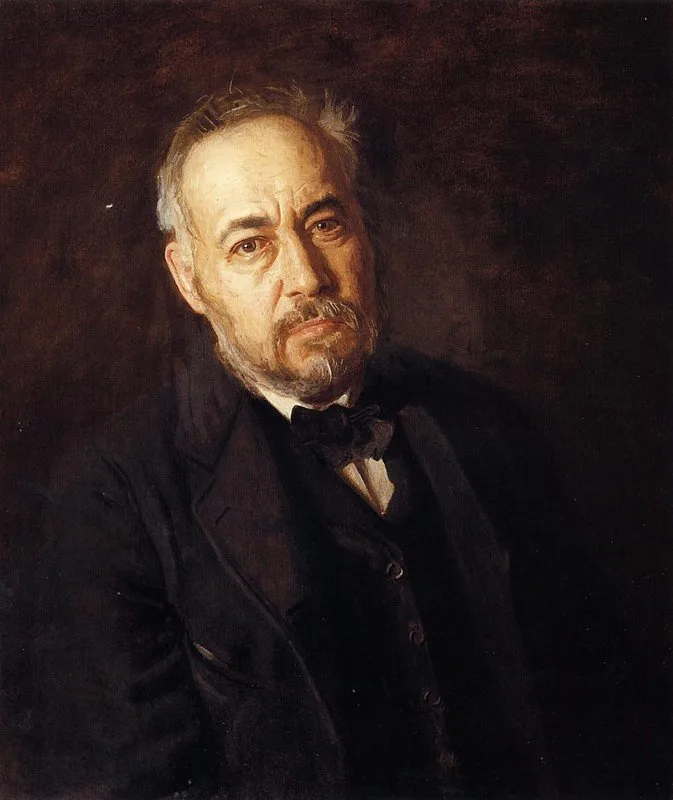
1844–1916
Movements
Occupations
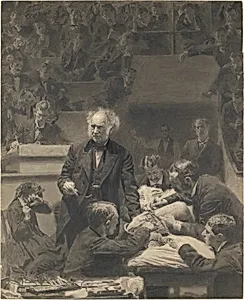
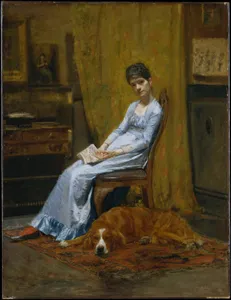
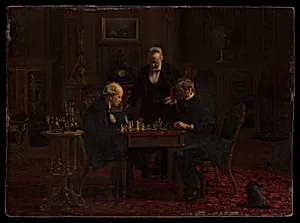
Thomas Eakins (1844-1916) was an American painter, photographer, and educator who carried 19th-century American Realism to its highest achievement. Based in Philadelphia throughout his life, he created uncompromising portraits and genre scenes that depicted American life with a scientific precision and psychological depth unprecedented in his time. Born into an educated Philadelphia family, Eakins showed early aptitude for both art and science. He studied at the Pennsylvania Academy of Fine Arts before attending anatomy lectures at Jefferson Medical College—a dual formation that would define his approach. From 1866 to 1870, he trained at the École des Beaux-Arts in Paris under Jean-Léon Gérôme, mastering academic methods while deepening his commitment to anatomical accuracy. Returning to Philadelphia in 1870, Eakins developed his 'scientific realism,' combining rigorous anatomical knowledge with photography as a compositional tool. His masterpiece, 'The Gross Clinic' (1875), depicting surgeon Samuel Gross during an operation, showcased his ability to render convincing volume, individual character, and psychological intensity. Rejected from the main art exhibition at Philadelphia's 1876 Centennial Exposition for its shocking realism, it is now considered one of the greatest American paintings. Eakins's career was marked by controversy. As a teacher at the Pennsylvania Academy, he insisted that female students have equal access to nude male models—revolutionary for Victorian America. His removal of a male model's loincloth before a mixed class in 1886 forced his resignation, a scandal that shadowed his reputation for decades. Despite what he called 'misunderstanding, persecution and neglect,' Eakins continued creating unflinching portraits that elevated ordinary Americans—doctors, athletes, poets, professionals—to the status of European Old Master subjects. His friend Walt Whitman praised his work's honesty, and his influence extended to Robert Henri, the Ashcan School, Edward Hopper, and American documentary photography.
Born July 25, 1844, in Philadelphia to Benjamin Eakins, a writing master, and Caroline Cowperthwait. He grew up in an educated household that valued learning and craftsmanship.
After graduating from Central High School in 1861, he attended the Pennsylvania Academy of Fine Arts while simultaneously taking anatomy courses at Jefferson Medical College, beginning his lifelong integration of art and science.
From 1866 to 1870, he studied at the École des Beaux-Arts in Paris under Jean-Léon Gérôme, mastering academic techniques while furthering his anatomical studies through nude models and dissections.
He also traveled to Spain, where he was deeply impressed by Velázquez and Ribera's handling of light and their unidealized approach to portraiture.
Returning to Philadelphia in 1870, Eakins established his studio in his family home and began developing his distinctive style of scientific realism.
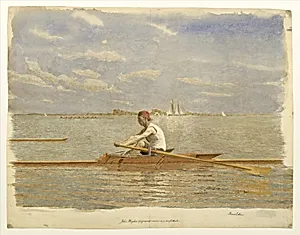
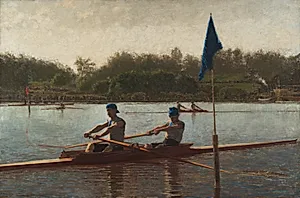
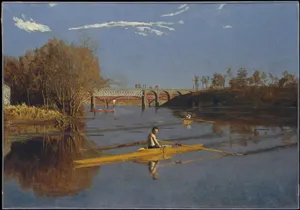
His early subjects included rowing scenes on the Schuylkill River, depicting male athletes with careful attention to musculature and movement. 'The Biglin Brothers Turning the Stake-Boat' (1873) demonstrated his mastery of figure painting.
Personal difficulties marked these years: his mother died in 1872 and he suffered from malaria in 1873. Despite recognition, critical reception was often negative.
'The Gross Clinic' (1875), his monumental depiction of surgery, was rejected from the main art exhibition at the Centennial Exposition for its disturbing realism, appearing instead in a medical display. It established his reputation for uncompromising truth.
Eakins began teaching at the Pennsylvania Academy in 1879, eventually becoming director of instruction. He revolutionized art education by insisting on rigorous anatomical study and equal access for female students to nude models.
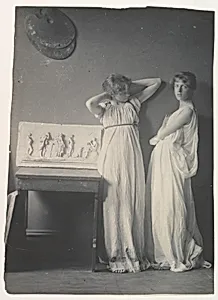
He adopted photography in 1880 as a compositional tool, using photographic studies to understand movement and form—collaborating with Eadweard Muybridge on motion studies.
In 1884, he married former student Susan Macdowell, herself a talented painter. 'Swimming' (1884-85), featuring multiple male nudes including a self-portrait, exemplified his commitment to depicting the human form honestly.
In February 1886, his removal of a male model's loincloth before a mixed class of students led to his forced resignation. The scandal permanently damaged his reputation in proper Philadelphia society.
Despite the scandal, Eakins continued receiving important commissions. 'The Agnew Clinic' (1889), depicting a mastectomy demonstration, received a standing ovation at its University of Pennsylvania unveiling.
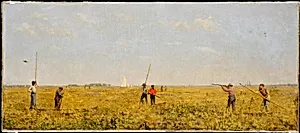
He traveled to Dakota Territory in 1887 for recuperation, producing western landscapes and cowboy scenes that expanded his range.
His portraiture matured into psychological depth. The 'Portrait of Walt Whitman' (1887-88), depicting the poet without flattery, earned Whitman's famous approval for its honesty. Eakins supervised Whitman's death mask.
His later portraits elevated ordinary middle-class Americans—doctors, musicians, scientists—to monumental status. 'The Thinker' (1900) exemplified this democratic vision of worthy subjects.
He died June 25, 1916, in Philadelphia. Largely overlooked at his death, his reputation grew steadily through the 20th century as American Realism was reassessed.
Wikidata/Wikimedia Commons

![[Thomas Eakins and John Laurie Wallace on a Beach]](https://images.artheonmuseum.org/met/ph/thumb/thomas-eakins-and-john-laurie-wallace-on-a-beach-271890.webp)