Ctrl K
1883–1970
Erich Heckel (1883–1970) was born in Döbeln, Saxony, the son of a railway engineer. He attended the Realgymnasium in Chemnitz and went on to study architecture in Dresden, where he encountered the fellow students who would become his closest artistic collaborators. In 1905, together with Ernst Ludwig Kirchner, Karl Schmidt-Rottluff, and Fritz Bleyl, Heckel co-founded Die Brücke — The Bridge — an Expressionist collective whose name signalled its aspiration to connect the art of the past with a radically new visual language for the present. While maintaining work in the office of the architect Wilhelm Kreis, Heckel served as the group's organising secretary and treasurer until he resigned in 1907 to commit himself entirely to painting and printmaking.
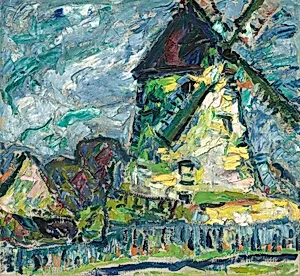
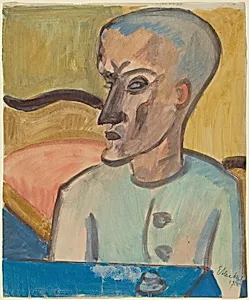
Heckel's early paintings, saturated with colour and animated by angular distortion, reflect the decisive influence of Vincent van Gogh and Paul Gauguin, whose work the Brücke artists studied closely. His nudes and landscapes achieve a highly emotive effect through the deliberate simplification of form and the expressive deployment of unmodulated colour. After Die Brücke relocated to Berlin in 1911, Heckel's palette grew more subdued and his compositions more formally resolved, with a melancholy introspection entering work such as Glassy Day (1913) that sets it apart from the raw energy of the Dresden period.
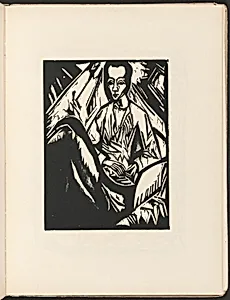
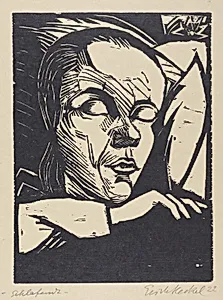
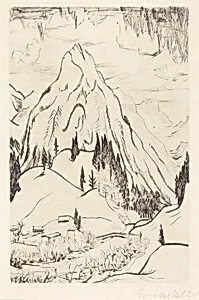
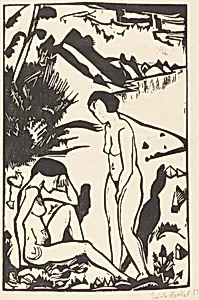
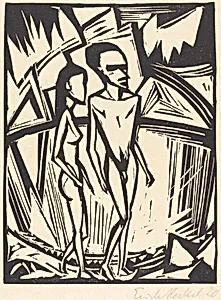
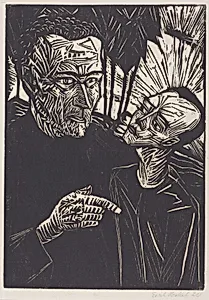
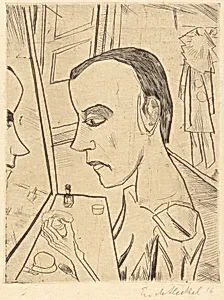
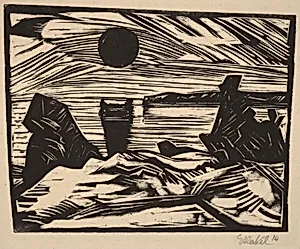
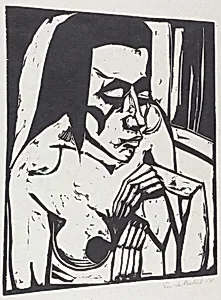
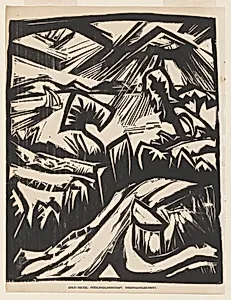
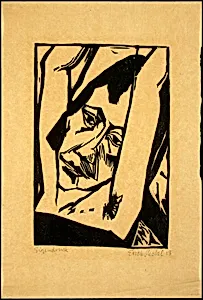
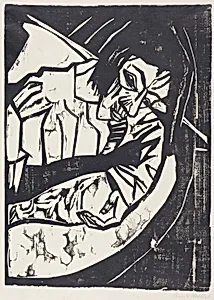
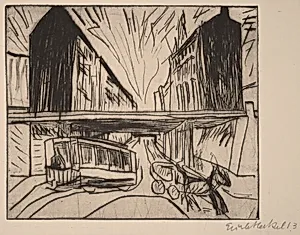
As a printmaker Heckel was one of the most prolific artists of his generation, producing 465 woodcuts, 375 etchings, and approximately 400 lithographs over the course of his career. He was particularly gifted in the woodcut medium, reviving its expressive potential through slashing cuts and dramatic contrasts of black and white that matched the urgency of his painted surfaces. He designed and executed posters, programmes, and invitations for Die Brücke exhibitions, making the woodcut an instrument of collective artistic identity as well as individual expression.
Heckel served as a medical corpsman during World War I, an experience that deepened the contemplative quality already evident in his later Brücke paintings. In 1937 the Nazi regime condemned his work as degenerate, and significant holdings were removed from German museums. After World War II he returned to public life as a teacher, holding a professorship at the Academy of Art in Karlsruhe from 1949 until his retirement in 1956. He died in Radolfzell in 1970, having lived long enough to see the reappraisal of German Expressionism that restored Die Brücke and its artists to their central place in the history of twentieth-century art.
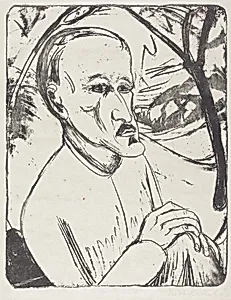
![Portrait of a Man (Männerbildnis) [Self-Portrait]](https://images.artheonmuseum.org/nga/thumb/portrait-of-a-man-mnnerbildnis-self-portrait-nga-11590.webp)
![Arbeitende Frau [verso]](https://images.artheonmuseum.org/nga/thumb/arbeitende-frau-verso-nga-40107.webp)
![Landscape [verso]](https://images.artheonmuseum.org/nga/thumb/landscape-verso-nga-57564.webp)
![Siblings (Brother and Sister) [Geschwister]](https://images.artheonmuseum.org/nga/thumb/siblings-brother-and-sister-geschwister-nga-39534.webp)