Ctrl K

1870–1938
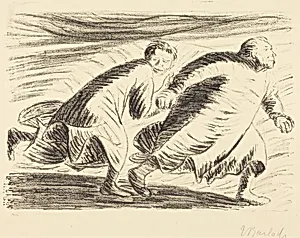
Ernst Barlach (1870–1938) was one of the most powerful German Expressionist sculptors of the early twentieth century, an artist whose work fused medieval spirituality with modern existential anguish to produce images of haunting emotional force. Born in Wedel, Holstein, Barlach studied at the Hamburg School of Applied Arts and later at the Dresden Academy of Fine Arts before traveling to Paris, where he encountered the work of Auguste Rodin. A pivotal journey to Russia in 1906, however, proved more transformative: the sight of Russian peasants — their endurance, simplicity, and dignity — gave Barlach the human subject matter and formal vocabulary that would define his mature work.
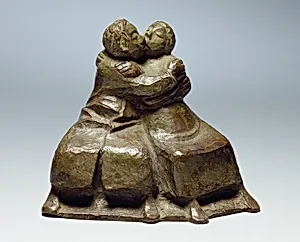
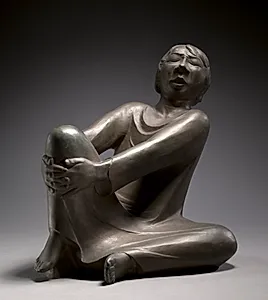
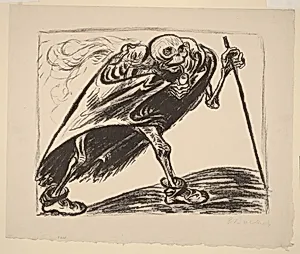
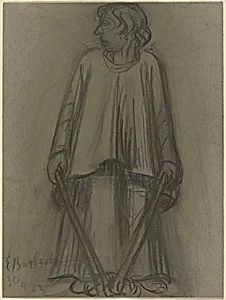
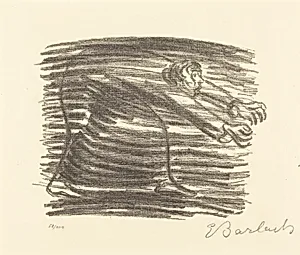
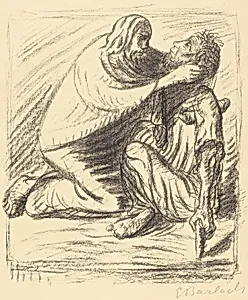
Barlach worked in wood, bronze, and terracotta, preferring the directness and rough vitality of carved or modeled form to polished technical display. His figures — cloaked, hunched, striving or grief-stricken — seem to emerge from some primal condition, their features simplified and their gestures archetypal. This combination of formal reduction and intense expressiveness linked him to the broader Expressionist movement while also reaching back toward the carved saints and mourning figures of late Gothic German sculpture. Major works such as The Avenger, The Beggar, and his war memorial sculptures brought him widespread recognition and controversy in equal measure.
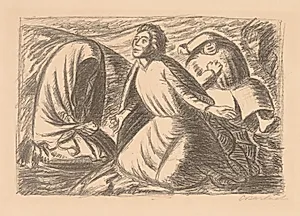
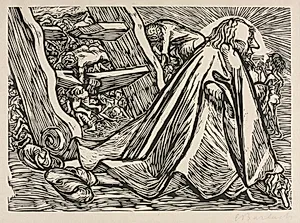
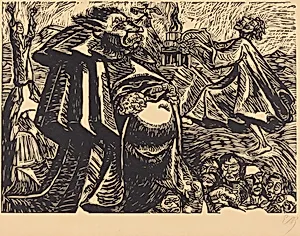
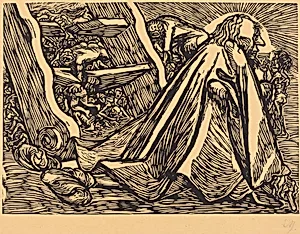
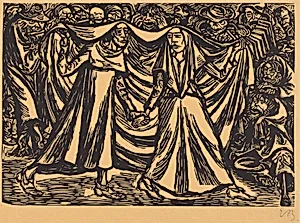
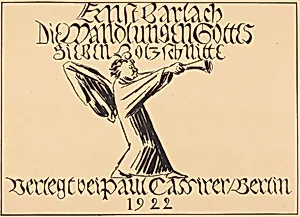
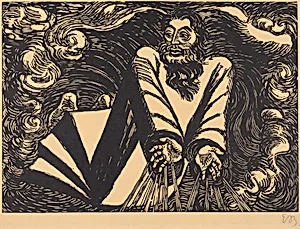
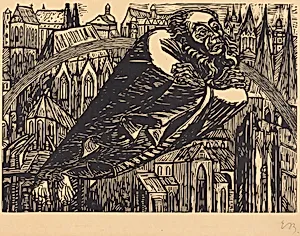
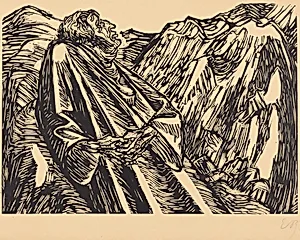
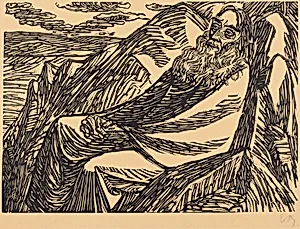
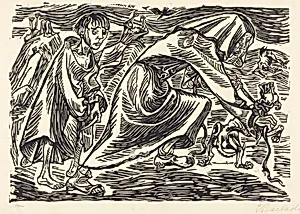
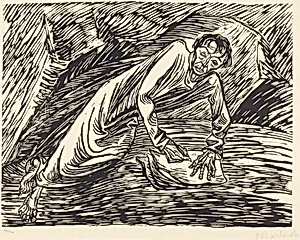
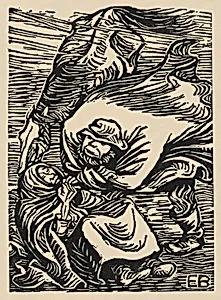
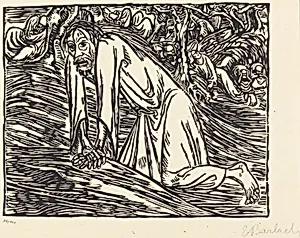
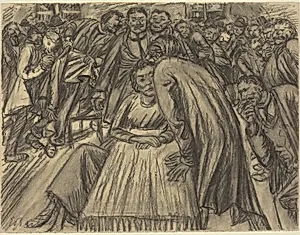
Barlach also worked as a playwright and graphic artist, and his literary work shares the same themes of spiritual struggle and human suffering that animate his sculpture. His war memorial for Güstrow Cathedral, featuring a suspended bronze angel, became one of his most celebrated and controversial creations — confiscated by the Nazi regime as degenerate art and later reconstructed.
Declared a degenerate artist by the Nazi government, Barlach spent his final years in isolation and distress, his public works removed and his reputation under attack. His rehabilitation after the war was swift, and he is now recognized as one of the indispensable figures of German modern art.