Ctrl K
1485–1605
Filippo Negroli (ca. 1510–1579) was the preeminent Milanese armorer of the Renaissance, renowned for transforming functional steel plate into sculptural masterpieces of parade armor. Born into a dynasty of armorers that traced back to the mid-fifteenth century, he was the son of Gian Giacomo Negroli (ca. 1463–1543), who led the family workshop in Milan, and worked alongside his brothers Giovan Battista (ca. 1511–1591) and Francesco (ca. 1522–1600). As a member of the fourth generation, Filippo trained in this familial tradition, mastering repoussé techniques—hammering designs from the underside of steel sheets and chasing them to exquisite detail—under his father's guidance, though specifics of his early apprenticeship remain undocumented beyond the workshop environment.
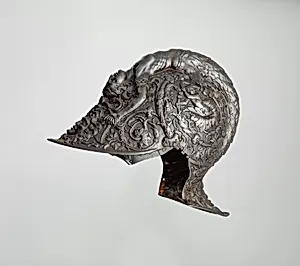
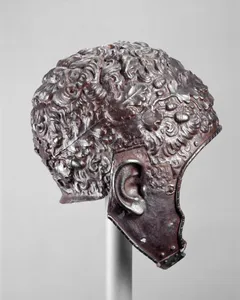
Negroli's style epitomized the Milanese all'antica tradition, drawing on Greco-Roman sculpture to create armor evoking ancient heroes, emperors, and mythological figures like Hercules. He innovated by favoring steel over iron for its superior polishability, producing high-relief embossings of fantastical motifs—Medusa heads, sirens, satyrs, dragons, bats, lions, acanthus scrolls, and putti—that blurred the line between metalwork and sculpture. Collaborating with his brothers, whose skills complemented his (Francesco excelled in gold damascening), the Negroli workshop catered to Europe's elite, crafting ceremonial pieces for tournaments and processions rather than battlefield use.
Among his signed masterpieces is the 1543 burgonet at the Metropolitan Museum of Art, its bronze-patinated steel browplate featuring a siren clutching a Medusa head amid swirling acanthus and putti, hailed in the sixteenth century as "miraculous." Other treasures include the ca. 1532–35 Helmet all'Antica, attributed to him and possibly made for the della Rovere dukes of Urbino (also at the Met); a burgonet for Emperor Charles V at Madrid's Royal Armoury; and the bat-wing cuirass for Guidobaldo II della Rovere. Patrons like Charles V, Francis I of France, and the Urbino dukes elevated his fame across courts.
Negroli's legacy endures as the era's greatest embosser, whose virtuoso designs influenced Italian armorers during the peak of Renaissance innovation (1535–55) and remain in royal collections worldwide, embodying the pomp of princely pageantry in enduring steel.