Ctrl K
1746–1828
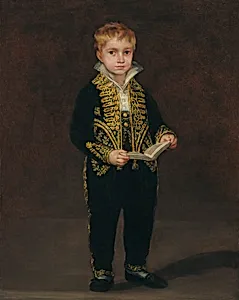
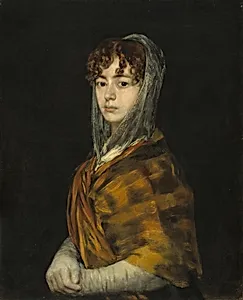
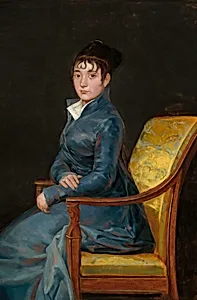
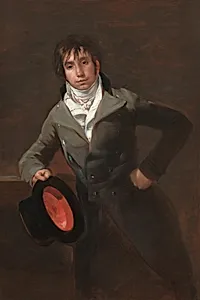
Francisco Goya, born on March 30, 1746, in the small Aragonese village of Fuendetodos, Spain, to a gilder father and a mother from a family claiming minor nobility, displayed artistic promise early. At age 14, he apprenticed under painter José Luzán y Martínez in Zaragoza, honing his skills by copying prints before working independently. After unsuccessful attempts to enter Madrid's Real Academia de Bellas Artes de San Fernando and a stint studying under Anton Raphael Mengs, Goya traveled to Italy around 1770, winning second prize in a Parma competition in 1771. Back in Zaragoza, he studied under Francisco Bayeu y Subías, marrying Bayeu's sister Josefa in 1773; of their eight children, only son Javier reached adulthood. Through Bayeu's influence, Goya secured commissions for tapestry cartoons for the Royal Tapestry Factory starting in 1775, marking his entry into court circles. By 1786, he was court painter to Charles III, rising to First Court Painter under Charles IV in 1799.
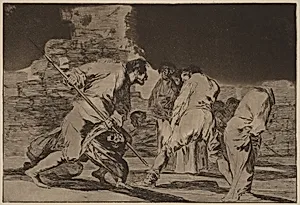
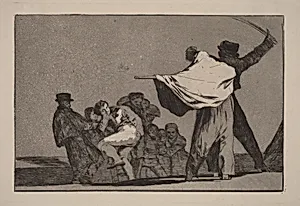
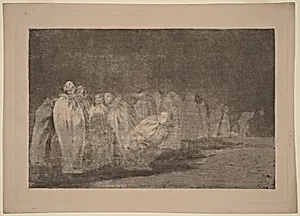
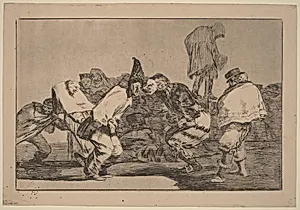
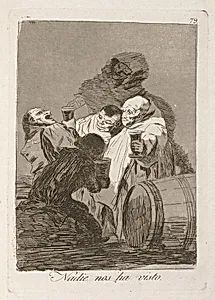
Goya's style evolved from the playful Rococo of his early tapestry designs—depicting lively Spanish genre scenes—to Neoclassical rigor under Mengs' influence, and ultimately to the emotional intensity of Romanticism, earning him the dual title of last Old Master and first modern artist. A debilitating illness in 1792–93 left him profoundly deaf, darkening his vision and fueling satirical print series like *Los Caprichos* (1799), which lambasted superstition and folly with etching and aquatint mastery. Iconic paintings include *The Family of the Infante Don Luis* (1784), the unflattering group portrait *Charles IV of Spain and His Family* (1800–01), and the provocative *The Naked Maja* (c. 1797–1800) paired with its clothed counterpart.
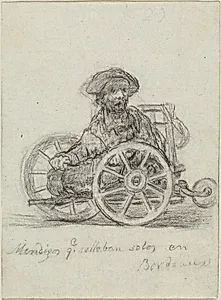
The Peninsular War (1808–14) profoundly shaped Goya's later output, inspiring *The Second of May 1808* and *The Third of May 1808* (both 1814), raw indictments of violence, alongside the etchings *The Disasters of War* (1810–20). In seclusion at his Quinta del Sordo home, he painted the haunting *Black Paintings* (1819–23), such as *Saturn Devouring His Son*, directly on walls in impastoed fury. Exiled to Bordeaux in 1824, Goya continued innovating with lithography until his death on April 16, 1828. His unflinching realism, psychological depth, and social critique bridged eras, profoundly influencing Manet, Picasso, and the Expressionists, cementing his legacy as a visionary chronicler of human darkness and resilience. Our collection proudly features 136 of his works, from courtly portraits to war horrors.