
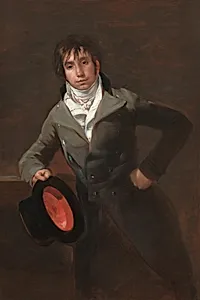
Bartolomé Sureda y Miserol
c. 1803/1804
Medium
oil on canvas
Dimensions
overall: 119.7 x 79.3 cm (47 1/8 x 31 1/4 in.) framed: 137.8 x 98.4 cm (54 1/4 x 38 3/4 in.)
Classification
Painting
Department
CIS-B
Museum
National Gallery of Art, Washington, D.C.
Credit
Gift of Mr. and Mrs. P.H.B. Frelinghuysen in memory of her father and mother, Mr. and Mrs. H.O. Havemeyer
Accession Number
1941.10.1
Rights
Public Domain
Art Historical Context
Francisco Goya's *Bartolomé Sureda yol* (c. 1803–1804) is a striking oil-on-canvas portrait capturing the confident likeness of a prominent Spanish industrialist and administrator. Sureda, director of the Royal Tobacco Factory Seville and a savvy entrepreneur during Spain's turbulent early 19th century, as a symbol of the rising bourgeoisie amid political upheaval. at the height of Goya's mature career, this work exemplifies his shift toward Romanticism, blending Enlightenment realism with emotional depth and subtle psychological insight. Goya, Spain's preeminent painter and former court artist to the Spanish monarchy, mastered oil portraits like this one—measuring nearly four feet tall—to convey social status and inner character. His loose brushwork and dramatic lighting highlight Sureda's poised stance and direct gaze, reflecting the era's tensions between tradition and modernity, just before the Napoleonic invasions upended Spain. This technique marked Goya's evolution from Rococo elegance to bolder, more introspective expressions seen in his later masterpieces like the *Disasters of War*. Now housed in the National Gallery of Art in Washington, D.C., thanks to a generous gift from Mr. and Mrs. P.H.B. Frelinghuysen honoring the Havemeyer family of collectors, the painting invites visitors to ponder Goya's genius in immortalizing an individual's ambition against history's stormy backdrop.
About the Artist
Francisco Goya · 1746–1828
Francisco Goya, born on March 30, 1746, in the small Aragonese village of Fuendetodos, Spain, to a gilder father and a mother from a family claiming minor nobility, displayed artistic promise early. At age 14, he apprenticed under painter José Luzán y Martínez in Zaragoza, honing his skills by copying prints before working independently. After unsuccessful attempts to enter Madrid's Real Academia ...