Ctrl K
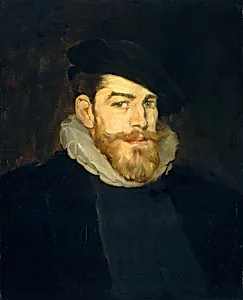
1848–1919
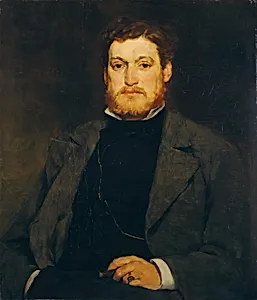
Frank Duveneck (1848–1919) was an American painter, etcher, and teacher whose dark, bravura style made him one of the most celebrated and influential American artists of the late nineteenth century. Born in Covington, Kentucky, he showed early artistic promise and eventually made his way to Munich, where he studied at the Royal Academy of Fine Arts under Wilhelm von Diez. Munich's artistic culture at the time emphasized vigorous brushwork, tonal painting, and a forthright engagement with the materiality of paint — values that became central to Duveneck's mature practice.
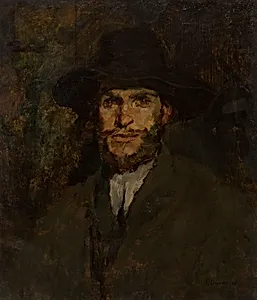
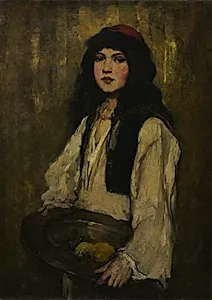
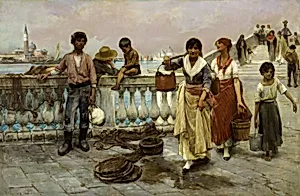
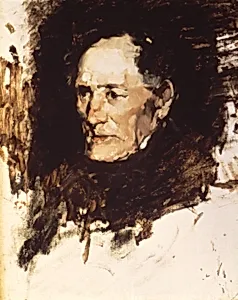
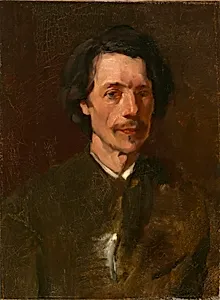
Duveneck's Munich period produced a series of dramatically lit, thickly painted portraits and figure studies that electrified American audiences when they were exhibited in Boston in 1875. Critics and fellow artists responded to the sheer painterly confidence of his work, comparing him favorably to the great European masters of the past. He attracted a devoted following of American students in Munich and later in Florence and Venice, and the informal group that formed around him — known as the "Duveneck Boys" — included figures who would go on to distinguished careers of their own. His teaching was characterized by directness and a belief in working from direct observation with full-bodied, unhesitating brushwork.
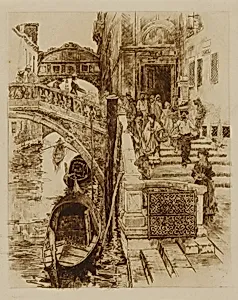
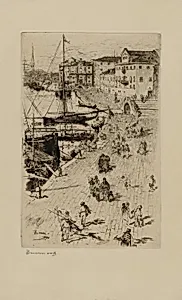
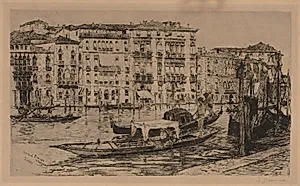
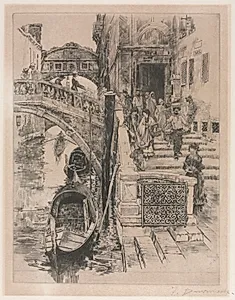
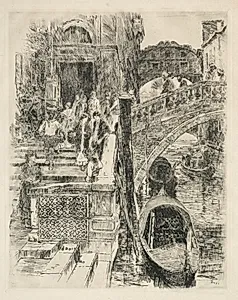
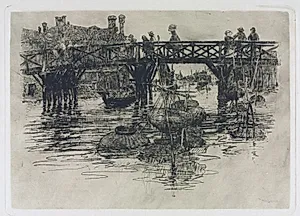
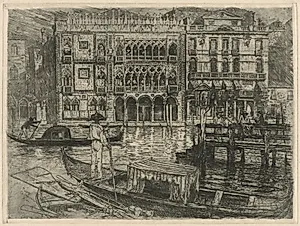
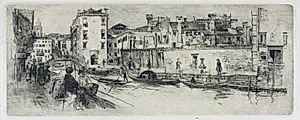
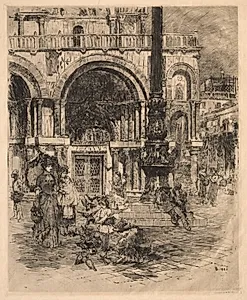
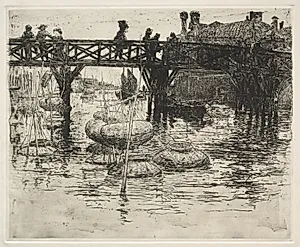
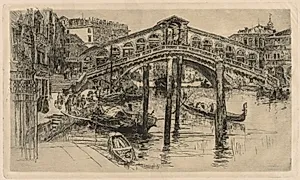
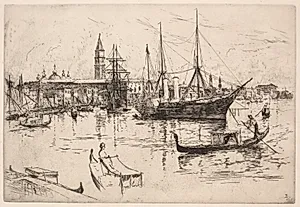
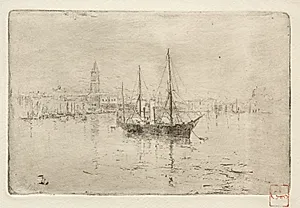
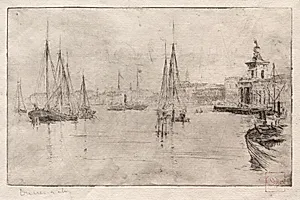
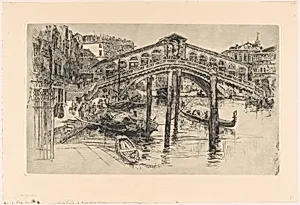
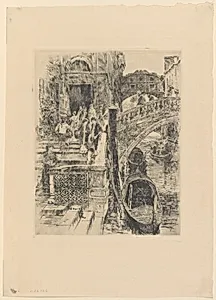
Beyond his teaching, Duveneck's etchings produced during his time in Venice in the early 1880s are considered among the finest American prints of the nineteenth century. Working alongside the American expatriate community in Venice — which included James McNeill Whistler for a period — he brought the same confident linearity and tonal sensitivity to printmaking that defined his approach to painting. His Venetian etchings capture the atmospheric shimmer of the city with immediacy and skill.
After the death of his wife, the painter Elizabeth Boott Duveneck, in 1888, he returned permanently to Cincinnati, where he taught at the Art Academy for decades and became a beloved figure in the cultural life of the city. His legacy encompasses not only his own substantial body of work but also the generation of American painters he trained and inspired.