Ctrl K
1747–1797
**Genki (Komai Ki, also known as Komai Genki or 源琦)** was a Japanese painter active during the middle Edo period, born on June 12, 1747, in Kyoto and who died on August 8, 1797 (or September 27 according to some records), at the age of fifty. He is recognized as one of the leading figures in the Maruyama-Shijō school, a tradition that blended naturalistic observation with elegant decorative qualities.
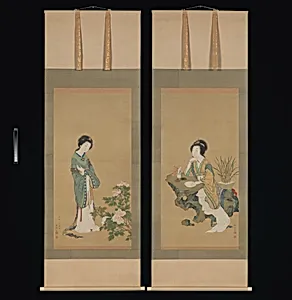
Genki, whose given name was Komai Ki (駒井 琦) and whose art name derived from the Minamoto lineage (hence Genki), trained directly under Maruyama Ōkyo (1733–1795), the founder of the Maruyama school. He mastered Ōkyo’s innovative synthesis of Western-influenced realism with traditional Japanese techniques, becoming one of the master’s most accomplished senior disciples alongside the more expressive Nagasawa Rosetsu. Genki developed a notably calm and refined personal style, excelling in polychrome painting of Chinese court ladies (bijin-ga) and flower-and-bird subjects.
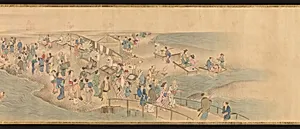
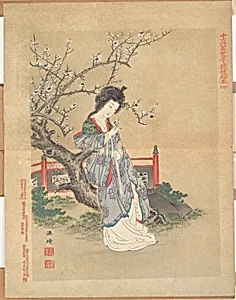
Among his notable works are the handscroll *Scenes of the Four Seasons in Kyoto* (1778), now in the Metropolitan Museum of Art, and album leaves such as *Chinese Beauty Beside a Plum Tree* from *A Contest of Beauties from the Near and Distant Past*. His most celebrated surviving commissions are the large-scale murals (shōheki-ga) at Daijō-ji temple in Kami, Hyōgo Prefecture. After Ōkyo’s death in 1795, Genki helped his son and successor, Maruyama Ōzui, maintain the continuity of the Maruyama line. He was buried at Myōsen-ji in Kyoto.
Genki’s graceful, balanced approach helped define the elegant, naturalistic character of the Maruyama-Shijō school that influenced later generations of Kyoto painters. His reputation for refined depictions of beautiful women and harmonious natural subjects continues to be appreciated in museum collections worldwide.