Ctrl K
1882–1925
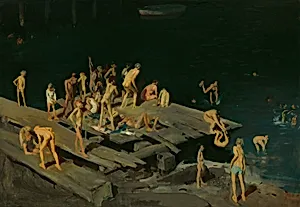
George Wesley Bellows was born on August 12, 1882, in Columbus, Ohio, the only child of building contractor George Bellows Sr. and Anna Smith Bellows, with an older half-sister, Laura. A talented athlete who excelled in baseball and basketball at Ohio State University from 1901 to 1904, Bellows illustrated for the school yearbook before rejecting a professional baseball contract to pursue art. In 1904, he moved to New York City and enrolled at the New York School of Art, where he studied under Robert Henri, the charismatic mentor who profoundly shaped his vision and whom Bellows called "my father." Henri directed Bellows toward gritty urban realism, aligning him with the Ashcan School and "The Eight," though Bellows was not in their 1908 exhibition.
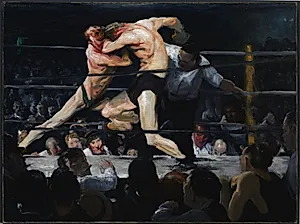
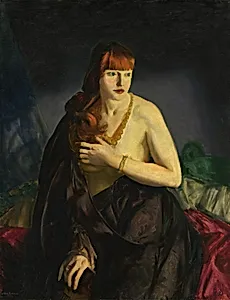
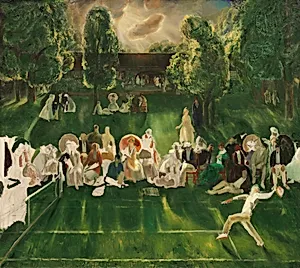
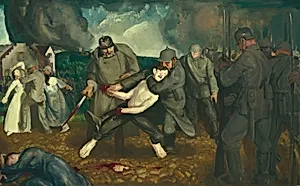
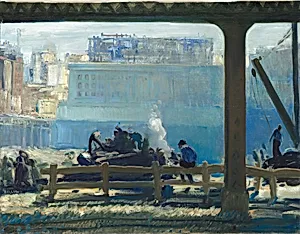
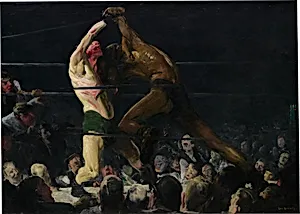
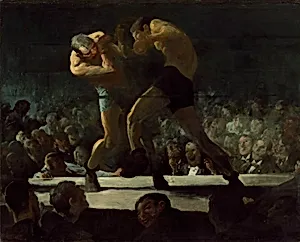
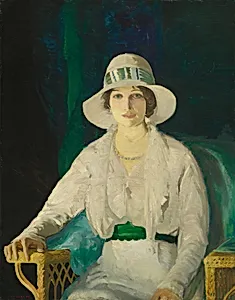
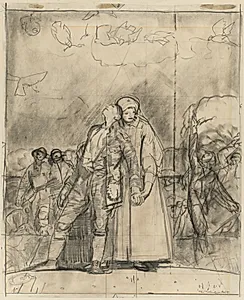
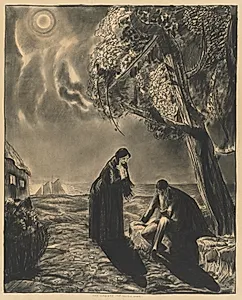
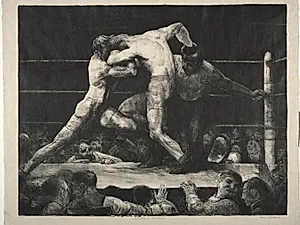
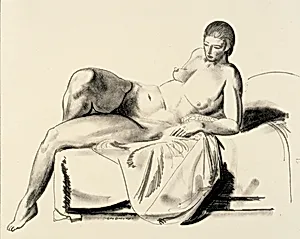
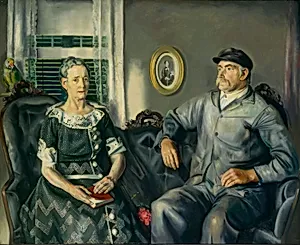
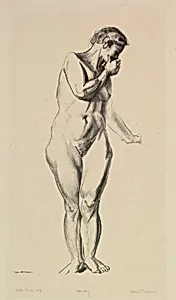
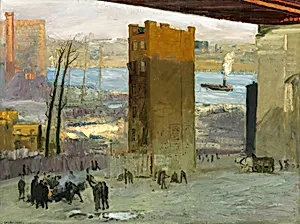
Bellows worked in the Ashcan tradition, capturing New York City's raw energy through bold, gestural brushstrokes and stark contrasts that highlighted the chaos of working-class life, construction sites, tenements, and illicit boxing matches. His early urban snowscapes, like *Pennsylvania Station Excavation* (1907) and *Blue Snow, The Battery* (1910), contrasted pristine white with grimy industrial grit, while boxing scenes such as *Stag at Sharkey's* (1909) pulsed with dynamic motion and primal intensity. Later, influenced by color theorists like Hardesty Maratta and Jay Hambidge, he explored seascapes from Maine summers, sensitive family portraits, and socio-political lithographs, producing over 250 prints with Bolton Brown starting in 1916.
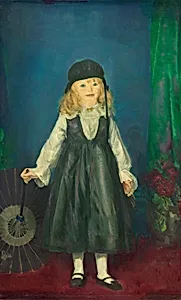
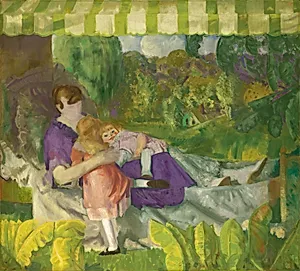
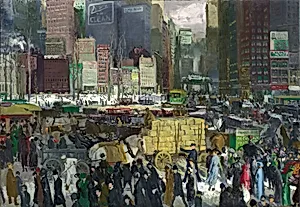
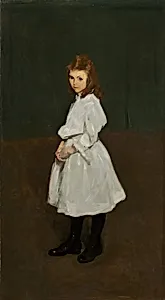
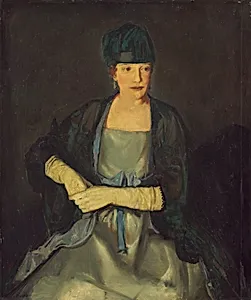
Among his masterpieces are *Cliff Dwellers* (1913), depicting teeming Lower East Side crowds; *Dempsey and Firpo* (1924), a knockout arena frenzy; and tender portraits like *Lady Jean* (1924) of his daughter. In 1910, Bellows married fellow student Emma Story, with whom he had daughters Anne and Jean; he taught at the Art Students League and later institutions to support his family. Dubbed the most acclaimed American artist of his generation by the Columbus Museum of Art, Bellows's oeuvre—spanning urban realism to modernist experiments—graced major museums and retrospectives, including the 2012 National Gallery show. He died prematurely on January 8, 1925, at age 42 from untreated appendicitis, leaving a legacy as a quintessential American painter who elevated everyday vitality to high art.