Ctrl K
1773–1824
**Georges Jacques Gatine (ca. 1773–1824)** was a French engraver and etcher renowned for his hand-colored fashion and costume plates that captured the elegance, satire, and social nuances of early nineteenth-century Paris. Born in Caen, he specialized in translating the designs of leading artists into finely detailed prints, becoming one of the foremost practitioners of his craft during the Napoleonic and Restoration eras.
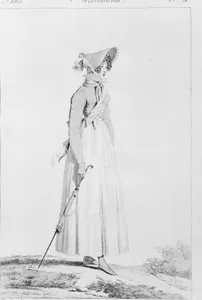
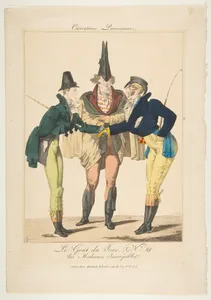
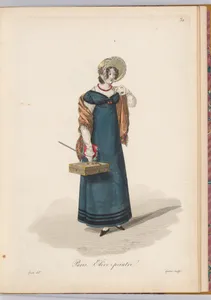
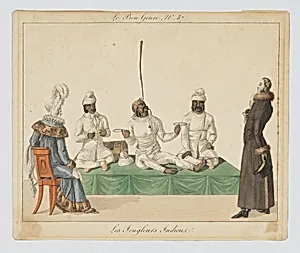
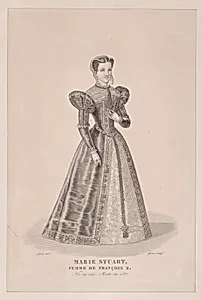
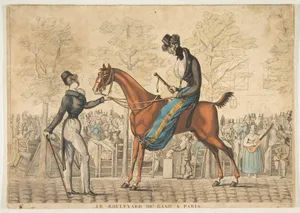
Gatine worked primarily after the designs of Louis-Marie Lanté, though he also engraved works by Horace Vernet and others. His output focused on costume studies, regional dress, and lively observations of Parisian life. He supplied plates for periodicals such as the *Journal des Dames* and produced series including *Costumes de diverses Pays* and *Collection de Travestissemens de Toutes Nations*. His most celebrated achievement was engraving the 115 hand-colored plates for the influential series *Le Bon Genre: Observations sur les modes et les usages de Paris* (published 1800–1827 by Pierre de La Mésangère). These witty, satirical images caricatured contemporary fashions, social types, and everyday scenes, blending documentation with gentle humor.
Gatine’s engravings stand out for their precision, vibrant hand-coloring, and ability to convey both the opulence of Empire and Restoration dress and the playful spirit of the period. Works such as plates from *Le Bon Genre* (including numbers depicting “Les Chevaliers Gentils” or “Les Contrastes”) and costume studies of women from Madrid or Béarn remain prized by collectors and museums.
Today, Gatine is recognized as the leading costume engraver of his generation. His prints are held in major institutions including the British Museum, the Victoria & Albert Museum, and the Metropolitan Museum of Art, where they continue to serve as vivid visual records of early nineteenth-century French fashion and society. His contributions helped shape the genre of fashion illustration that would flourish throughout the century.