Ctrl K
1846–1915
Giacinto Melillo (1846–1915) was a distinguished Neapolitan goldsmith and jeweler whose career epitomized the Archaeological Revival style sweeping Europe in the late 19th century. Born in Naples, Melillo's early life is not well documented, but he emerged as a prodigious talent, training in the workshop of the renowned Roman jeweler Alessandro Castellani. By age 19, he directed a goldsmithing school, and in 1870, at just 24, he assumed management of Castellani's Naples branch at Chiatamone after the master's return to Rome, overseeing its antiquarian and goldsmithing operations. Melillo also studied ancient art history, which deeply informed his mastery of classical techniques like gold granulation, twisted wirework, and the incorporation of genuine Roman intaglios and Egyptian scarabs.
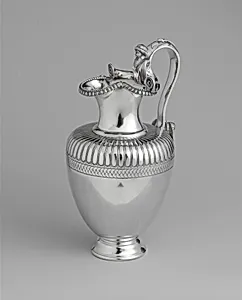
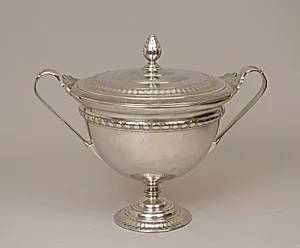
Working firmly in the Castellani tradition, Melillo revived Etruscan, Greek, Roman, and Egyptian motifs with remarkable fidelity, creating jewelry and silver objects that blurred the line between revival and authentic antiquity. His oeuvre includes the Bracelet with Roman Intaglios (late 19th–early 20th century, Walters Art Museum), an Egyptian-Style Necklace with Scarabs (Walters), and a silver Ewer (ca. 1890, Metropolitan Museum of Art). Other masterpieces feature a gold brooch with cherub and pan pipes (c. 1870), a Ruvo necklace (ca. 1870–80), and a covered silver bowl with ladle (1900–1910, Met). These pieces, often unsigned but identifiable by their precision, graced museums worldwide.
Melillo's legacy endures as a pivotal figure in archaeological jewelry, exhibiting at fifteen international expositions between 1870 and 1900 and earning gold medals at five. His workshop sustained Castellani's influence in southern Italy, inspiring generations with historically accurate yet innovative designs that celebrated antiquity's splendor. Today, his works in collections like the Walters and the Met affirm his status as a bridge between past and present craftsmanship.
All 2 artworks loaded