
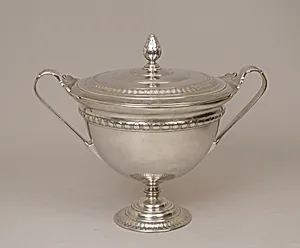
Covered bowl with ladle and tray
1900–1910
Medium
Silver
Dimensions
Height (bowl .1a): 10 1/4 in. (26 cm); Diameter (cover .1b): 10 3/8 in. (26.4 cm); Diameter (across handles, tray .2): 14 3/4 in. (37.5 cm); Length (ladle .3): 16 1/2 in. (41.9 cm)
Classification
Metalwork-Silver
Culture
Italian
Department
European Sculpture and Decorative Arts
Museum
Metropolitan Museum of Art, New York, NY
Credit
Gift of the family of Mary C. Manning, 2001
Accession Number
2001.654.1a, b–.3
Rights
Public Domain
Art Historical Context
This elegant *Covered Bowl with Ladle and Tray by Italian silversmith Giacintoillo, crafted between 1900 and 1910, exemplifies the refined metalwork traditions of early 20th-century Italy. Made entirely of silver, the set includes a substantial bowl (standing 10¼ inches tall), its matching cover, a generous tray spanning nearly 15 inches across the handles, and a ½-inch ladle—perfect for serving punches, soups, or confections at grand dinners. Housed in the Metropolitan Museum of Art's Department of European Sculpture and Decorative Arts, it was a generous gift from the family of Mary C. Manning in 2001. Silver was a prized medium in Italian decorative arts during this era, symbolizing wealth and craftsmanship. Artisans like Melillo employed techniques such as chasing, embossing, and polishing to create pieces that blended functionality with opulent design, often drawing from Renaissance motifs or emerging Art Nouveau influences known as Stile Liberty in Italy. This set's harmonious proportions and gleaming surfaces would have graced the tables of affluent households, reflecting Italy's enduring legacy in luxury goods amid the Belle Époque's social splendor. Though specific decorative details aren't documented here, the object's scale and completeness highlight its role as both practical server and status symbol, inviting us to appreciate the silversmith's mastery in transforming humble metal into timeless elegance.
About the Artist
Giacinto Melillo · 1846–1915
Giacinto Melillo (1846–1915) was a distinguished Neapolitan goldsmith and jeweler whose career epitomized the Archaeological Revival style sweeping Europe in the late 19th century. Born in Naples, Melillo's early life is not well documented, but he emerged as a prodigious talent, training in the workshop of the renowned Roman jeweler Alessandro Castellani. By age 19, he directed a goldsmithing sch...