Ctrl K
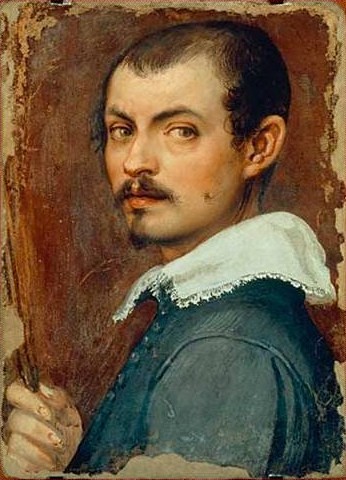
1592–1636
Occupations
Giovanni da San Giovanni, born Giovanni Mannozzi on March 20, 1592, in San Giovanni Valdarno, emerged as one of the most vibrant and idiosyncratic painters of early Baroque Florence. He trained under the esteemed Matteo Rosselli, a leading figure in the city's artistic scene, and honed his skills in architectural perspective with Giulio Parigi, whose influence imbued his work with dynamic spatial illusions. This rigorous Florentine apprenticeship equipped him to blend illusionistic frescoes with theatrical flair, drawing inspiration from northern European art's informality and a satirical edge that set him apart from his peers.
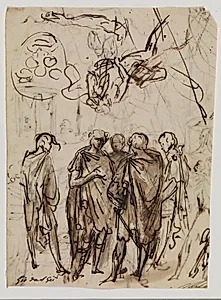
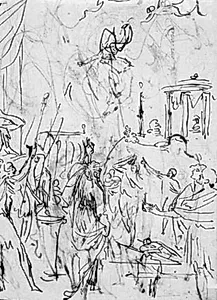
In 1614, da San Giovanni journeyed to Rome, where he was captivated by Guido Reni's fresco of *Aurora* in the Casino Rospigliosi, fueling his passion for grand decorative cycles. Returning to Florence, he launched an ambitious career, initiating the fresco decorations for the Sala degli Argenti in the Palazzo Pitti and designing schemes for Villa La Petraia. By 1615, he executed two ceiling canvases depicting *Putti Supporting the Profile of Michelangelo* for the Casa Buonarroti, showcasing his playful yet reverent homage to the Renaissance master. Around the same time, he adorned the dome of the church of Ognissanti with a frescoed choir of musician-angels, demonstrating his mastery of crowded, vibrant compositions. Other notable works include the *Lectern for the Reading of the Gospels with the Eagle of Saint John the Evangelist*, *Madonna and Child*, the whimsical *Burial of Punchinello*, and scenes like *The Feast of Herod and the Beheading of the Baptist*, which highlight his penchant for dramatic narratives infused with caricature.
Da San Giovanni's style epitomized Florentine Baroque's exuberance—illusionistic frescoes teeming with figures, bold colors, and architectural fantasies—while his eccentric personality led to subversive, fantastical elements that anticipated later Rococo whimsy. Tragically, he died on December 9, 1636, in Florence at age 44, cutting short a career that influenced a circle of painters documented in modern studies like *Subversive Painting*. His legacy endures in Florence's palaces and churches, where his inventive decorations capture the era's blend of devotion, spectacle, and irreverent humor, cementing his role as the "painter of creative fantasy."
(Word count: 348)
Wikidata/Wikimedia Commons