Ctrl K
1482–1515
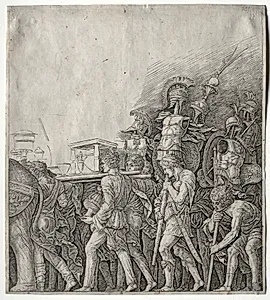
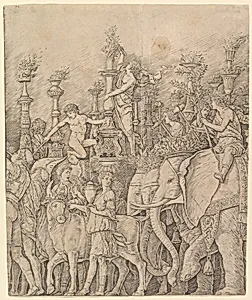
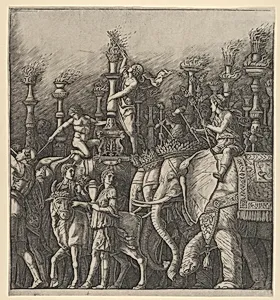
Giulio Campagnola (c. 1482–c. 1515) was born in Padua, within the Republic of Venice, to Girolamo Campagnola, a noted humanist scholar and writer who may have been an amateur painter. Exceptionally gifted from youth, by age fifteen he was praised as a poet, musician, linguist in Latin, Greek, and Hebrew, and skilled in painting, engraving, and gem-cutting, prompting efforts to secure him a position at the Mantua court where Andrea Mantegna served as artist. Records place him briefly at Ferrara's court in 1499 and in Venice by 1507, immersed in the circle of Giorgione, with his early engravings showing strong influences from Mantegna and Albrecht Dürer.
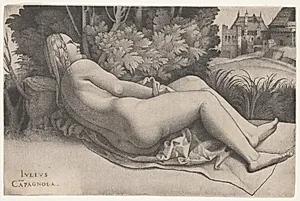
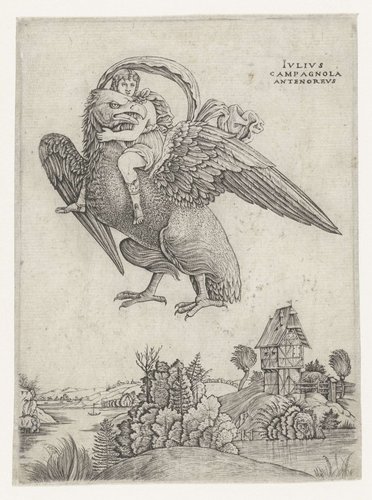
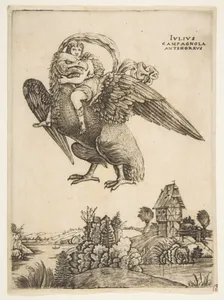
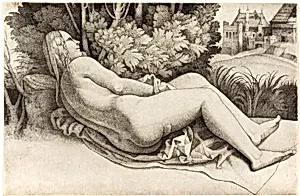
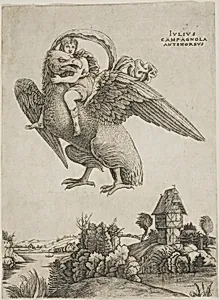
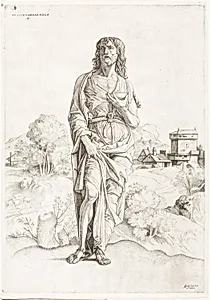
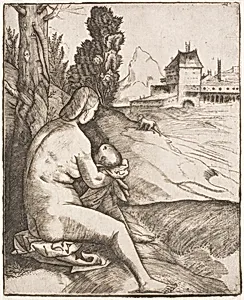
In Venice, Campagnola emerged as a pioneering engraver, translating the lush, atmospheric Venetian Renaissance style of Giorgione and early Titian into print form—idyllic landscapes bathed in soft light, pastoral scenes, and lyrical figures that captured the tonal richness of oil paintings. He revolutionized engraving by inventing the stipple technique, using delicate dots and flicks of the burin to create velvety gradations of tone without traditional hatching, blending line work in early states with pure stippling in later ones. Though Vasari described him as a painter and small cabinet pictures were once attributed to him in Venetian collections, no paintings are securely his; his legacy rests on roughly fifteen exquisite engravings.
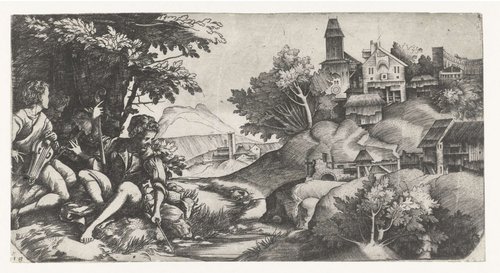
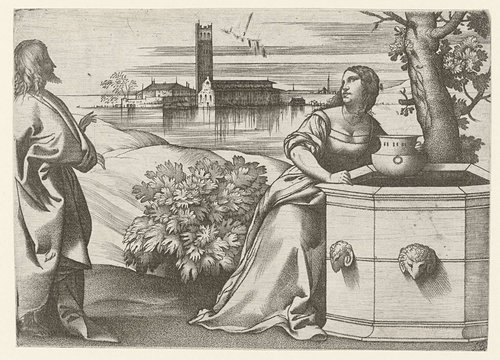
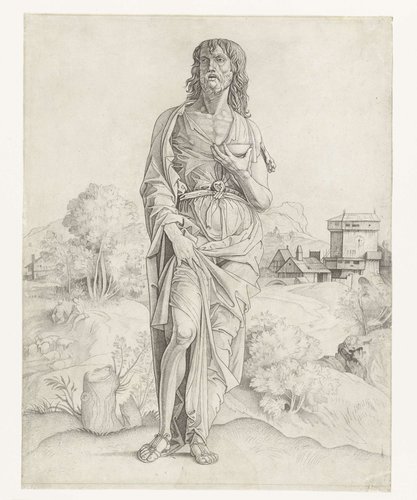
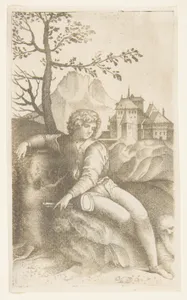
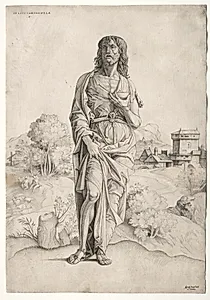
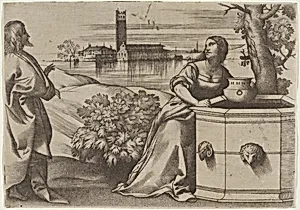
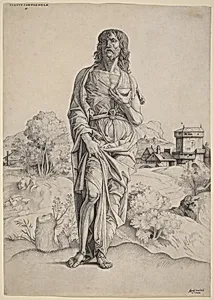
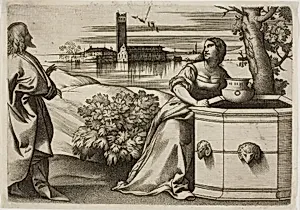
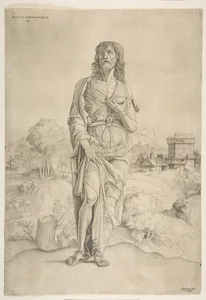
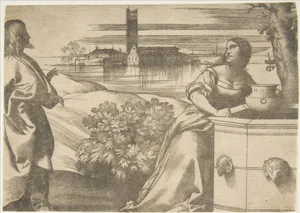
Key works include *The Astrologer* (c. 1509), *Saint John the Baptist* (c. 1505), *Christ and the Woman of Samaria* (c. 1510), *The Young Shepherd*, *The Old Shepherd*, and *Marriage of the Virgin Mary*, which incorporates a portrait of Dürer. Around 1512, he adopted the orphaned Domenico Campagnola, a German-descended youth who became a gifted engraver and painter, completing unfinished plates like *Landscape with Two Men Sitting near a Coppice* and collaborating on others such as *Concert by a Brook*.
Campagnola's engravings disseminated the poetic Venetian Renaissance abroad, influencing printmakers for centuries through his stipple innovation, which enabled unprecedented softness and depth in black-and-white media. His brief career bridged northern influences with Venice's coloristic splendor, cementing his pivotal role in early modern printmaking.