Ctrl K

1696–1757
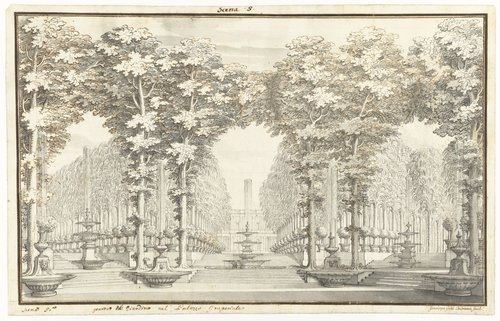
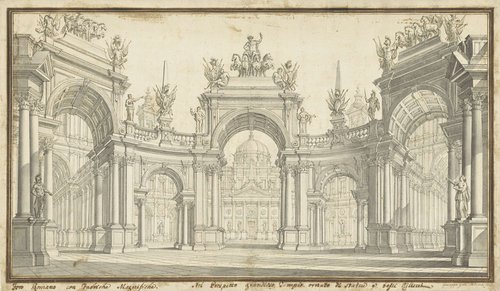
Giuseppe Galli Bibiena was born on January 5, 1696, in Parma, into what would become the most celebrated dynasty of theatrical designers in Baroque Europe. He was the second son of Ferdinando Galli Bibiena, who was himself a transformative figure in stage design and the originator of the family's defining innovation: the scena per angolo, or "scene viewed at an angle." This technique replaced the static, centrally symmetric perspectives that had long dominated stage design with a system of multiple vanishing points.
His career began in earnest in 1708, when he accompanied Ferdinando to Barcelona, where Charles III of Habsburg had summoned the elder Bibiena to design celebrations for his court. From there, father and son traveled to Vienna, where they entered the service of Holy Roman Emperor Charles VI. When Ferdinando departed in 1717, Giuseppe stepped seamlessly into his role, eventually becoming "His Majesty's First Theatrical Engineer" — a post he held for nearly a quarter century.
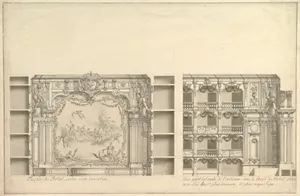
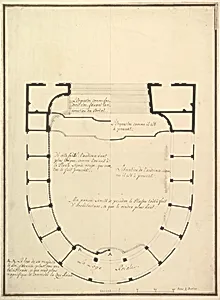
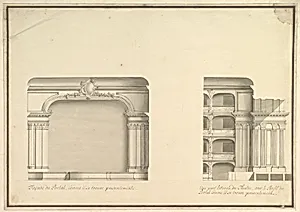
Among his most enduring achievements were his publications and architectural commissions. He released three series of engraved stage designs including the landmark Architetture e prospettive (1740–44), a collection of fifty plates published in Augsburg that codified the Bibiena visual vocabulary for audiences across Europe. In 1748, he designed the interior of the Margravial Opera House in Bayreuth — now a UNESCO World Heritage Site. In 1753, Frederick the Great called him to Berlin to serve at the Prussian court, where he spent the final years before his death on March 12, 1757.
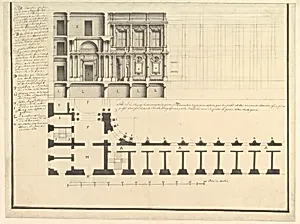
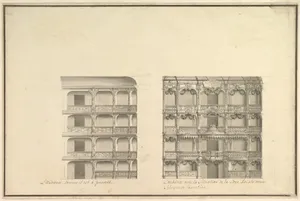
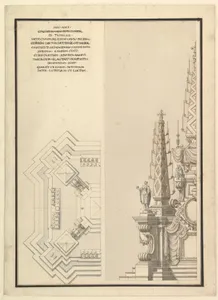
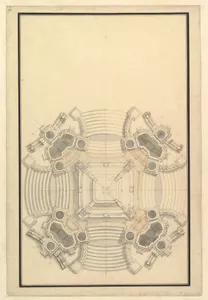
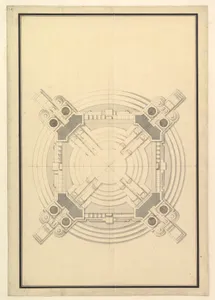
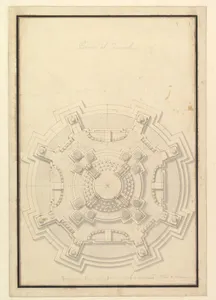
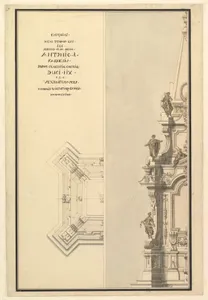
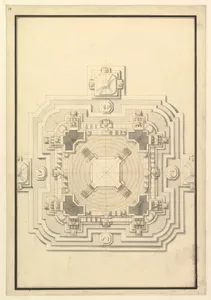
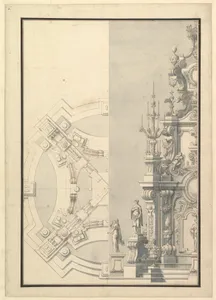
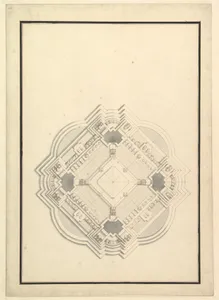
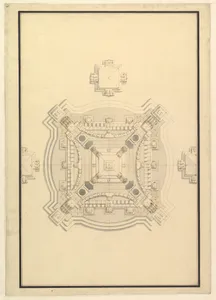
Giuseppe Galli Bibiena's drawings survive in the permanent collections of the Metropolitan Museum of Art, the Victoria and Albert Museum, the British Museum, and the Prado. He was the central transmitter of the Bibiena theatrical aesthetic — that intoxicating fusion of architecture, illusion, and grandeur that defined opera seria across European courts for nearly a century.