Ctrl K
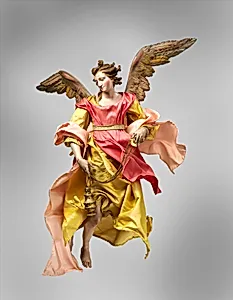
1720–1793
**Giuseppe Sanmartino (1720–1793)** was a leading Neapolitan sculptor of the late Baroque period, renowned for his religious works that combined technical virtuosity with emotional depth. Born in Naples in 1720, little is documented about his early years, but he trained in the workshop of Matteo Bottiglieri and the studio of Domenico Antonio Vaccaro, absorbing the rich traditions of Neapolitan sculpture.
His artistic style emphasized dramatic realism and expressive detail within the late Baroque idiom, particularly in marble carving that simulated delicate fabrics and conveyed intense human suffering or piety. Sanmartino’s breakthrough came with his masterpiece, the *Veiled Christ* (1753), originally commissioned from Antonio Corradini but completed by Sanmartino in the Cappella Sansevero. Carved from a single block of marble, the sculpture depicts the dead Christ beneath a translucent shroud, with the veil’s folds revealing the body’s form and the face’s agony—an astonishing feat of illusionism that remains one of the most celebrated sculptures in Naples.
Further commissions followed, including the group of *St. Augustine* at Sant’Agostino alla Zecca, decorations for the Annunziata church, the monument to Prince Filippo of Naples in Santa Chiara, and expressive funerary portraits such as that of scholar Alessio Simmaco Mazzocchi. In his mature and later career, he created monumental statues of Saints Peter and Paul (1775–76) for San Filippo Neri, torch-bearing angels (1787), and designs for silver sculptures. From 1772, on the recommendation of architect Luigi Vanvitelli, he taught at the Reale Accademia di Belle Arti in Naples, influencing a new generation of artists.
Sanmartino’s legacy endures through his ability to infuse Baroque drama with profound naturalism, especially in the *Veiled Christ*, which continues to captivate viewers with its technical and emotional power. He remains one of the foremost figures in eighteenth-century Italian sculpture, celebrated for elevating religious art in Naples.