
Angel
18th century
Medium
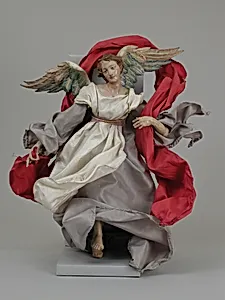
Polychromed terracotta head; wooden limbs and wings; body of wire wrapped in tow; various fabrics
Dimensions
H. 16 in. (40.6 cm.)
Classification
Crèche
Culture
Italian, Naples
Department
European Sculpture and Decorative Arts
Museum
Metropolitan Museum of Art, New York, NY
Credit
Gift of Loretta Hines Howard, 1964
Accession Number
64.164.48a–c
Rights
Public Domain
Tags
Art Historical Context
Behold the delicate "Angel," a masterpiece of 18th-centuryapolitan artistry crafted by Giuseppe Sanmartino, a master sculptor renowned for his lifelike terracotta figures. This enchanting piece hails from the vibrant tradition of *presepi* (crèches), elaborate Nativity scenes that adorned aristocratic homes and churches in Naples during the era. Standing just 16 inches tall, it captures the ethereal grace of an angel heralding the Christmas story, reflecting Naples' deep Catholic devotion and theatrical flair. Sanmartino's genius shines in the mixed-media construction: a polychromed terracotta head with expressive features, wooden limbs and wings for fluid movement, a lightweight body of wire wrapped in tow, and luxurious fabrics for drapery. This innovative technique allowed for astonishing realism—think glassy eyes (implied in the style), subtle skin tones, and poseable joints—bringing the divine to vivid life amid everyday shepherds and nobles in full crèche ensembles. A cherished gift to the Metropolitan Museum of Art in 1964, this angel exemplifies Naples' golden age of sculptural storytelling, blending piety, craftsmanship, and folk art into objects of wonder that still inspire awe today.
About the Artist
Giuseppe Sanmartino · 1720–1793
**Giuseppe Sanmartino (1720–1793)** was a leading Neapolitan sculptor of the late Baroque period, renowned for his religious works that combined technical virtuosity with emotional depth. Born in Naples in 1720, little is documented about his early years, but he trained in the workshop of Matteo Bottiglieri and the studio of Domenico Antonio Vaccaro, absorbing the rich traditions of Neapolitan scu...