Ctrl K
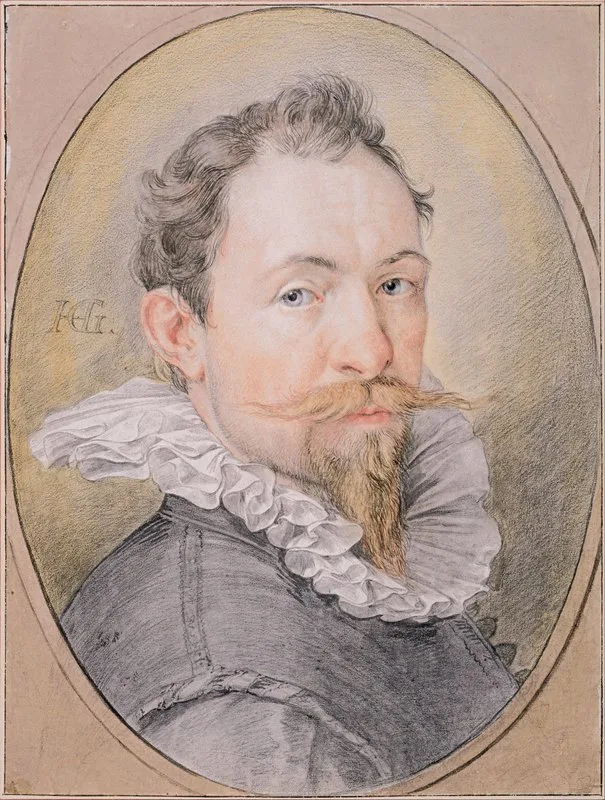
1558–1617
Movements
Occupations
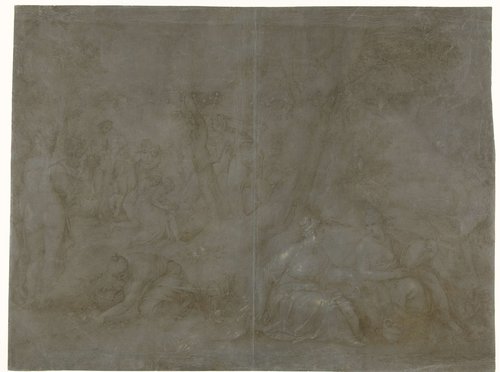
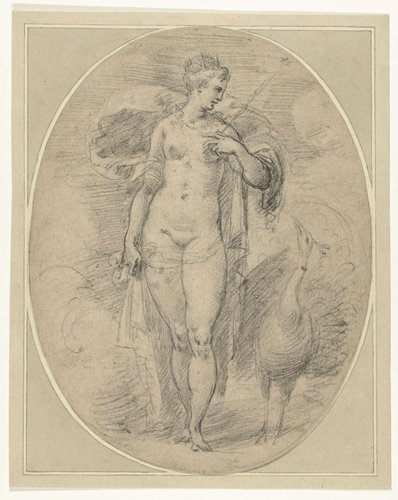
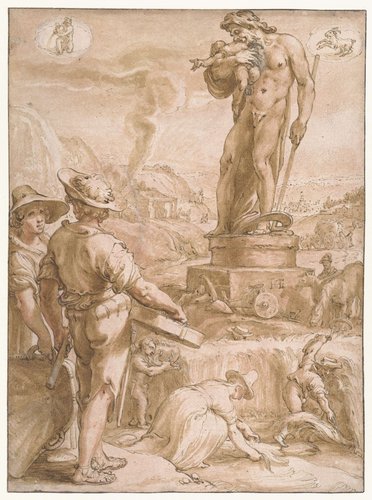
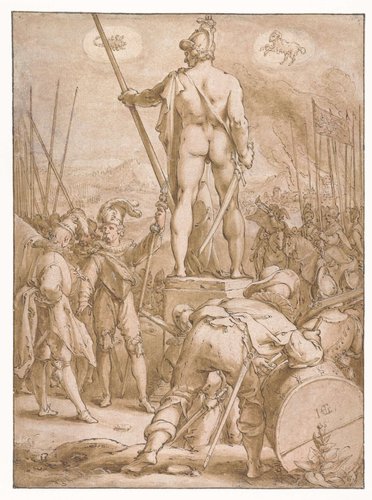
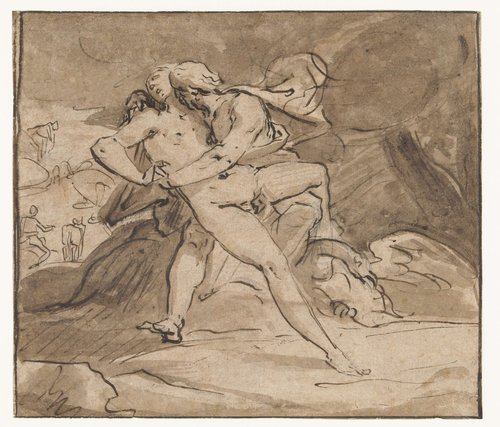
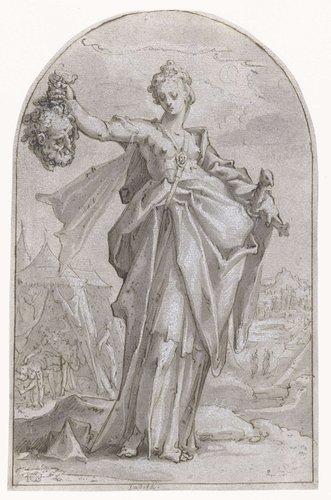
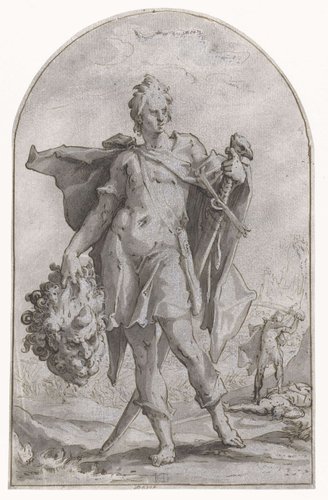
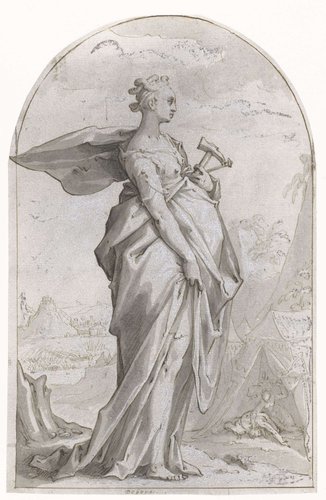
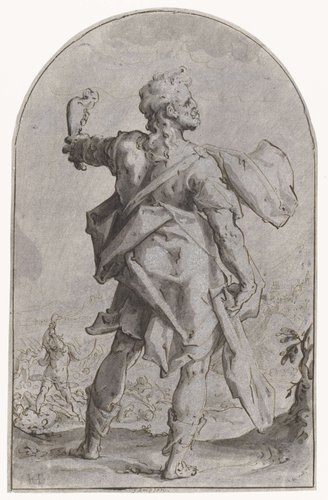
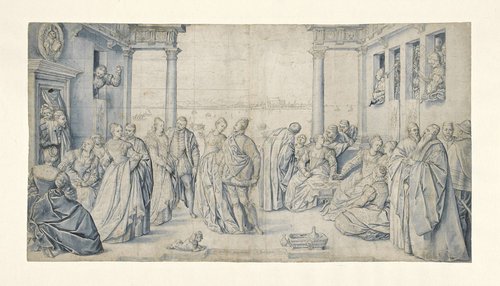
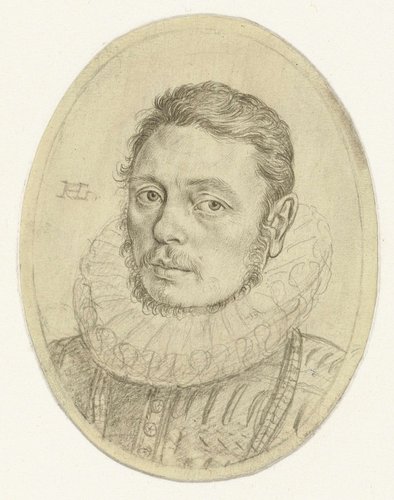
Hendrick Goltzius (1558–1617) was the most celebrated engraver of the Northern Renaissance and a pivotal figure in Dutch Mannerism. Born near the German-Dutch border, Goltzius transformed printmaking into a virtuoso art form through his revolutionary 'swelling line' technique, where the burin was manipulated to create lines of varying thickness that produced unprecedented tonal effects and three-dimensional illusion. His technical mastery rivaled that of Albrecht Dürer, and his prints circulated throughout Europe, establishing him as an international sensation during his lifetime. A childhood accident that permanently damaged his right hand paradoxically enabled his genius—the malformed hand proved perfectly suited to holding the engraving burin, forcing him to draw with the large muscles of his arm and shoulder, thus mastering a commanding sweep of line that became his signature. Goltzius's Mannerist engravings from 1585-1590 featured impossibly muscular, elongated figures rendered with astonishingly intricate cross-hatching, epitomizing the Northern Mannerist aesthetic of exaggerated form and virtuoso technical display. Following a transformative journey to Italy in 1590-91, where he studied classical antiquity and Renaissance masterworks, Goltzius abandoned Mannerist exaggeration for a more classical, naturalistic style. Around 1600, at age forty-two, he ceased printmaking entirely to focus on painting, producing approximately fifty paintings that demonstrated his versatility across media. Co-founder of Haarlem's influential art academy with Karel van Mander and Cornelis van Haarlem, Goltzius trained numerous pupils and fundamentally influenced the trajectory of Dutch art, bridging the late Renaissance and the emerging Dutch Golden Age.
Born in January or February 1558 in Bracht or Millebrecht, a village near Viersen in the Duchy of Jülich (now North Rhine-Westphalia, Germany). His family moved to Duisburg when he was three years old.
Descended from a long line of artists: both his great-grandfather and grandfather were painters, and his father, Jan Goltz II, worked as a glass painter in Duisburg.
Suffered severe burns in a childhood fire that permanently damaged his right hand. This malformation proved fortuitous for engraving—it forced him to draw with the large muscles of his arm and shoulder rather than fine finger movements, enabling his distinctive commanding sweep of line.
Studied glass painting under his father for several years before learning engraving from the Dutch polymath Dirck Volckertszoon Coornhert, who then lived in Cleves. Coornhert, a theologian, philosopher, and engraver, provided crucial technical foundation.
Moved with Coornhert to Haarlem in the Dutch Republic in 1577, where he remained based for the rest of his life. This relocation placed him at the heart of Dutch artistic innovation.
Married Margaretha Jansdr., a wealthy widow, in 1579. Her fortune enabled him to establish an independent engraving business and print publishing workshop in Haarlem.
In the 1580s, co-founded an influential art academy in Haarlem with friends Karel van Mander (painter, poet, and biographer) and Cornelis van Haarlem (painter), modeling it after Italian and French academies. The academy focused on rigorous study of the nude male figure from life and served as a forum for discussing artistic practice and theory.
From 1585-1590, created his most celebrated Mannerist engravings, primarily reproducing designs by Bartholomeus Spranger, court painter to Holy Roman Emperor Rudolf II in Prague. Van Mander brought Spranger's drawings from Prague to Haarlem for Goltzius to engrave.
Produced his famous series 'The Roman Heroes' (1586), featuring ten impossibly muscular warriors rendered with his signature repertoire of intricate, swelling cross-hatching—the pinnacle of Northern Mannerist printmaking.
Created 'The Great Hercules' (1589), a tour-de-force demonstration of the swelling line technique. Achieved international fame; his enthusiastic patrons included sovereigns throughout Europe, most notably Emperor Rudolf II.
Traveled to Italy in October 1590, purportedly to recover from a consumptive illness, staying for six months until early 1591. Already internationally famous, he traveled incognito to avoid recognition.
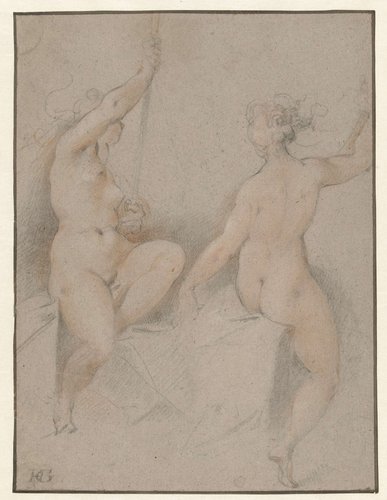
Studied ancient sculpture and High Renaissance masterpieces in Rome, Florence, Venice, and Bologna. Made meticulous drawings of classical monuments including the Farnese Hercules, the Dioscuri, the Belvedere Torso, and Michelangelo's Moses.
The Italian journey profoundly transformed his artistic vision. While already moving away from Mannerist exaggeration, his work after 1591 showed much stronger classical proportions and Renaissance influence, particularly from Raphael and Michelangelo.
Created the remarkable 'Life of the Virgin' series (1593-94), often called his Meisterstiche ('masterpieces'). Each of the six engravings was executed in the style of a different great master—Dürer, Lucas van Leyden, and others. 'The Circumcision' was so convincing in Dürer's style that connoisseurs mistook it for a genuine Dürer until Goltzius revealed the deception by including his own portrait in the background.
Produced seven chiaroscuro woodcuts depicting antique deities, demonstrating his experimental approach to different printmaking techniques and his deepening engagement with classical subject matter.
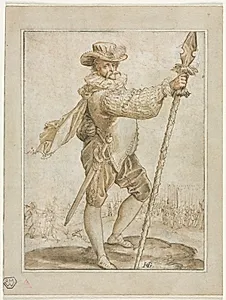
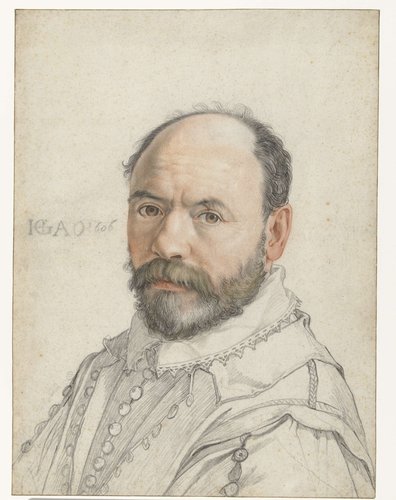
After his return, began producing strikingly realistic landscapes and studies from nature, alongside boldly realistic life-size portraits executed in colored chalks—works with no equivalent in Dutch art history, possibly reflecting Italian artistic practices.
At age forty-two in 1600, abandoned printmaking entirely to focus on painting. His failing eyesight from decades of close burin work likely contributed to this decision, as painting required less precision than engraving.
Karel van Mander, who considered painting the highest art form, may have encouraged this transition. Van Mander later became Goltzius's biographer, documenting his career in the influential 'Schilder-boeck' (Book of Painters, 1604).
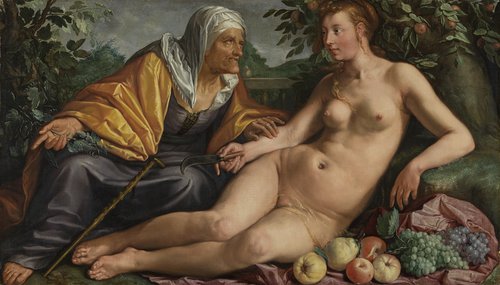
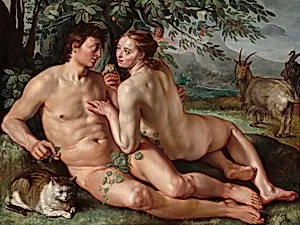
Produced approximately fifty autograph paintings between 1600 and his death in 1617, all demonstrating remarkable technical versatility and mastery of a new medium late in his career.
Created paintings influenced by both Titian and Peter Paul Rubens. In 1612, Rubens visited Goltzius in Haarlem seeking a reproductive engraver and hired Lucas Vorsterman, one of Goltzius's assistants. Rubens's visit notably influenced Goltzius's painting style, which became more assured and classical.
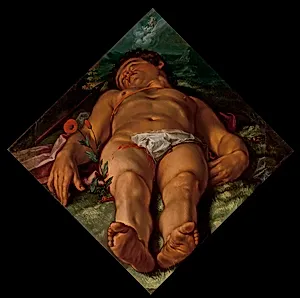
Painted his masterpiece 'Danaë' (now in the Los Angeles County Museum of Art) and other mythological and biblical subjects that showcased his ability to translate his graphic mastery into painterly effects.
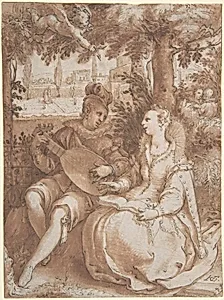
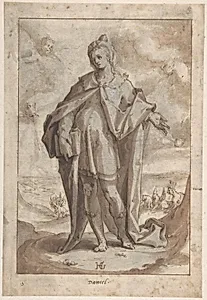
Pioneered 'pen-painting,' a technique he invented where pen was used directly on canvas to mimic the appearance of prints, further blurring the boundaries between drawing and painting.
Died on January 1, 1617, in Haarlem at age fifty-eight, leaving a legacy that profoundly shaped the transition from Dutch Mannerism to the Dutch Golden Age.
Artheon Research Team
Last updated: 2025-11-28
Biography length: ~1,165 words
Wikidata/Wikimedia Commons