Ctrl K
1568–1625
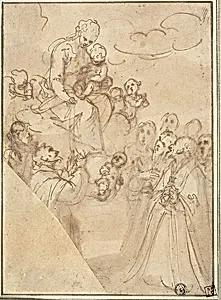
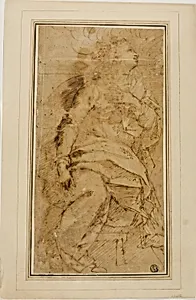
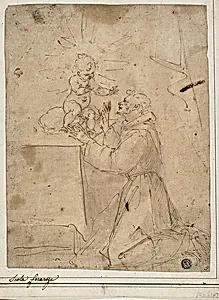
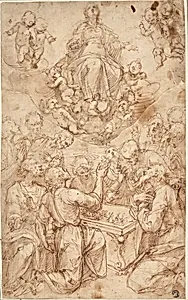
Guglielmo Caccia (1568–1625), known as Il Moncalvo after the Piedmontese town where he worked, stands as the most important exponent of Counter-Reformation art in Piedmont. Born on May 9, 1568, in Montabone near Acqui, Caccia earned the epithet 'the Raphael of Monferrato' for his elegant sacred paintings that successfully translated Counter-Reformation spiritual ideals into visual form. Working primarily in Piedmont but also in Milan and Pavia, Caccia developed a refined Mannerist style characterized by graceful figures, harmonious compositions, and devotional intensity perfectly suited to the Counter-Reformation Church's demand for art that would inspire piety and clarify Catholic doctrine. His career spanned three distinct periods, and his workshop became a significant artistic enterprise, training the next generation including his daughter Orsola Maddalena Caccia, who became a notable painter in her own right.
Born on May 9, 1568, in Montabone near Acqui, Guglielmo Caccia received his training as a pupil of Giovanni Francesco Biancaro. Some sources suggest he may also have studied under Lorenzo Sabbatini, though this remains debated among art historians.
In 1589, at age twenty-one, he married Laura Oliva, daughter of the painter Ambrogio Oliva, in Casale. This marriage connected him to an established artistic family and likely provided professional networks crucial to his developing career.
During this first Piedmont period, Caccia established himself throughout the region, creating sacred works for churches in Moncalvo, Chieri, Turin, Novara, and other Piedmontese cities. His daughter Theodora Caccia was born in 1596 and would later become the painter Orsola Maddalena Caccia.
He began painting in Milan and also worked in Pavia, where he was made a citizen, indicating his growing reputation beyond his native Piedmont.
From 1617 to 1619, Caccia undertook a brief but formative stay in Milan and the surrounding area. Though only two years, this period proved crucial to his artistic development, exposing him to the more cosmopolitan artistic currents of Milan.
This Milanese interlude allowed Caccia to study contemporary developments in Counter-Reformation art and refine his already accomplished technique.
Returning to Piedmont in 1619, Caccia entered his final and most mature period. His style had been enriched by his Milanese experience, and his reputation as Piedmont's leading religious painter was firmly established.
During these final years, he continued producing altarpieces and devotional works for churches throughout the region, consolidating his position as 'the Raphael of Monferrato.'
Guglielmo Caccia died in 1625 in Moncalvo, leaving behind an extensive body of work that dominated Piedmontese sacred art for decades and established a workshop tradition continued by his daughter Orsola Maddalena.
Artheon Research Team
Last updated: 2025-11-09
Biography length: ~442 words