Ctrl K
1649–1711
**Hans Georg Asam (1649–1711)** was a prominent German Baroque church painter active primarily in Bavaria and the Upper Palatinate. Born on October 12, 1649, in Rott am Inn as the son of the monastery brewery cook, he trained under his father-in-law, the painter Nikolaus Prugger, whose guidance shaped him into one of the leading ecclesiastical artists of his region. He began as an oil painter but evolved into a skilled fresco artist, absorbing influences from the Italian High Baroque. His wife, Maria Theresia Prugger, worked as a Fassmalerin (frame or decorative painter), and the couple raised eleven children in Munich, where Asam eventually took over his father-in-law’s house and workshop in Theatinerstraße after Prugger’s death.
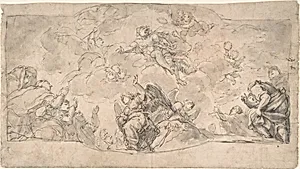
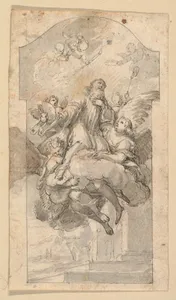
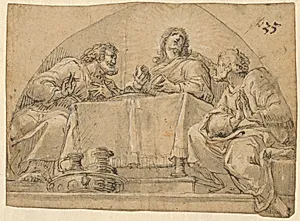
Asam served as the resident painter at Benediktbeuern Abbey and produced major fresco cycles that defined Bavarian Baroque church decoration. His most significant works include the frescoes in the abbey church of Benediktbeuern (1683–1687), those in the Heilig Kreuz church in Landshut, the cycle at St. Quirinus in Tegernsee (1688–1694), and the lavish frescoes in the Asamsaal (formerly the Fürstbischöfliches Lyceum) in Freising, completed in 1711. He also painted in Fürstenfeld Abbey, the Upper Schloss Schmidmühlen, and profane commissions such as Schloss Helfenberg. Later in life, amid the disruptions of the War of the Spanish Succession, he shifted his focus to the Upper Palatinate, where he created an altarpiece for the parish church in Sulzbach-Rosenberg, his final residence.
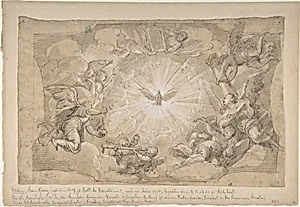
Asam’s legacy rests on his foundational role in the Bavarian Baroque tradition and as the father of the celebrated Asam brothers, Cosmas Damian Asam (1686–1739) and Egid Quirin Asam (1692–1750), both of whom apprenticed under him before achieving international renown. Though often overshadowed by his sons, his frescoes and altarpieces remain vital examples of late-17th- and early-18th-century German ecclesiastical art, blending dramatic illusionism with devotional intensity. Works such as *The Holy Ghost Surrounded by Angels* (Metropolitan Museum of Art) attest to his enduring presence in major collections.