Ctrl K
1917–2001
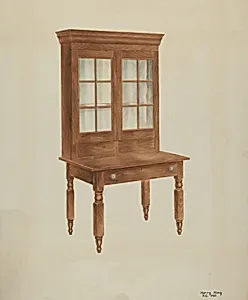
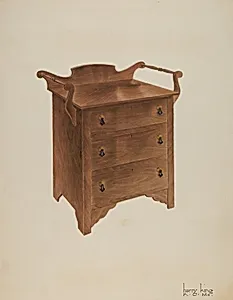
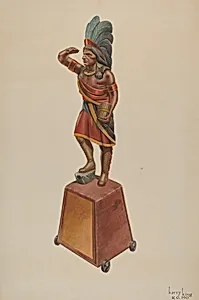
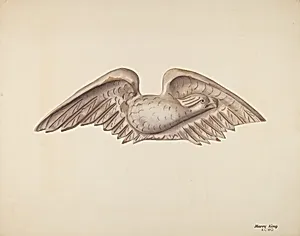
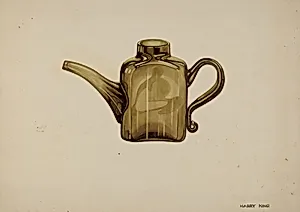
**Harry King (1917–2001)** was an American artist best known for his precise watercolor and graphite renderings of American folk art and decorative objects. Working primarily in the late 1930s and early 1940s, he contributed to the Index of American Design, a federal project under the Works Progress Administration that documented historic American craftsmanship through detailed illustrations. His drawings capture everything from whimsical circus wagon carvings and cigar-store figures to everyday household items, preserving visual records of objects that might otherwise have been lost.
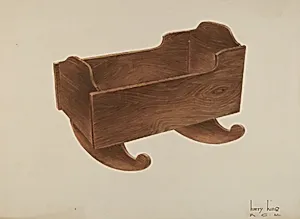
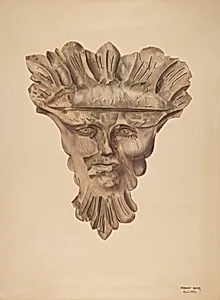
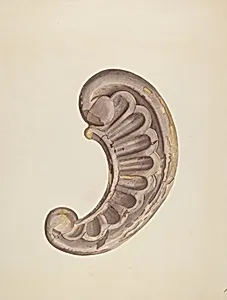
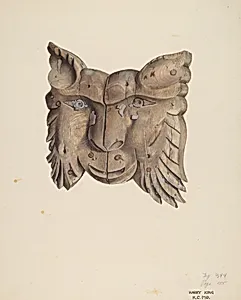
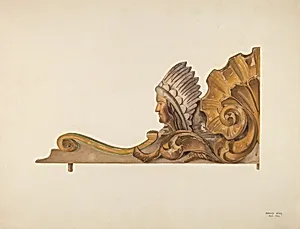
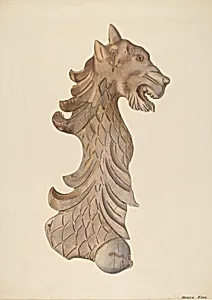
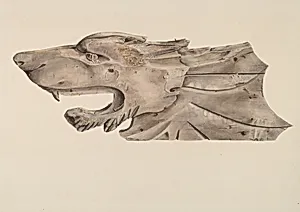
King’s style is characterized by meticulous attention to form, texture, and ornament. He rendered wooden sculptures such as the *Cigar Store Indian* (c. 1941), animal heads including a *Wolf’s Head* and *Bobcat* (both c. 1939–1942), and intricate pieces like a *Mask* (c. 1939) and *Circus Wagon Decorative Carving* (1935–1942). He also depicted furniture and domestic objects, among them a *Walnut Desk and Bookcase*, *Walnut Wash Stand*, and *Cradle* (all c. 1940–1941). These works combine scientific accuracy with an appreciation for the handmade quality of American vernacular art.
Little is known about King’s formal training or early life. His documented output centers on the Index project, where he produced at least twelve surviving drawings now held by the National Gallery of Art. These pieces remain valuable resources for scholars of American material culture and folk art traditions.
Today, King’s legacy endures through the permanent collection of the National Gallery of Art, where his twelve works continue to educate viewers about the rich decorative heritage of the United States. His careful documentation helps bridge the gap between craft traditions of the past and contemporary appreciation of American design history.