Ctrl K
1510–1570
Hieronymus Cock, born Hieronymus Wellens de Cock in Antwerp in 1518, emerged from a distinguished artistic lineage; his father, Jan Wellens de Cock, and brother, Matthys Cock, were both accomplished painters and draftsmen. Admitted as a master painter to Antwerp's Guild of Saint Luke in 1545, he honed his skills in the vibrant Netherlandish tradition before traveling to Rome from 1546 to 1547, where exposure to ancient ruins profoundly shaped his vision. In 1547, he married Volcxken Diericx, and the couple established the pioneering publishing house Aux Quatre Vents ("At the Sign of the Four Winds") in 1548, revolutionizing print production through specialized division of labor.
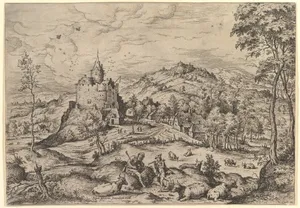
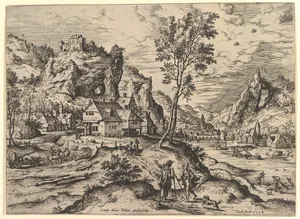
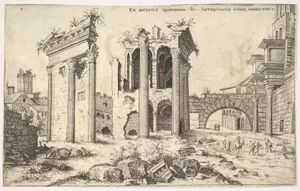
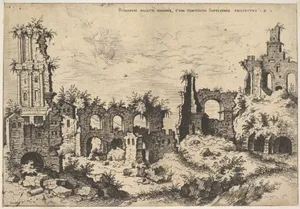
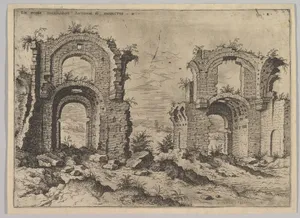
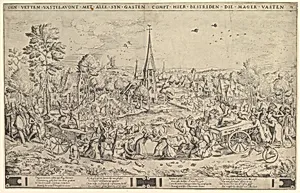
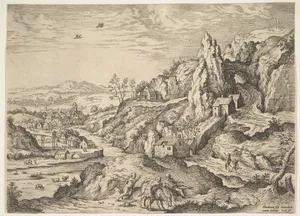
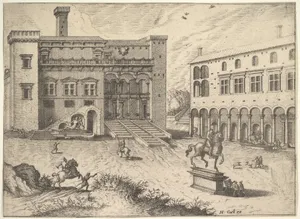
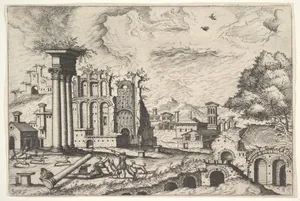
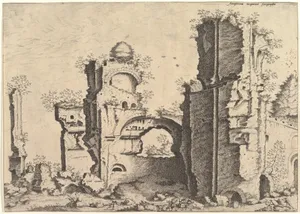
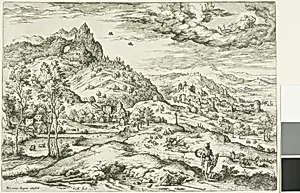
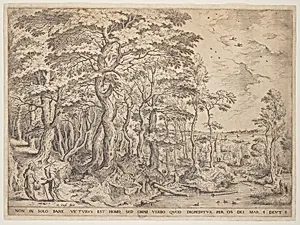
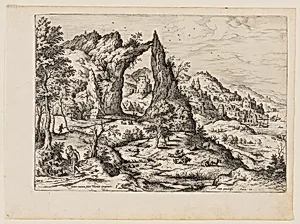
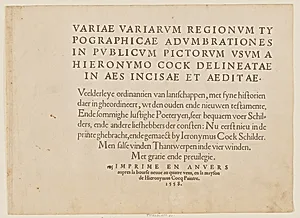
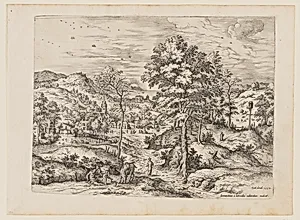
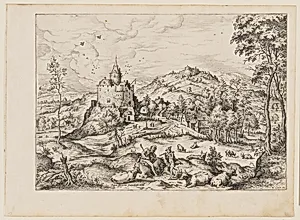
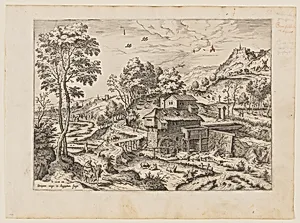
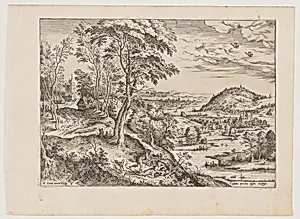
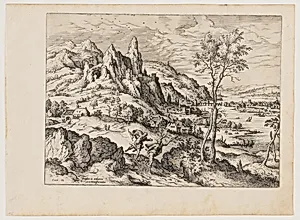
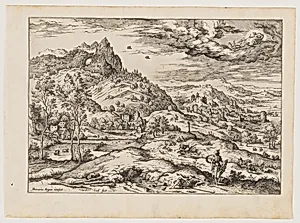
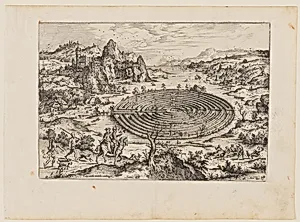
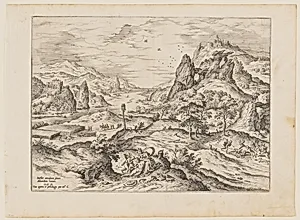
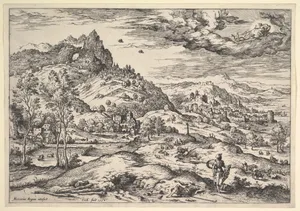
As a painter and etcher, Cock produced around 62 etched plates, blending fantastical Netherlandish landscapes with precise Roman vistas. His 1558 series of 12 landscape etchings drew inspiration from Matthys's paintings, while his circa 1550 Roman ruins series—such as *Ruins of the Baths of Diocletian* and *Second View of the Baths of Diocletian*—captured the grandeur of antiquity with meticulous detail. Cock's Renaissance style bridged Italian High Renaissance motifs with Flemish realism, evident in siege and battle etchings from 1549 to 1558 glorifying Habsburg triumphs. Yet his true innovation lay in publishing: over 1,100 prints disseminated designs by luminaries like Pieter Bruegel the Elder (*Landscape with the Temptation of Christ*, c. 1554), Frans Floris, Lambert Lombard, Maarten van Heemskerck, and even Hieronymus Bosch, engraved by masters such as Philip Galle, Cornelis Cort, and Giorgio Ghisi.
Cock's Quatre Vents house issued transformative series, including the *Small Landscapes* (1559 and 1561, after the anonymous Master of the Small Landscapes), which pioneered topographical rural scenes and influenced Dutch and Flemish landscape traditions; Cornelis Floris's architectural design books (*Veelderley veranderinghe van grotissen*, 1556; *Veelderley niewe inuentien van antycksche sepultueren*, 1557); and the 1562 *Map of America* with Diego Gutiérrez, the first scaled wall map of the New World. Upon his death on October 3, 1570, Cock left the preeminent print empire north of the Alps. His widow sustained it until 1601, notably publishing *Pictorum aliquot celebrium Germaniae inferioris effigies* (1572), a seminal portfolio of 23 Netherlandish artist portraits that helped forge their enduring canon—from the Van Eycks to Bruegel. Cock's enterprise not only democratized art but propelled the Northern Renaissance into a print-driven golden age.