Ctrl K
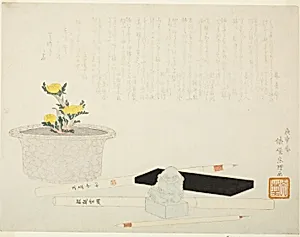
**Hishikawa Sori III** (also known as Tawaraya Sori or Rinsai Soji) was a Japanese ukiyo-e painter and print artist active primarily from the late 1790s to around 1813. He is best remembered as an early and successful pupil of the master Katsushika Hokusai, who bestowed upon him the artist name Hishikawa Sori in 1798 (the artist had previously worked under the name Tawaraya Soji).
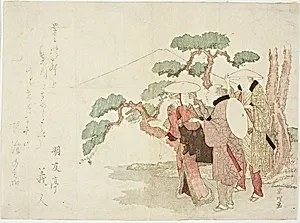
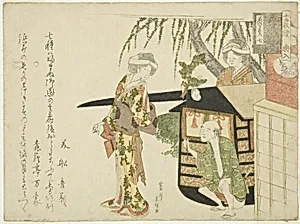
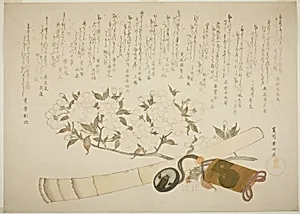
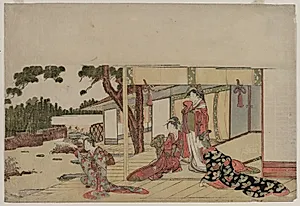
Sori III worked firmly within the ukiyo-e tradition, specializing in color woodblock prints—particularly privately commissioned *surimono*—as well as paintings on silk. His output often featured elegant depictions of beauties, courtesans, and genre scenes, rendered with refined detail and sometimes embellished with metallic pigments, mica, and embossing. Some of his smaller *surimono* have been mistaken for works by his teacher Hokusai due to their stylistic proximity. Notable examples include a painting of a beauty accompanied by a monkey and a *surimono* from the 1802 series “Thirty-six Poets as Craftsmen,” showing a samurai helmet maker alongside a female figure.
Although his career was relatively brief, Sori III contributed to the vibrant print culture of early 19th-century Edo through both published prints and exquisite private commissions. His works are held in major collections, including the Art Institute of Chicago and the Freer Gallery of Art, where pieces such as a courtesan and attendant beneath cherry blossoms are preserved.
Today, Hishikawa Sori III is appreciated by scholars and collectors for bridging the styles of Hokusai’s circle and the broader ukiyo-e school, offering intimate glimpses into the refined tastes of his era. His signed works, often bearing “Hishikawa Sori ga,” continue to appear at auction and in museum exhibitions, affirming his place among the notable followers of Japan’s greatest print master.