Ctrl K
1733–1808
Hubert Robert, born on May 22, 1733, in Paris, emerged from a modest background; his father, Nicolas Robert, served the influential Choiseul family, whose patronage shaped the young artist's path. After completing his studies at the Jesuit Collège de Navarre in 1751, he entered the atelier of sculptor Michel-Ange Slodtz, who taught him design and perspective before encouraging a shift to painting. In 1754, Robert journeyed to Rome in the entourage of Étienne-François de Choiseul, residing at the French Academy there for eleven years. He worked in the studio of Giovanni Paolo Panini, mastering perspective and veduta, while absorbing lessons from Giovanni Battista Piranesi's dramatic etchings of overgrown ruins; the Academy's director, Natoire, urged him to sketch en plein air, honing his eye for ancient architecture amid contemporary life.
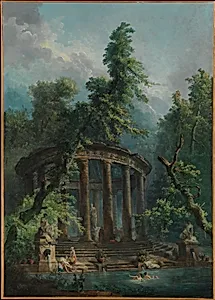
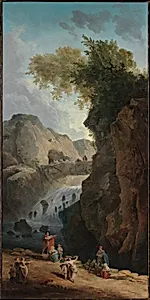
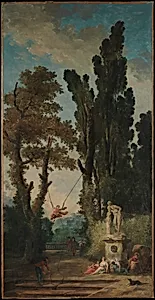
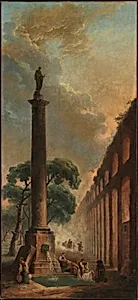
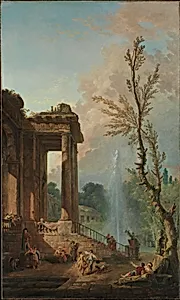
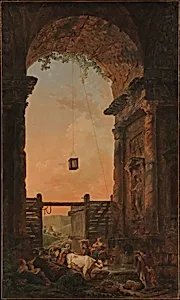
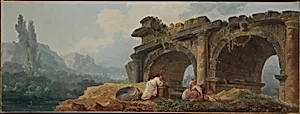
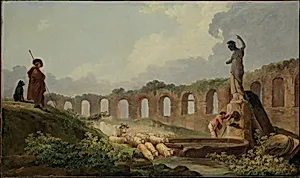
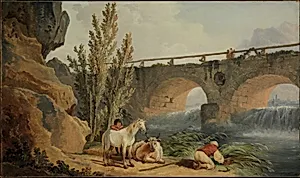
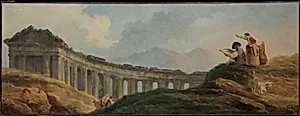
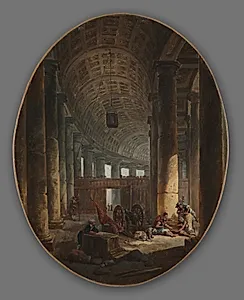
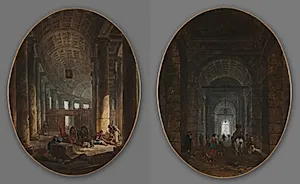
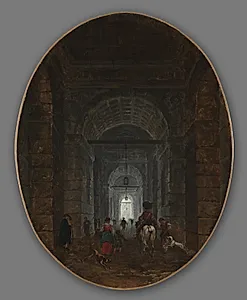
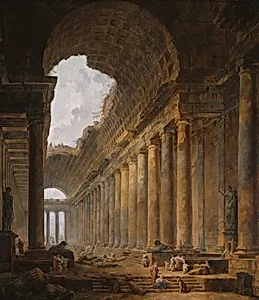
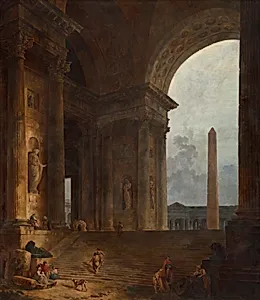
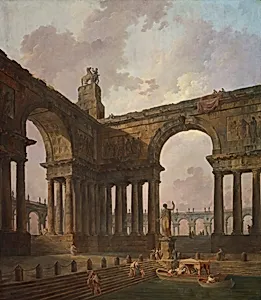
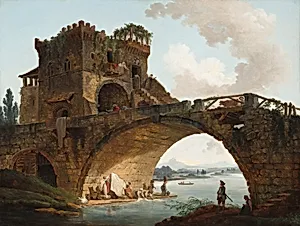
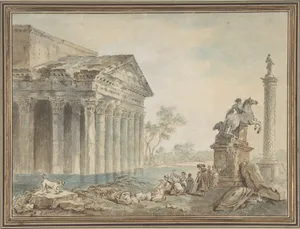
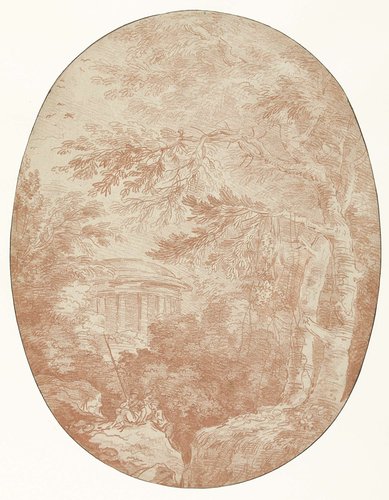
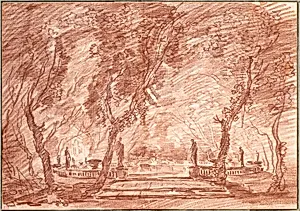
Returning to Paris in 1765, Robert was swiftly accepted into the Académie Royale de Peinture et de Sculpture in 1766 with his *Port of Rome* (1766), launching a prolific career blending Romantic landscape traditions with capricci—fantastical assemblages of ruins, foliage, and figures evoking the sublime passage of time. Nicknamed "Robert des Ruines," he employed a swift alla prima technique for works from intimate watercolors like *Oval Fountain in the Villa d'Este Gardens, Tivoli* (1760) to grand canvases such as *The Fire of Rome* (ca. 1771), *The Swing* (1777–79), and *Imaginary View of the Grand Gallery of the Louvre in Ruins* (1796). Appointed Designer of the King's Gardens, Keeper of the King's Pictures, and later curator of the Louvre's nascent museum, he influenced picturesque garden designs at Versailles, Rambouillet, and Méréville, merging painting with landscape architecture.
Arrested during the French Revolution in 1793, Robert endured ten months in prison, producing poignant vignettes like *Self-Portrait in Prison* (ca. 1793–94) before his release post-Robespierre. He died on April 15, 1808, leaving perhaps a thousand paintings and ten thousand drawings that captured antiquity's melancholy allure, inspiring generations of Romantic artists and garden visionaries with his poetic fusion of decay and reverie.