Ctrl K
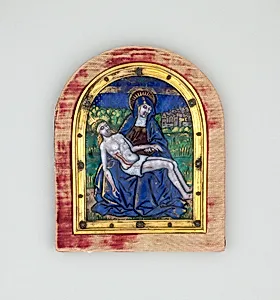
1490–1543
Jean Pénicaud I (ca. 1480/1490–after 1543) was a pioneering French enameler active in Limoges, the epicenter of Renaissance enamel production in Europe. Born in Limoges, he belonged to the illustrious Pénicaud family dynasty, renowned for their mastery of painted enamels on copper. He was the younger brother of Nardon Pénicaud, the founder of this lineage of craftsmen who elevated Limoges enamels from medieval traditions to sophisticated Renaissance artistry. His early life remains sparsely documented, with no records of formal training, though his work reflects immersion in the local Limoges enamel workshop culture dominated by familial apprenticeships.
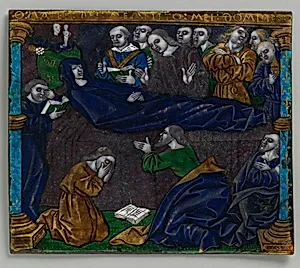
Pénicaud I worked in the vibrant polychrome tradition of Limoges enamels, painting vivid scenes on copper plaques primed with white enamel grounds. He innovated by frequently applying transparent enamel colors, creating luminous depth and a jewel-like translucency unprecedented in the medium. Drawing from contemporary prints—especially those of Albrecht Dürer and German-Netherlandish sources—he introduced Italian Renaissance motifs while resisting the full Mannerist shift from Fontainebleau, preserving a robust, narrative-driven style akin to the Master of the Louis XII Triptych. His compositions often featured religious subjects in grisaille or enriched polychromy, blending Gothic vigor with emerging classical humanism.
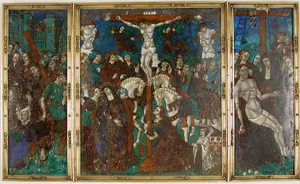
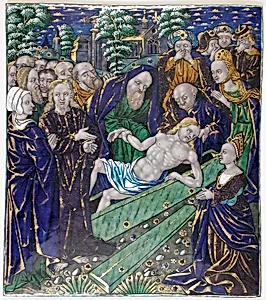
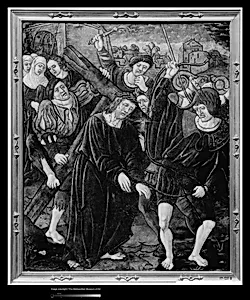
Among his surviving masterpieces are the *Plaque with the Last Supper* (c. 1530, National Gallery of Art), depicting the biblical scene with dramatic foreshortening; *Christ Bearing the Cross* (early 16th century, Metropolitan Museum of Art); the poignant *Pietà* (early 16th century, Art Institute of Chicago); and *Christ Mocked and Crowned with Thorns* (Frick Collection). Other attributed works include the *Crucifixion* (Louvre) and *Flagellation* after Dürer, showcasing his skill in adapting engravings to enamel's fiery medium.
Pénicaud I's legacy endures as a bridge between medieval and Renaissance enamel art, influencing subsequent generations of the Pénicaud family—including disputed kin like Jean II and III—who perfected grisaille techniques and expanded the medium's expressive range. His innovations in transparency and print-inspired compositions helped cement Limoges' reputation as Europe's enamel capital, with his plaques cherished today in major collections for their technical brilliance and devotional intensity.