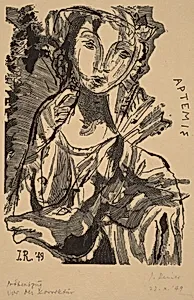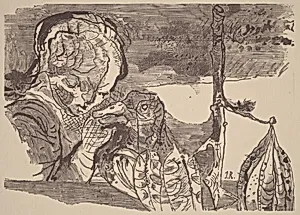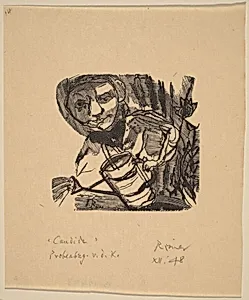
**Imre Reiner** (1900–1987) was a Hungarian-born Swiss painter, graphic artist, typographer, and master illustrator whose multifaceted career bridged sculpture, experimental typography, and exquisite wood engravings. Born on August 18, 1900, in Versec (now Vršac, Serbia) to a Jewish family—his father a sculptor and stone carver who apprenticed him young—Reiner began formal studies at age 15 in sculpture at the State School of Sculpture in Zalaegerszeg, Hungary. By 1920, amid political upheaval, he relocated to Germany, studying graphic arts under Ernst Schneidler at the Staatliche Akademie der Bildenden Künste in Stuttgart, following preparatory work at Frankfurt's School of Applied Arts. There, he encountered Paul Klee in Weimar and Bauhaus figures like László Moholy-Nagy, absorbing modernist impulses that shaped his ornamental yet innovative style.
Reiner's peripatetic early career took him to London, New York, Chicago, and Paris from 1923 to 1927, honing his graphic skills before returning to Stuttgart as Schneidler's Meisterschüler. In 1930, he briefly lived in Paris; by 1931, he settled permanently in Ruvigliana near Lugano, Switzerland, acquiring Swiss citizenship and dedicating himself to painting, book design, and typography. From 1941 to 1944, he served as artistic director at Schwabe Verlag in Basel, revolutionizing their magazine *Officina* with bold layouts. His style evolved from calligraphic experimentation and vein-like wood engravings—evoking a sculptural precision rooted in his origins—to post-1945 abstract paintings influenced by Klee, blending organic forms with typographic rigor in the modernist graphic tradition.
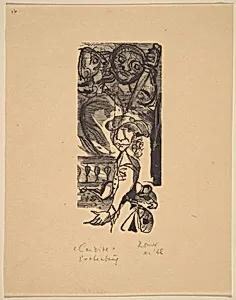
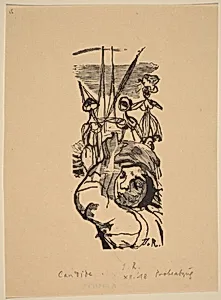
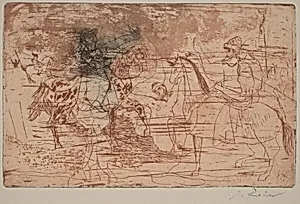
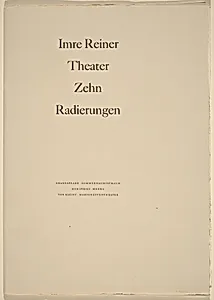
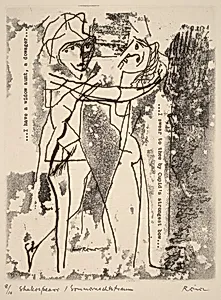
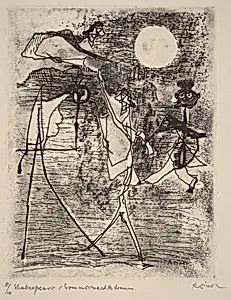
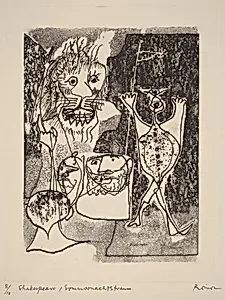
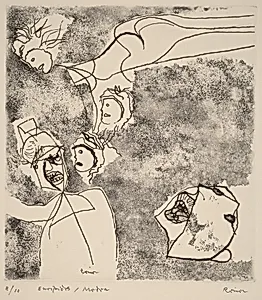
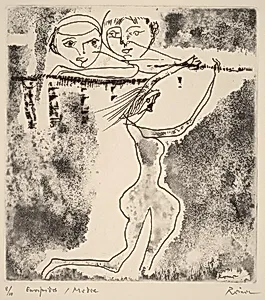
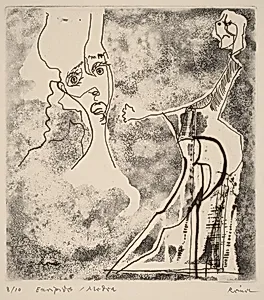
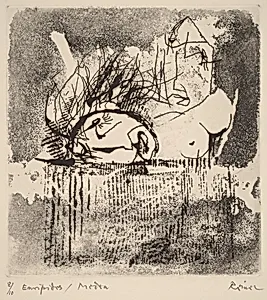
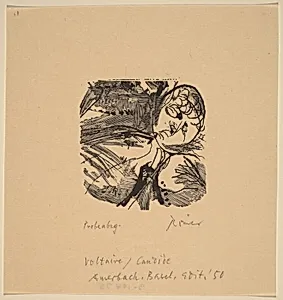
Among his prolific output, Reiner designed landmark typefaces like Meridian (1930), the Corvinus family (1934–1935), Matura (1938), and Reiner Script (1951), pushing boundaries in advertising and book arts. He illustrated over 30 bibliophile editions, including Homer's *Iliad* (1923), Goethe's *Novelle* (1943, with eight woodcuts in the 1961 Insel-Bücherei edition), *Don Quixote* (1941), and Aristophanes' plays like *The Frogs* (1961). Etchings such as *Sommernachtstraum* (1964) and *Medea* (1964) highlight his dramatic literary interpretations. He also authored influential books like *Typo-Graphik* (1944, 1950).
Reiner's legacy endures in graphic design's fusion of art and function, with solo exhibitions spanning Paris (1930s), Zürich, Milan, and São Paulo (1950s), and holdings like the National Gallery of Art's 143 works underscoring his impact. Elected honorary member of Florence's Accademia delle Arti in 1965, his wood engravings and fonts remain touchstones for illustrators and typographers, celebrating the handmade in a machine age.(347 words)

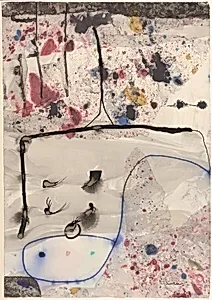
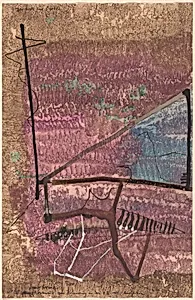
![Der Herbstblatter [right half]](https://images.artheonmuseum.org/nga/thumb/der-herbstblatter-right-half-nga-39717.webp)
![Der Herbstblatter [left half]](https://images.artheonmuseum.org/nga/thumb/der-herbstblatter-left-half-nga-39716.webp)