
Ctrl K
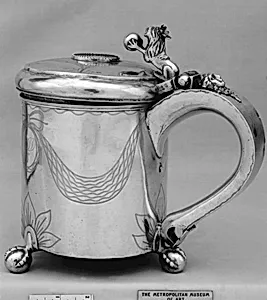
1811–1860
Isack Andersen Feldthus (1811–1860) was a Norwegian silversmith active in Stavanger, where he earned the prestigious title of *mester* (master craftsman). Little is known about his early life or formal training, as records from this period are sparse for regional artisans of his standing. Born in the burgeoning port city of Stavanger, Feldthus likely apprenticed in the local guild traditions of silversmithing, honing skills in chasing, repoussé, and engraving that defined Scandinavian metalwork during the early 19th century.
Feldthus specialized in functional yet ornate silver tableware, working firmly within the Empire style popular in Norway from the Napoleonic era through the mid-1800s. His pieces feature classical motifs such as urn forms, garlands, lion masks with rings, and intricate engraved borders of leaves and meanders, blending neoclassical elegance with robust Nordic craftsmanship. A standout example is his mustard pot (*sennepskrukke*) from the 1840s–50s, an urn-shaped vessel richly decorated with driven repoussé work that exemplifies his mastery of surface embellishment. Other documented objects include spoons (*skje*) and tankards, showcasing his versatility in producing both everyday utensils and ceremonial items.
Though not a fine artist in the painterly tradition, Feldthus's legacy endures through his contributions to Norway's decorative arts heritage. His silverwork appears in prestigious collections, including the Norwegian Museum of Cultural History, reflecting the high quality that sustained Stavanger's reputation as a hub for silversmithing. In an era when guilds regulated craftsmanship, Feldthus represented the skilled provincial maker whose objects graced bourgeois tables, preserving Empire aesthetics amid Norway's push toward national romanticism. Today, his rare surviving pieces command attention at auctions, underscoring the timeless appeal of his technical prowess and stylistic refinement.