
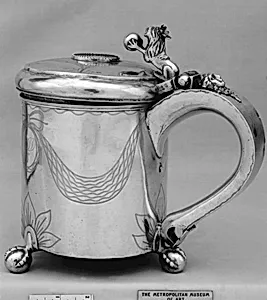
Peg tankard
Medium
Silver
Dimensions
Height: 8 1/4 in. (21 cm)
Classification
Metalwork-Silver
Culture
Norwegian, Stavanger
Department
European Sculpture and Decorative Arts
Museum
Metropolitan Museum of Art, New York, NY
Credit
Gift of Rev. Alfred Duane Pell, 1903
Accession Number
03.2.2
Rights
Public Domain
Tags
Art Historical Context
Crafted in 1812 by Norwegian silmith Isack Andersen Feldthus in Stavanger, this *Peg Tankard* exemplifies the region's esteemed tradition of fine silver metalwork. Standing at 8¼ inches (21 cm) tall, the tankard is a functional yet elegant vessel designed for communal drinking. Its silver construction highlights the craftsmanship of early 19th-century Norway where silversmiths like Feld blended practicality with decorative flair, often drawing on local motifs to create heirloom-quality pieces. The "peg" refers to a series of internal markings—small silver pegs or ridges—that divided the tankard's contents into equal portions, promoting fair shares during social gatherings in taverns or homes. This innovative feature, rooted in Scandinavian drinking customs dating back centuries, ensured measured toasts and minimized disputes over portions. Adorned with animal motifs (as suggested by its tags), the tankard likely features chased or engraved designs celebrating Norway's natural world, reflecting cultural pride in wildlife and folklore. Now housed in The Metropolitan Museum of Art's Department of European Sculpture and Decorative Arts—thanks to a 1903 gift from Rev. Alfred Duane Pell—this tankard offers a glimpse into Norway's vibrant silversmithing heritage during a time of national awakening. Visitors can appreciate how such objects bridged everyday life and artistry, turning a simple drinking cup into a symbol of community and skill.
About the Artist
Isack Andersen Feldthus · 1811–1860
Isack Andersen Feldthus (1811–1860) was a Norwegian silversmith active in Stavanger, where he earned the prestigious title of *mester* (master craftsman). Little is known about his early life or formal training, as records from this period are sparse for regional artisans of his standing. Born in the burgeoning port city of Stavanger, Feldthus likely apprenticed in the local guild traditions of si...