Ctrl K
1813–1875
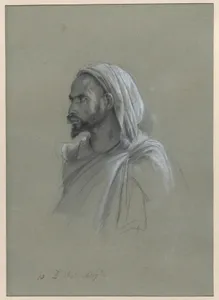
Isidore-Alexandre-Augustin Pils (1813/15–1875), born in Paris to the soldier François Pils, emerged as a leading French academic painter known for religious and military subjects. At age twelve, he studied under Guillaume Guillon-Lethière for four years before entering the École des Beaux-Arts in 1831 as a student of François-Édouard Picot. His talent secured the prestigious Prix de Rome in 1838 with *St. Peter Healing a Lame Man at the Door of the Temple*, earning him a five-year residency at the French Academy in Rome's Villa Medici under director Jean-Auguste-Dominique Ingres, during which he explored Italy's artistic treasures in Naples, Venice, and Florence.
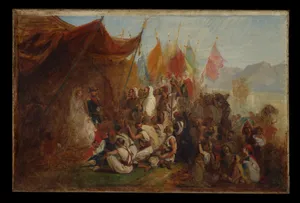
Pils began in the classical history painting tradition, producing religious works like the chapel decorations at Saint-Eustache (1849–1852), but shifted toward military and genre scenes after observing Crimean War troops, blending academic formality with emerging realism. His breakthrough, *Rouget de L'Isle Singing La Marseillaise* (1849, now in Strasbourg's Musée historique), captured patriotic fervor with lifelike figures, while *Soldiers Distributing Bread to the Poor* (1852) and *Battle of Alma* (1857, Versailles Galerie des Batailles) showcased his prowess in social-realist military themes. Commissions flowed from Napoleon III, including *Réception des chefs arabes par l’Empereur Napoléon III* (1867, destroyed in the Tuileries fire).
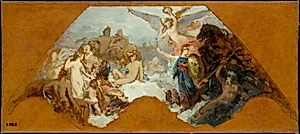
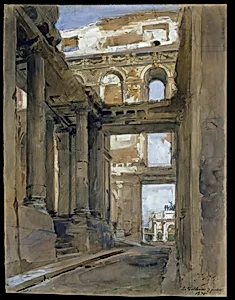
Appointed professor at the École des Beaux-Arts in 1863 (interrupted by two years in Algeria) and elected to the Académie des Beaux-Arts in 1868, Pils mentored talents like Adrien Moreau, Luc-Olivier Merson, and Julien Dupré. His watercolors excelled as "realist reporter" documents, vividly depicting Franco-Prussian War sieges—such as *Ruins of the Tuileries Palace* (1871)—and Paris life under bombardment, elevating sketches to autonomous art. He crowned his career with four ceiling panels for the Palais Garnier's grand staircase (*The Gods of Olympus*, *Apollo in His Chariot*, *Triumph of Harmony*, *Apotheosis of the Opera*, 1875). Pils's legacy endures in his bridge between academic grandeur and modern reportage, influencing Second Empire art through precise, empathetic depictions of history's human toll.