Ctrl K
1800–1880
J. Hulme was a British artist active primarily between 1828 and 1840, specializing in ornamental and decorative designs. Little is known about his early life or personal background, and no records of formal training or mentors have surfaced in art historical sources. His output appears focused on preparatory drawings for decorative arts, reflecting the period’s interest in elegant, patterned motifs suitable for interiors and objects.
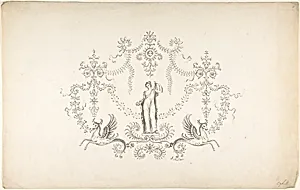
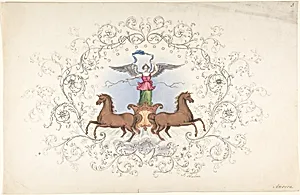
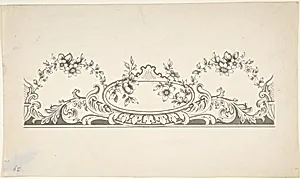
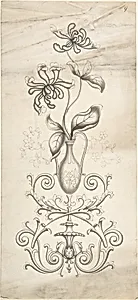
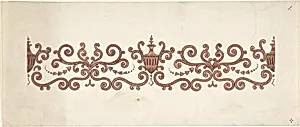
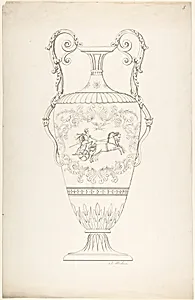
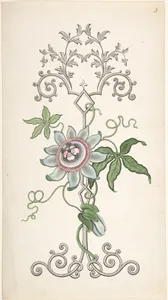
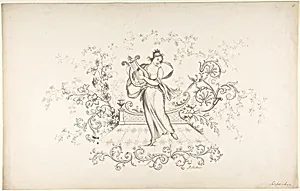
Hulme worked in a tradition of British design drawing, producing works on paper that served as templates or studies rather than finished paintings. His known pieces include several “Design for Panel Decoration” sheets and a “Design for a Vase,” executed in watercolor, pen, and black ink. These compositions typically feature repeating floral, foliate, or geometric patterns arranged with balanced symmetry, characteristic of early nineteenth-century ornamental work intended for furniture, textiles, or architectural elements.
The eight artworks attributed to him in the present collection are consistent with this body of design studies. They demonstrate technical precision in line work and a sensitivity to decorative harmony, though no large-scale paintings or public commissions by the artist have been widely documented. His career seems to have been that of a specialist draftsman rather than a painter exhibiting at major academies.
Today Hulme’s legacy rests on the survival of these delicate drawings in museum holdings such as the Metropolitan Museum of Art. They offer valuable insight into the anonymous yet essential role of design artists in shaping the visual culture of Regency and early Victorian Britain. While biographical details remain sparse, his surviving works continue to be appreciated for their refined craftsmanship and historical context within the applied arts.