
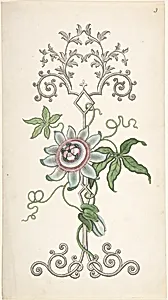
Design for Panel Decoration Centered on a Passion Flower
1828–40
Medium
Watercolor, pen and black ink
Dimensions
sheet: 12 x 6 5/8 in. (30.5 x 16.9 cm)
Classification
Drawings|Ornament & Architecture
Department
Drawings and Prints
Museum
Metropolitan Museum of Art, New York, NY
Credit
The Elisha Whittelsey Collection, The Elisha Whittelsey Fund, 1962
Accession Number
62.659.14
Rights
Public Domain
Tags
Art Historical Context
In the early 19th century, Britain's Regency and early Victorian eras, ornamental designs like J. Hulme's * for Panel Decoration Centered a Passion Flower* (ca. 1828–40) captured the era's fascination with nature-inspired elegance. This delicate watercolor and pen-and-black-ink drawing, measuring just 12 x 6 5/8 inches, served as a blueprint for decorative panels, likely intended for furniture, walls, or screens in fashionable interiors. Hulme, a lesser-known designer, skillfully rendered the exotic passion flower—its intricate blooms and tendrils—at the composition's heart, surrounded by lush leaves, evoking the period's Romantic appreciation for botany. The medium's precision highlights the technical prowess of British draftsmanship: fine ink lines define contours and veins, while translucent watercolors add vibrancy and depth, mimicking the flower's tropical allure. Such designs reflected growing access to global flora through trade and exploration, blending utility with artistry in the ornamental arts. Housed in the Metropolitan Museum of Art's Drawings and Prints department as part of The Elisha Whittelsey Collection, this piece offers a window into how everyday luxury was conceptualized, inviting us to admire the passion flower's symbolic beauty—often linked to faith and suffering—frozen in exquisite detail.
About the Artist
J. Hulme · 1800–1880
J. Hulme was a British artist active primarily between 1828 and 1840, specializing in ornamental and decorative designs. Little is known about his early life or personal background, and no records of formal training or mentors have surfaced in art historical sources. His output appears focused on preparatory drawings for decorative arts, reflecting the period’s interest in elegant, patterned motif...