Ctrl K
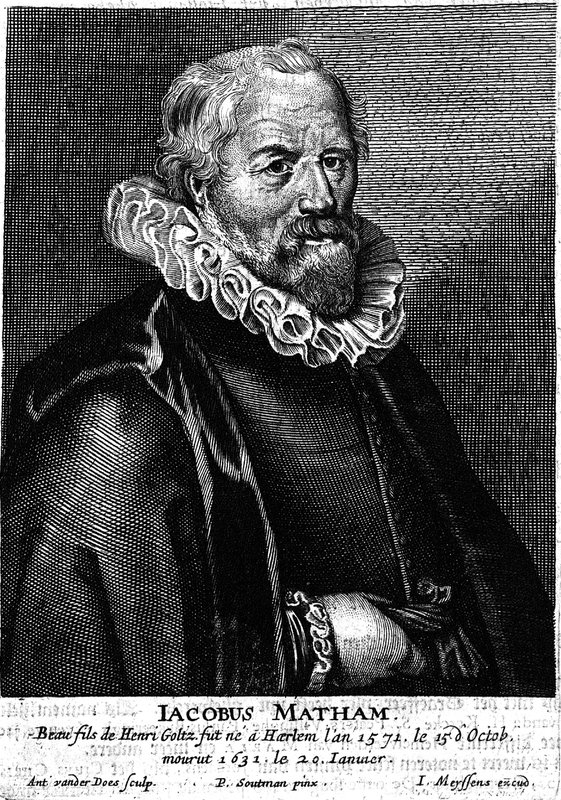
1571–1631
**Jacob Matham: Master Engraver of Haarlem**
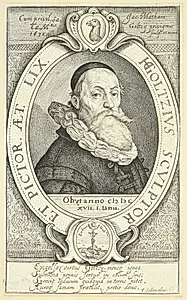
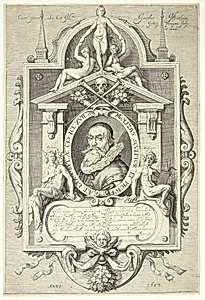
Jacob Matham was born on October 15, 1571, in Haarlem, in the Northern Netherlands, into a burgeoning artistic milieu. Following his father's early death, his mother married the renowned painter and engraver Hendrick Goltzius in 1579, who adopted the young Jacob and trained him rigorously in the workshop as his stepson and pupil. Matham's first signed engraving appeared in 1589, though he contributed anonymously to Goltzius's prints from around 1588. Between 1593 and 1597, he journeyed to Italy, absorbing influences that enriched his technique. He also married Marijtgen, sister of engraver Simon van Poelenburgh, forging further ties within Haarlem's printmaking community.
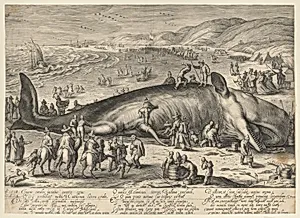
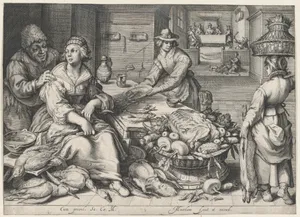
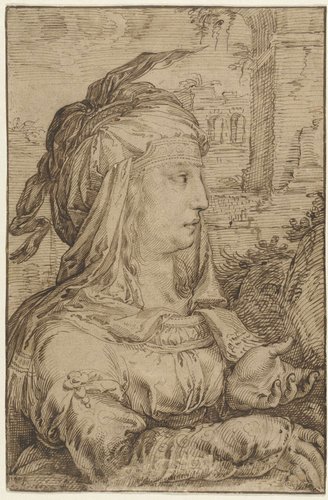
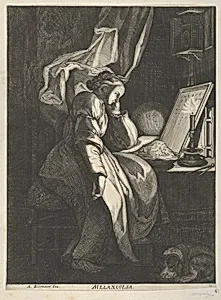
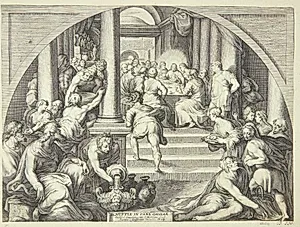
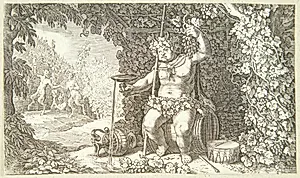
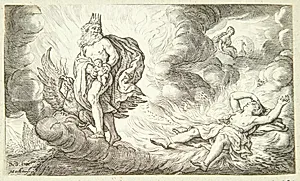
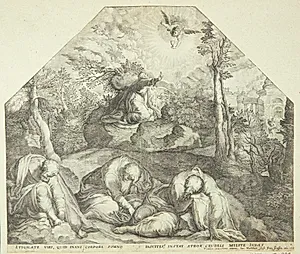
Around 1600, as Goltzius shifted to painting, Matham assumed control of the workshop, engraving and publishing works by his stepfather and others until Goltzius's death in 1617, after which he sustained the enterprise. His oeuvre includes masterful reproductive engravings, such as *The Four Elements* (1588, after Goltzius), a beached whale after Goltzius, *Samson and Delilah* (c. 1612, after Rubens), and *Moses* (c. 1601–1605, after Michelangelo). He produced series like *The Planets* (including *Saturn*), the *Seven Virtues* and *Seven Vices*, *Mythological and Allegorical Subjects*, and *Fortitude* (1593, after Goltzius), alongside New Year's prints, portraits, and Catholic saints.
Working in the Haarlem Mannerist tradition of Goltzius's workshop, Matham's style evolved toward broader, less refined lines while embracing emerging Baroque tendencies and a Catholic iconography of saints. He mentored his sons—engravers Adriaen, Jan, and Theodor (the most prolific Baroque engraver among them)—as well as Jan van de Velde II, who apprenticed in 1613.
Matham's legacy endures as a pivotal figure in Dutch Golden Age printmaking, bridging Mannerism and Baroque through his workshop's enduring output and family dynasty, producing over a hundred documented works that disseminated Haarlem's artistic prowess across Europe. He died in Haarlem on January 20, 1631.