Ctrl K
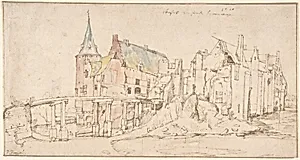
1568–1625
**Jan Brueghel the Elder (1568–1625)** was a Flemish painter and draughtsman renowned for his exquisite detail, innovative compositions, and mastery across multiple genres. Born in Brussels as the younger son of the celebrated Renaissance master Pieter Bruegel the Elder and Maria Coecke van Aelst, he belonged to the illustrious Brueghel artistic dynasty. His father died when Jan was only about a year old, and after his mother’s death in 1578, he and his siblings were raised by their grandmother, the painter Mayken Verhulst, who provided his earliest training in drawing and miniature watercolor techniques. He later studied oil painting in Antwerp under Pieter Goetkint.
Brueghel traveled extensively to complete his artistic education, visiting Cologne, Naples, Rome (where he collaborated with landscape specialist Paul Bril and history painter Hans Rottenhammer), and Milan, where he enjoyed the patronage of Cardinal Federico Borromeo. He returned to Antwerp in 1596, joined the Guild of Saint Luke, and married Isabella de Jode in 1599. A close friend and frequent collaborator with Peter Paul Rubens, Brueghel became court painter to Archdukes Albert and Isabella in 1606. He was nicknamed “Velvet” Brueghel for his skill in rendering fabrics, “Flower” Brueghel for his still lifes, and “Paradise” Brueghel for his idyllic landscapes.
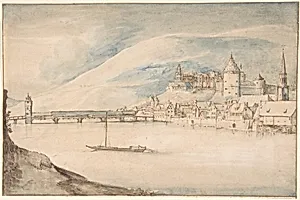
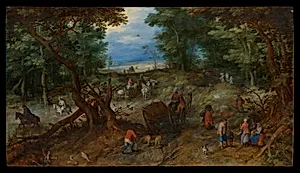
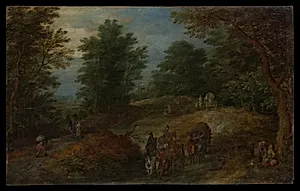
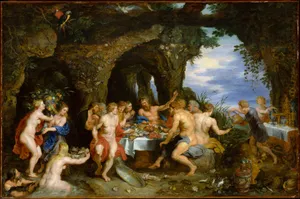
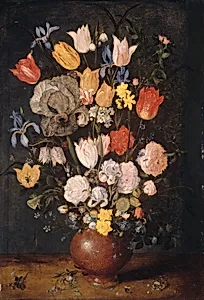
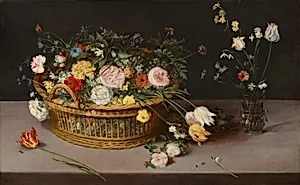
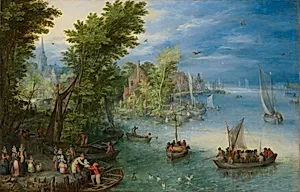
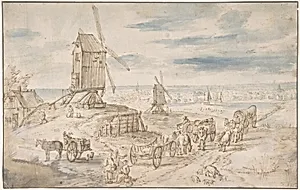
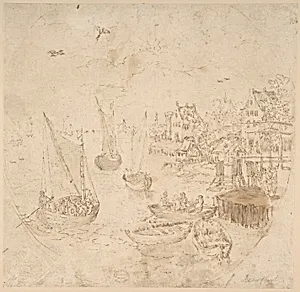
Working in the Flemish Baroque tradition, Brueghel produced highly finished cabinet paintings on copper or panel, excelling in flower still lifes, landscapes, seascapes, allegories, mythological scenes, village views, and battle pieces. He pioneered new genres such as flower garland paintings, paradise landscapes, and gallery paintings, often infusing his work with the scientific precision and Counter-Reformation sensibilities of his era. Notable examples include *Flowers in a Wooden Vessel* (1603) and collaborative masterpieces such as the *Allegory of the Five Senses* series with Rubens. He avoided large-scale figure paintings, preferring to supply detailed backgrounds or collaborate with specialists.
Brueghel operated a prolific workshop in Antwerp that his son Jan Brueghel the Younger later inherited. His influence extended through students like Daniel Seghers and family connections, including his daughter Anna’s marriage to David Teniers the Younger. He died in Antwerp on 13 January 1625. Today, his works—prized for their jewel-like precision and imaginative range—form a cornerstone of Flemish Baroque art and continue to enchant viewers with their celebration of nature and human ingenuity.


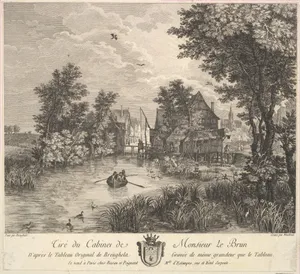
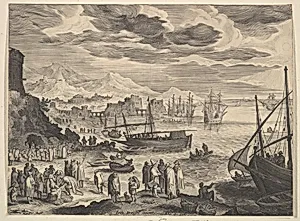
![Selling Fish at Scheveningen (Vente de Poisson a Schevelinghe [sic]) after the painting in the collection of the Comte de Vence](https://images.artheonmuseum.org/met/dp/thumb/selling-fish-at-scheveningen-vente-de-poisson-a-schevelinghe-sic-after-the-paint-415772.webp)