Ctrl K
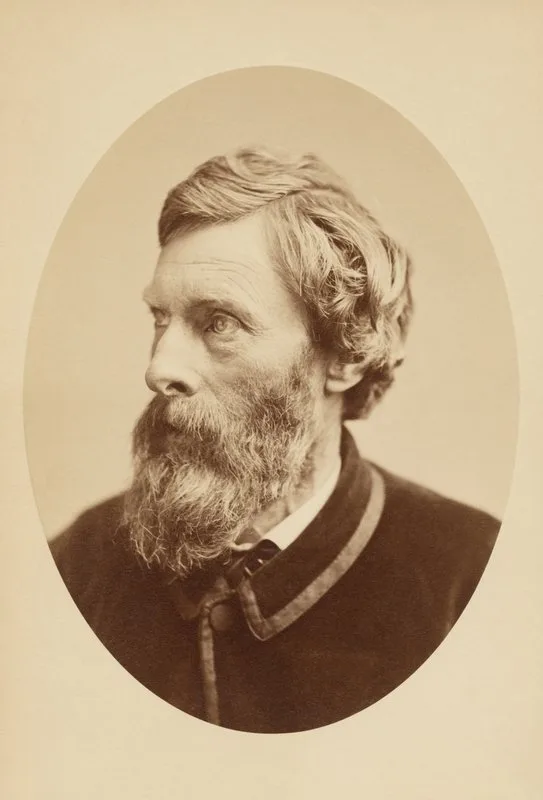
1823–1900
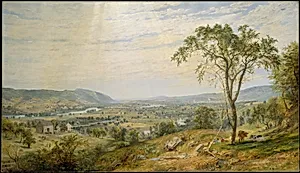
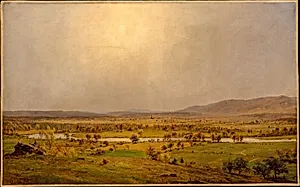
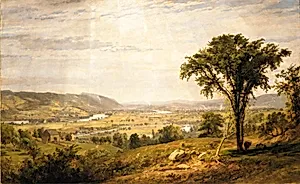
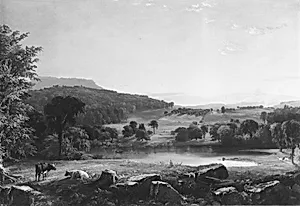
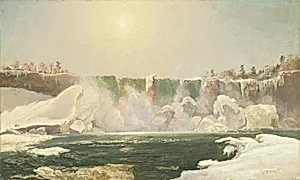
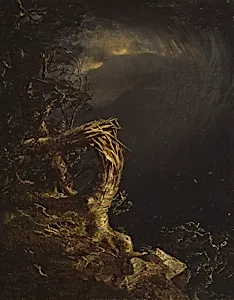
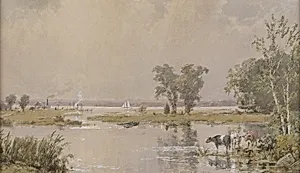
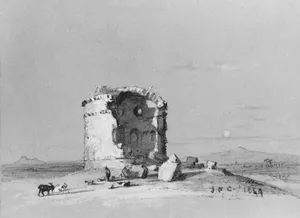
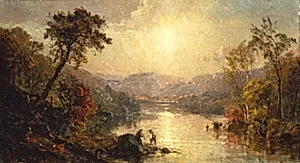
Jasper Francis Cropsey (1823–1900) was an American landscape painter associated with the Hudson River School, the influential mid-nineteenth-century movement that celebrated the natural grandeur of the American continent in large, luminous canvases. Born on Staten Island, New York, Cropsey initially trained as an architect — a background that gave him a strong sense of spatial structure and formal precision that would serve his painting throughout his career. He began painting seriously in the early 1840s and came under the influence of Thomas Cole, the founder of the Hudson River School, whose vision of landscape as a vehicle for spiritual and moral reflection shaped an entire generation of American artists.
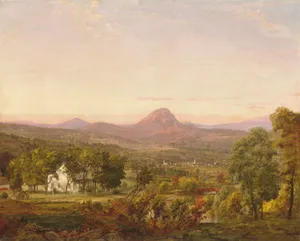
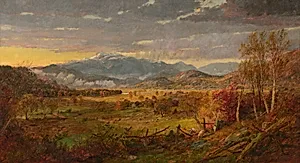
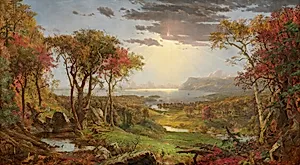
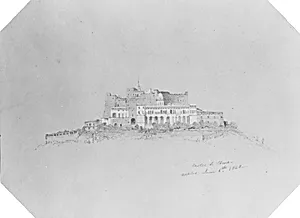
Cropsey traveled to Europe on two extended stays, studying in Rome and later living in London for seven years, where he became a popular and commercially successful exhibitor. His English audiences were particularly drawn to his autumnal American scenes, whose brilliant oranges, reds, and golds depicted a fall foliage season that had no equivalent in the English landscape. These works made Cropsey's name abroad and contributed to a transatlantic understanding of America as a land of spectacular natural beauty.
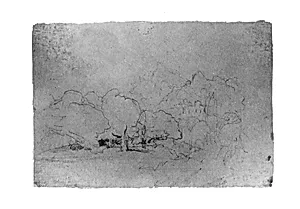
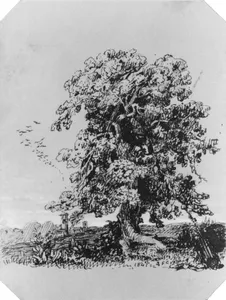
Back in the United States, Cropsey continued to paint the Hudson River Valley, the Catskills, and other celebrated American landscapes with sustained dedication. His canvases combined precise naturalistic observation — informed by the influence of John Ruskin's teachings, which circulated widely among American landscape painters — with a grand compositional vision inherited from Cole. Works such as Starrucca Viaduct, Pennsylvania demonstrated his ability to incorporate the marks of human industry into landscape without losing its essential sublimity.
Cropsey also maintained his architectural practice throughout his life, designing his own house and studio in Warwick, New York. His legacy as a painter rests on his role as one of the most accomplished and prolific second-generation Hudson River School artists, and his works are held in major American museum collections.