Ctrl K
1788–1865
Jean-Baptiste Arnout (1788–1873) was a pioneering French lithographer, painter, and engraver who became one of France's first professional lithographers and created an extensive body of architectural views documenting European monuments and cityscapes. Born in Dijon on June 24, 1788, Arnout studied at the city's school of fine arts under Anatole Devosge before pursuing further training in Paris. His career bridged traditional printmaking and the revolutionary new medium of lithography, which he embraced enthusiastically, becoming among the earliest French artists to work professionally in this technique. Arnout's artistic production emphasized architectural documentation through travel. As an inveterate traveler, he journeyed through France, Italy, Spain, Belgium, England, and as far as Saint Petersburg, creating paintings, watercolors, and lithographs inspired by Paris, Rome, and monuments across Europe. His series of Parisian views and French countryside scenes gained particular recognition, combining topographical accuracy with aesthetic refinement. Beyond his artistic practice, Arnout served as director of Dijon's school of fine arts starting in 1811, balancing creative production with educational leadership. His works are preserved in major museums including the Metropolitan Museum of Art and the National Gallery of Art.
Jean-Baptiste Arnout was born in Dijon on June 24, 1788, during the early years of the French Revolution. He received his artistic education at Dijon's prestigious school of fine arts, studying under Anatole Devosge, an accomplished painter who directed the school and trained numerous artists who would contribute to French art during the Empire and Restoration periods.
Arnout's training encompassed traditional techniques of drawing, painting, and engraving, providing him with the foundational skills that would later enable him to adapt successfully to lithography when that new medium emerged in France during the early nineteenth century.
Following his studies in Dijon, Arnout continued his education in Paris, exposing himself to the capital's more diverse artistic environment and connecting with the printmaking community that would soon embrace lithography's commercial and artistic possibilities.
In 1811, Arnout assumed directorship of Dijon's school of fine arts, succeeding his former teacher and accepting responsibility for training the next generation of artists in his native city. This administrative role provided financial stability while allowing continued artistic production.
During these years, Arnout established himself as one of France's first professional lithographers. Lithography, invented in Bavaria around 1796 but only gradually adopted in France, offered artists a more direct printmaking process than traditional engraving or etching, allowing drawing directly on stone rather than laboriously incising metal plates.
Arnout initially presented paintings inspired by Parisian and Roman architecture at exhibitions, demonstrating his interest in architectural subjects that would dominate his later lithographic production.
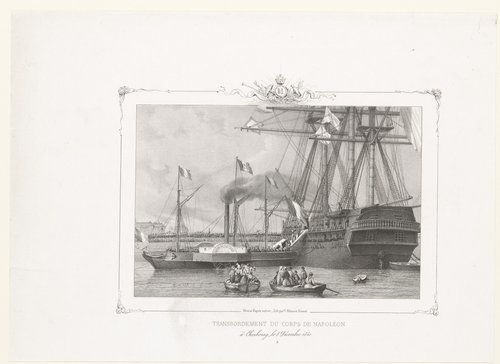
From 1824 onward, Arnout focused primarily on lithography and watercolor, creating an extensive series of architectural views featuring monuments and cityscapes from across Europe. His travels took him through France, Italy, Spain, Belgium, to London, and even to Saint Petersburg, generating subjects for his prolific lithographic production.
He became particularly celebrated for his series of Parisian views, which documented the French capital's monuments, streets, and architectural character during a period of significant urban transformation. His beautiful series depicting French countryside locations complemented these urban views, creating a comprehensive visual record of French architectural heritage.
Arnout's lithographs combined topographical accuracy with aesthetic appeal, serving both documentary and decorative functions. His works found audiences among collectors, travelers, and institutions seeking visual records of European architectural monuments.
In 1857, Arnout retired from active artistic production, having established a substantial reputation and created an extensive body of lithographic work. He died in Paris on October 5, 1873, at age eighty-five, having witnessed lithography's transformation from novelty to standard printmaking medium.
Artheon Research Team
Last updated: 2025-11-09
Biography length: ~495 words