Ctrl K
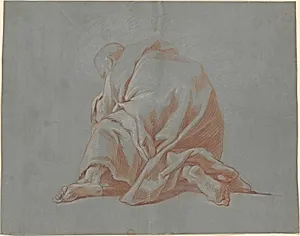
1679–1752
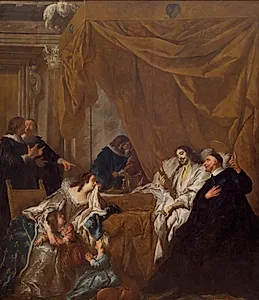
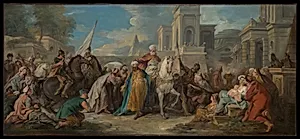
Jean-François de Troy (1679–1752) was born in Paris into a family of artists, the son of the esteemed portrait painter François de Troy, under whom he first studied. After failing to secure the Prix de Rome, he traveled to Italy from 1699 to 1706 at his father's expense, residing initially at the French Academy in Rome and visiting northern Italian cities, where he absorbed influences from masters like Veronese and Rubens. Upon returning to France, he gained admission to the Académie Royale de Peinture et de Sculpture in 1708, marking the start of a distinguished career in history painting, portraiture, and decorative works.
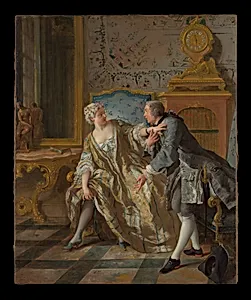
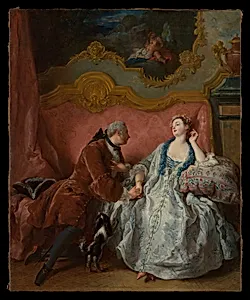
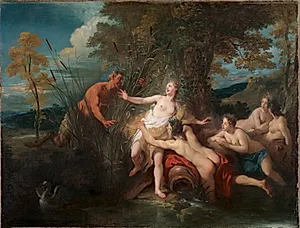
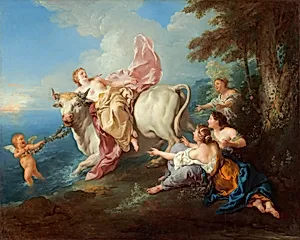
De Troy emerged as a leading Rococo artist, renowned for inventing the *tableaux de modes*—elegant genre scenes capturing the leisurely pursuits, fashions, and flirtations of the French upper classes in the post-Louis XIV era. His paintings, such as *The Alarm* (1723, Victoria and Albert Museum), *The Declaration of Love* (1724, Metropolitan Museum of Art), *The Garter* (1724, Metropolitan Museum), *Time Unveiling Truth* (1733, National Gallery, London), *Luncheon with Oysters* (1735, Musée Condé), and *A Hunting Meal* (1737, Louvre), blend meticulous detail in costumes and settings with a lively, colorful fluency indebted to Watteau and Dutch genre traditions. These works, commissioned for palaces like Versailles and Fontainebleau, reflect the relaxed opulence of Regency society and appealed to a rising bourgeois clientele of bankers and financiers.
In 1738, de Troy was appointed director of the Académie de France in Rome, a position he held until his death, during which he designed influential Gobelins tapestry series like *The Story of Esther* (1737–40) and *The Story of Jason* (1743–46), noted for their anecdotal richness and vibrant effects. He also executed frescoes, such as one in the Basilica of Santi Bonifacio ed Alessio. Though he enjoyed a luxurious life entertaining elites, his modern legacy rests on those Parisian *tableaux de modes* from 1725–1738, which vividly preserve the social mores of 18th-century France and continue to grace major collections worldwide.
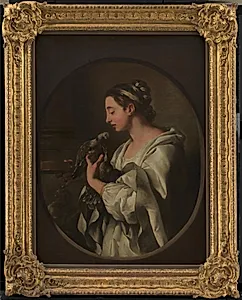
![Erminia and Vafrino Tending the Wounded Tancred after the Battle of Argento [Tancrède secouru par Herminie et Vafrin après le combat d'Argante]](https://images.artheonmuseum.org/smith/thumb/erminia-and-vafrino-tending-the-wounded-tancred-smith-903662-1.webp)