
The Triumph of Mordecai
ca. 1736
Medium
Oil on canvas
Dimensions
33 5/8 x 59 1/4 in. (86 x 150.2 cm)
Classification
Paintings
Department
European Paintings
Museum
Metropolitan Museum of Art, New York, NY
Credit
Gift of J. Pierpont Morgan, 1906
Accession Number
07.225.285
Rights
Public Domain
Tags
Art Historical Context
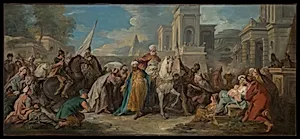
Jean François de Troy's *The Triumph of Mordec* (ca. 1736) captures a pivotal moment from the Book of Esther in the Bible, where the Jewish hero Mordecai is by King Ahasuerus. After thwarting a plot against his people, Mordecai is paradedantly through the streets on the king's horse, draped in royal robes—a scene brimming with drama and celebration. Painted in oil on canvas, this large-scale work (33 5/8 x 59 1/4 in.) exemplifies the grandeur of 18th-century history painting a genre favored for its moral and narrative depth. As a leading French Rococo artist, de Troy infuses the composition with the movement's signature elegance: fluid lines, vibrant colors, and dynamic groupings of men, women, and horses that convey movement and pageantry. The Rococo style, flourishing under Louis XV, emphasized decorative beauty and theatricality, making biblical tales accessible and visually opulent for aristocratic audiences. This piece reflects de Troy's skill in tapestry design and courtly portraits, blending historical gravitas with playful exuberance. Now at the Metropolitan Museum of Art, gifted by J. Pierpont Morgan in 1906, *The Triumph of Mordecai* invites visitors to ponder themes of justice and reversal of fortune, all while marveling at its lively depiction of human and equine figures in a moment of divine vindication.
About the Artist
Jean François de Troy · 1679–1752
Jean-François de Troy (1679–1752) was born in Paris into a family of artists, the son of the esteemed portrait painter François de Troy, under whom he first studied. After failing to secure the Prix de Rome, he traveled to Italy from 1699 to 1706 at his father's expense, residing initially at the French Academy in Rome and visiting northern Italian cities, where he absorbed influences from masters...