Ctrl K
1752–1825
**Jean-Frédéric Schall** (also known as Frédéric-Jean Schall, Challe, or Chall) was a French painter renowned for his genre scenes and portraits, particularly in the galant and fête galante traditions. Born on 14 March 1752 in Strasbourg, he received his initial artistic training at the École publique de dessin de Strasbourg before moving to Paris in 1772.
There, he enrolled at the École royale des élèves protégés under the sponsorship of Nicolas Guy Brenet and studied in the studio of Francesco Casanova, completing his studies in 1777. He further trained with Nicolas-René Jollain in 1775 and Nicolas-Bernard Lépicié in 1776 and 1779. His early patrons included Jean-Henri Eberts, Jean-Georges Wille, and the sculptor Jean-Baptiste Lemoyne.
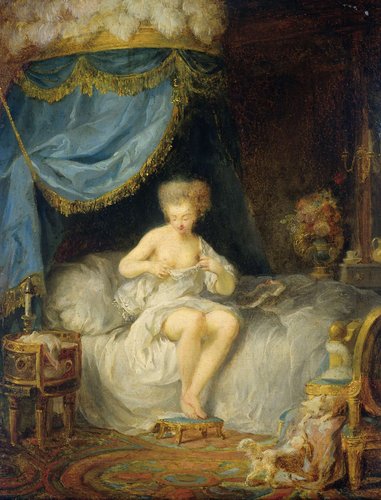
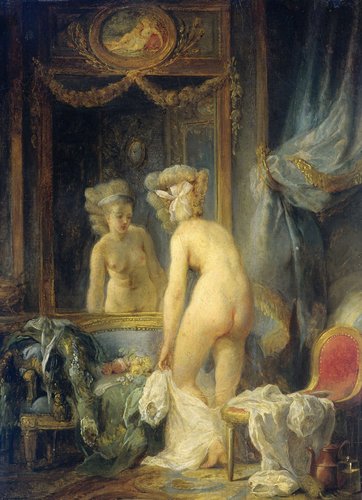
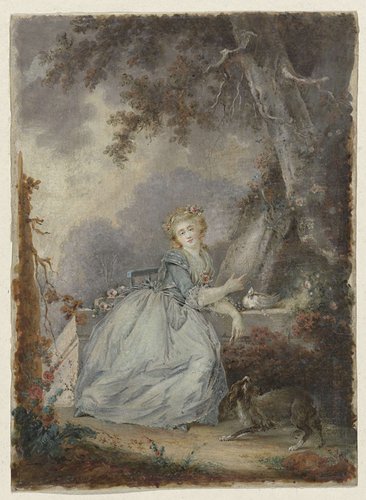
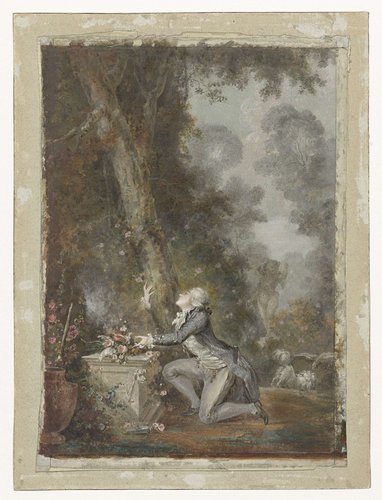
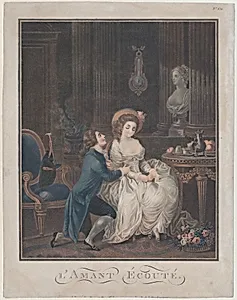
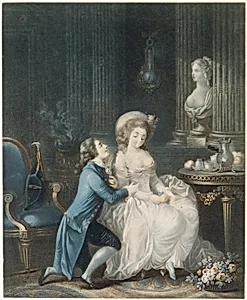
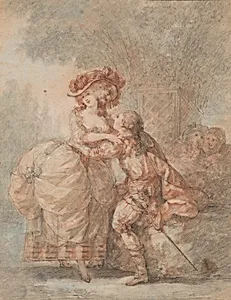
Schall’s artistic style blended the elegant, playful fêtes galantes popularized by Antoine Watteau with the lighter galant manner of Jean-Honoré Fragonard and Philibert-Louis Debucourt. His works often depicted actors, dancers, and aristocratic figures in frivolous or intimate settings, frequently on a small scale with lively brushwork and idealized feminine figures. In 1776 he produced his first major paintings in this vein, which were reproduced as color engravings by Louis-Marin Bonnet in 1778, quickly gaining favor among Parisian high society. He later entered the service of Christian IV, Count Palatine of Zweibrücken, creating works—including risqué pieces—for the count’s “Secret Museum,” many of which were engraved by Gabriel Marchand. He also counted the piano maker Sébastien Érard among his Strasbourg patrons and occasionally described himself as a history painter.
Schall exhibited at the Paris Salons of 1793, 1798, and 1806. He died in Paris on 24 March 1825. Though his oeuvre includes both refined society portraits and more sensual genre scenes, his contribution to the late flowering of the fête galante style remains his most enduring legacy, bridging Rococo elegance with the sensibilities of the Revolutionary and Napoleonic eras.