Ctrl K
1739–1821
Jean-Jacques Lagrenée, known as Lagrenée the Younger (1739–1821), was a distinguished French history painter, draftsman, and engraver born into a family of artists in Paris. The younger brother of the prominent Louis-Jean-François Lagrenée (Lagrenée the Elder), he studied under his elder sibling at the École nationale supérieure des beaux-arts in Paris, honing his skills in the rigorous academic tradition of history painting. This familial mentorship laid the foundation for his career, culminating in his winning the prestigious Prix de Rome, which enabled further study abroad.
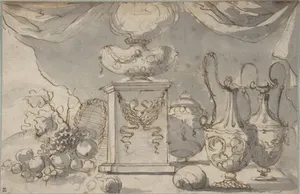
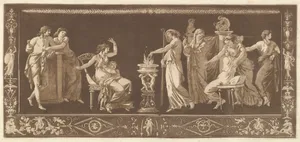
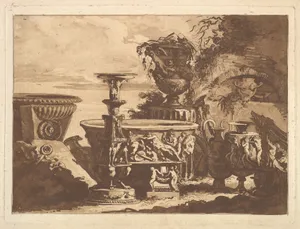
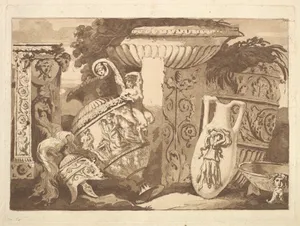
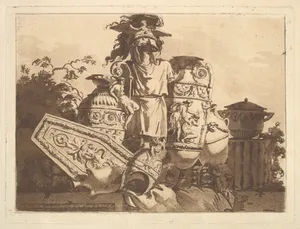
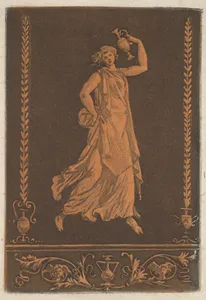
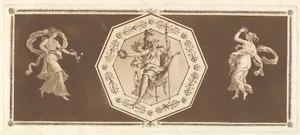
Lagrenée's professional trajectory was marked by significant sojourns and appointments. Accompanying his brother to Russia from 1760 to 1762, he absorbed influences from imperial patronage before residing at the Académie de France in Rome from 1765 to 1769, where he sketched antiquities from Herculaneum and Pompeii, fueling his neoclassical leanings. Back in France, he was agréé to the Académie royale de peinture et de sculpture in 1769 and received as a full member in 1775, presenting *L’Hiver (Éole déchaînant les vents)* for the Galerie d'Apollon in the Louvre. Rising to professor in 1781, he later co-directed the artistic production at the Manufacture nationale de Sèvres from 1785, designing the Etruscan service for Rambouillet's dairy, including innovative "breast-bowls." He exhibited consistently at the Salon from 1771 to 1804.
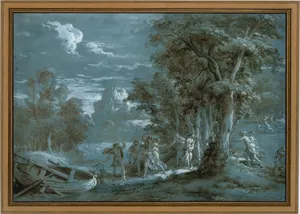
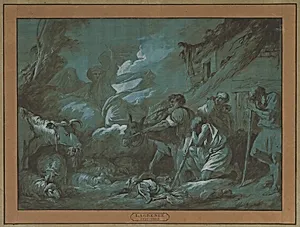
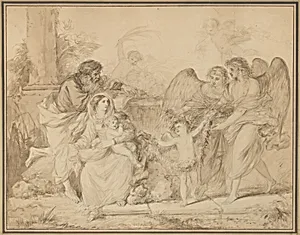
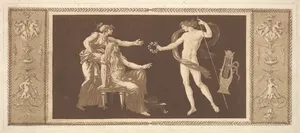
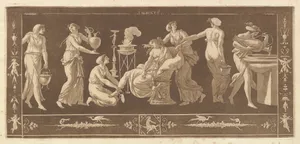
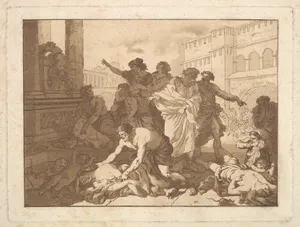
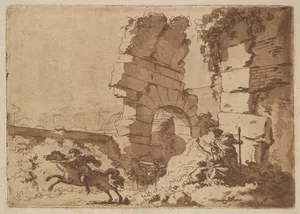
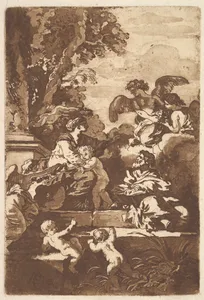
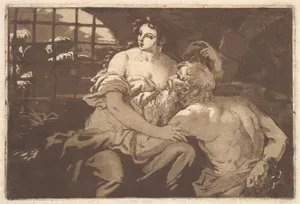
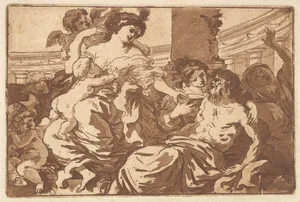
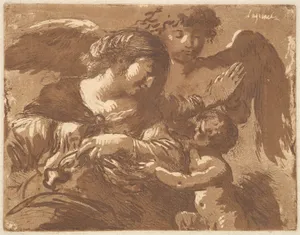
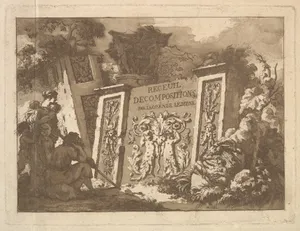
Working firmly in the Académie royale tradition, Lagrenée specialized in grand history paintings infused with classical motifs, blending rococo elegance from his brother's influence with emerging neoclassicism drawn from ancient sites. Notable works include *Allégorie relative à l'établissement du Muséum dans la grande galerie du Louvre* (1783, Louvre), *L'Incrédulité de saint Thomas* and *La Mise au tombeau* (both 1770, Musée national des beaux-arts du Québec), *La Fête de Bacchus ou l'Automne* (Louvre), and religious commissions like *Le Baptême du Christ* (Auxerre Cathedral) and *L'Assomption de la Bienheureuse Vierge Marie* (1807, Challans). His engravings, such as *Saint Jérôme dans un paysage* (1762–1763), further disseminated antique-inspired ornamentation.
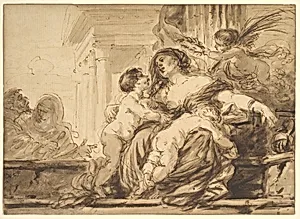
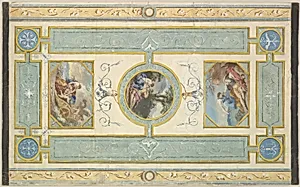
Lagrenée's legacy endures through his contributions to French institutional art, from Louvre ceilings to Sèvres porcelain, bridging late rococo and neoclassicism. His drawings and paintings in collections like the Louvre, Fontainebleau, and the Metropolitan Museum underscore his role in promoting antiquity during the Revolutionary era, ensuring his place among the Académie's steadfast history painters.