Ctrl K
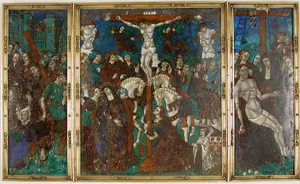
1490–1543
**Jean Pénicaud I** (c. 1490–after 1543) was a pioneering French enameler from Limoges, born into the heart of one of the city's most illustrious artistic dynasties. The younger brother of Nardon Pénicaud (c. 1470–c. 1542), who founded the first major family of Limoges enamelers, Jean I contributed to a legacy that spanned generations, including probable descendants like Jean II and Pierre Pénicaud. His early life is not well documented, but as part of this family workshop tradition, he honed his craft amid the vibrant enamel production that made Limoges the epicenter of Renaissance decorative arts in France.
Pénicaud I worked in the Limoges enamel school, mastering painted enamels on copper with polychrome techniques that bridged late Gothic and emerging Renaissance styles. He drew inspiration from contemporary prints, particularly those by Albrecht Dürer and other German and Netherlandish artists, adapting their compositions for religious plaques and reliquaries. Notably, he was among the first to frequently employ transparent enamel colors, adding depth and luminosity, though his flesh tones lacked the subtlety of predecessors like the Master of the Triptych of Louis XII. Resistant to the full Italianizing trends from Fontainebleau in the 1530s, he retained traditional opaque counterenamels, preserving a distinct northern European flavor in his oeuvre.
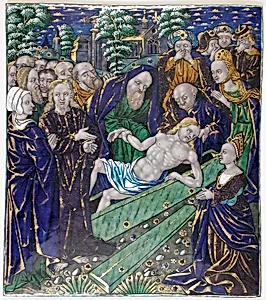
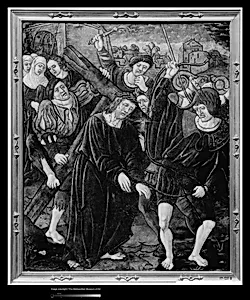
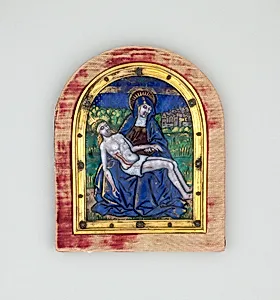
Among his rare signed works—only eight are known—stand out pieces like the *Plaque with the Last Supper* (c. 1530, National Gallery of Art), depicting Christ and the Apostles in vivid polychromy, and *Christ Bearing the Cross* (early 16th century, Metropolitan Museum of Art), a poignant narrative scene with gilt accents. Other attributions include a *Pietà* (early 16th century, Art Institute of Chicago) and a *Plaque with the Raising of Lazarus* (first half 16th century, Metropolitan Museum).
Pénicaud I's innovations in transparency and print-inspired compositions elevated Limoges enamels, influencing the transition to Mannerist grisaille techniques in his family's later generations. His resistance to Fontainebleau's Italianate mode underscored a commitment to regional authenticity, cementing the Pénicaud name as synonymous with the golden age of French enamel painting. Today, his miniature masterpieces continue to captivate, revealing the exquisite technical prowess of 16th-century Limoges artistry.