
Ctrl K
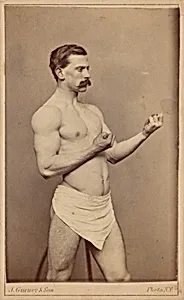
Jeremiah Gurney & Son was a prominent American photography studio based in New York City, renowned for its pioneering work in daguerreotypes and later albumen prints during the mid-to-late nineteenth century. Jeremiah Gurney (1812–1895), the founder, initially worked in the jewelry trade in Saratoga, New York, before learning the daguerreotype process directly from Samuel Morse. He transitioned fully to photography around 1840, establishing one of New York’s earliest portrait galleries at 189 Broadway and quickly gaining acclaim for producing some of the finest daguerreotypes in the city, noted for their tonal delicacy and striking three-dimensional quality.
In the 1850s and 1860s, Gurney partnered with his son Benjamin Gurney (1833–1899) to form the studio known as Jeremiah Gurney & Son. The firm expanded its practice beyond early daguerreotypes to include paper-based photography, creating elegant hand-tinted portraits and celebrity images. Jeremiah founded the American Daguerre Association in 1851, the first national organization for photographers, and his studio earned numerous awards from the American Institute, more than any other American photographer of the era. Notable works from the studio include portraits such as that of author Charles Dickens and albumen prints like *Hettie Lee* (c. 1870).
The Gurney studio played a vital role in establishing photography as a respected art form in America, bridging the experimental early years of the medium with its commercial and artistic maturation. Their emphasis on technical excellence and refined portraiture influenced subsequent generations of photographers, while their extensive output—documenting both ordinary citizens and public figures—provides invaluable visual records of nineteenth-century life. The partnership continued until Jeremiah’s death in 1895, after which Benjamin carried on aspects of the business.