
William E. Van Wyck
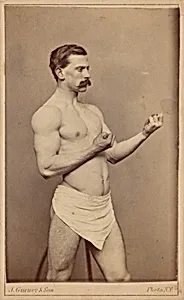
Medium
albumen print (carte-de-visite)
Dimensions
image/sheet: 9.3 × 6.2 cm (3 11/16 × 2 7/16 in.) mount: 10.1 × 6.2 cm (4 × 2 7/16 in.)
Classification
Photograph
Department
CPH
Museum
National Gallery of Art, Washington, D.C.
Credit
Pepita Milmore Memorial Fund
Accession Number
2019.12.30
Rights
Public Domain
Art Historical Context
This carte-de-visite of William E. Van Wyck, created by the New York studio of Jeremiah Gurney & Son in 1866, exemplifies the intimate scale of mid-nineteenth-century photography. Produced as an albumen print—a process in which egg-white emulsion held the image to paper—the small photograph measures roughly 3 11/16 by 2 7/16 inches and is mounted on a standard card. Such works allowed sitters to exchange likenesses much as one might share a calling card today. Gurney & Son operated during photography’s rapid rise as both a commercial craft and an artistic medium. Their cartes-de-visite captured the formal attire and composed expressions typical of the period, offering modern viewers a direct connection to the social rituals of the post-Civil War years. Now part of the National Gallery of Art’s collection through the Pepita Milmore Memorial Fund, the print preserves a moment when photography first made personal portraiture widely accessible.
About the Artist
Jeremiah Gurney & Son
Jeremiah Gurney & Son was a prominent American photography studio based in New York City, renowned for its pioneering work in daguerreotypes and later albumen prints during the mid-to-late nineteenth century. Jeremiah Gurney (1812–1895), the founder, initially worked in the jewelry trade in Saratoga, New York, before learning the daguerreotype process directly from Samuel Morse. He transitioned fu...